
Galaxy S21 FE 5G Vs Google Pixel 8

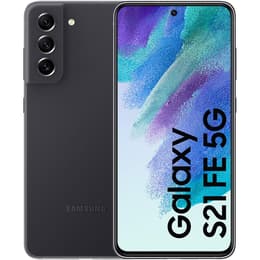
Galaxy S21 FE 5G
Galaxy S21 FE 5G
Starting at

Refurbished price:£122.00

Versus £759.00 new

See options
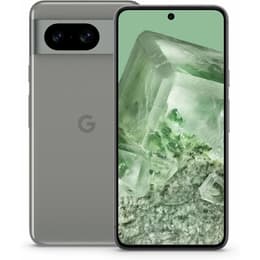
Google Pixel 8
Google Pixel 8
Starting at

Refurbished price:£185.99

Versus £699.99 new

See options

Ratings

The Samsung Galaxy S21 FE 5G and the Google Pixel 8 are both capable smartphones, offering distinct experiences within the Android ecosystem. The Galaxy S21 FE 5G, released in January 2022, is Samsung's 'Fan Edition' device, aiming to deliver popular flagship features in a streamlined package. The Google Pixel 8, launched in October 2023, represents Google's vision for a modern smartphone, emphasizing advanced computational photography and a long-term software commitment. While both run on the Android operating system, they differ significantly in their approach to software updates, camera processing, and overall design philosophy.

Scores

Durability

When considering the long-term usability of a smartphone, software support and physical resilience are key factors. The Pixel 8, being a newer device, offers a significantly extended support period compared to the S21 FE 5G.

  • Software Longevity: The Google Pixel 8 is notable for its commitment to seven years of OS upgrades, security updates, and regular Feature Drops, extending its support until October 2030. This provides an exceptionally long period of up-to-date software and security. In contrast, the Samsung Galaxy S21 FE 5G, released in January 2022, typically receives around three to four major Android OS updates and four to five years of security updates, meaning its software support will conclude sooner.
  • Physical Durability: Both devices feature an IP68 rating for dust and water resistance, indicating protection against submersion in up to 1.5 meters of freshwater for up to 30 minutes. The Pixel 8 utilizes Corning Gorilla Glass Victus for both its front and back, while the S21 FE 5G features Gorilla Glass Victus on the front and a plastic back, both framed by aluminum.
  • Practical Lifespan: The Pixel 8's extended software support means it is designed to remain secure and perform well for a longer duration, potentially making it a more sustainable choice for users who prefer to keep their devices for many years. The S21 FE 5G, while robust, will reach its end-of-life for major software updates earlier.

Year of Release

2022

2023

Compatible with latest Update

Yes

Yes

OS

Android

Android

Foldable

No

No

Performance

The performance of both the Galaxy S21 FE 5G and the Google Pixel 8 is designed to handle daily tasks efficiently, though they achieve this with different underlying hardware and software optimizations.

  • Processing Power: The Google Pixel 8 is equipped with a newer generation processor, which contributes to improved efficiency, performance, and advanced AI capabilities. This translates to smooth handling of demanding applications, responsive multitasking, and enhanced on-device machine learning features. The Galaxy S21 FE 5G, powered by a previous generation processor, still offers capable performance for everyday use, including gaming and streaming, with apps loading quickly and multitasking remaining fluid.
  • Battery Behavior: The Pixel 8 has a 4575mAh battery, and user experiences suggest it can last a full day with average use, though heavy users might need a midday top-up. Its adaptive battery feature learns usage patterns to optimize power consumption. The Galaxy S21 FE 5G features a 4500mAh battery, which is also designed to provide all-day power for typical usage, supported by power-efficient components.
  • Storage and Responsiveness: Both devices offer storage options typically including 128GB and 256GB, providing ample space for applications and media. The Pixel 8 comes with 8GB of RAM, contributing to its smooth multitasking capabilities. The S21 FE 5G is available with either 6GB or 8GB of RAM, with the 8GB variant offering comparable multitasking fluidity.

Memory (GB)

8 GB

8 GB

Screen quality

The visual experience on both the Galaxy S21 FE 5G and the Google Pixel 8 is characterized by vibrant colors and smooth motion, though there are differences in their display technologies and brightness levels.

  • Display Technology and Clarity: Both smartphones feature OLED displays, known for deep blacks and high contrast. The Galaxy S21 FE 5G uses a 6.4-inch Dynamic AMOLED 2X display, while the Pixel 8 has a 6.2-inch OLED Actua Display. Both offer FHD+ resolution (1080 x 2400 pixels), providing clear and sharp visuals for everyday viewing.
  • Brightness and Refresh Rate: The Pixel 8's display can reach up to 1400 nits for HDR content and a peak brightness of 2000 nits outdoors, offering excellent visibility in various lighting conditions. The S21 FE 5G's display also provides good brightness, with a peak of 1200 nits. Both devices feature a 120Hz refresh rate, ensuring smooth scrolling and fluid animations. The Pixel 8's refresh rate is adaptive, ranging from 60Hz to 120Hz, which can help optimize battery consumption.
  • Screen Size and Viewing: The S21 FE 5G offers a slightly larger 6.4-inch screen, which can be beneficial for media consumption and productivity. The Pixel 8's 6.2-inch display provides a more compact form factor, which some users may find easier for one-handed use.

Resolution

1080 x 2340

1080 x 2400

Screen type

Dynamic AMOLED 2X

OLED

Audiovisual

Both the Galaxy S21 FE 5G and the Google Pixel 8 offer advanced camera systems, but they approach image processing and feature sets with distinct philosophies, catering to different photographic preferences.

  • Rear Camera Systems: The Google Pixel 8 features a dual-camera setup with a 50MP wide main sensor (f/1.68, OIS) and a 12MP ultrawide lens (f/2.2, 126˚ field of view, autofocus). Its main sensor is larger, allowing for better light capture. The Samsung Galaxy S21 FE 5G boasts a versatile triple-camera system, including a 12MP wide lens (f/1.8), an 8MP telephoto lens (f/2.4) with 3x optical zoom, and a 12MP ultrawide lens (f/2.2, 123˚ field of view). The S21 FE 5G also offers 30x Space Zoom.
  • Photography Performance: The Pixel 8 leverages Google's computational photography for strong performance in various conditions, including improved low-light capabilities due to its wider aperture and larger sensor. It excels at producing natural-looking images with consistent color science. The S21 FE 5G also delivers high-quality photos with features like Night Mode, which uses multi-frame processing for brighter low-light images, and Scene Optimiser for automatic adjustments. Its telephoto lens provides dedicated optical zoom capabilities.
  • Video and Front Camera: Both devices support 4K video recording at 30/60fps. The Pixel 8 can also record 10-bit HDR video. For selfies, the S21 FE 5G has a 32MP wide front camera, while the Pixel 8 features a 10.5MP ultrawide front camera with autofocus. The S21 FE 5G includes features like Director's View for recording with both front and rear cameras simultaneously.

Main camera

12 megapixels

50 megapixels

Front camera

32 megapixels

10.5 megapixels

Miscellaneous

Beyond core performance and display, several practical elements contribute to the overall user experience of these smartphones, from connectivity to physical design.

  • Connectivity and Ports: Both the Galaxy S21 FE 5G and the Google Pixel 8 support 5G connectivity for fast mobile data speeds. The Pixel 8 supports the newer Wi-Fi 7 standard, offering potentially faster and more reliable wireless connections, while the S21 FE 5G supports earlier Wi-Fi standards. Both utilize a USB Type-C port for charging and data transfer, and neither includes a 3.5mm headphone jack.
  • Biometrics and Sensors: For security, both phones feature an in-display optical fingerprint sensor. The Pixel 8 also offers face recognition for unlocking. Both devices include a standard suite of sensors such as accelerometers, gyroscopes, compasses, barometers, ambient light sensors, and proximity sensors.
  • Design and Handling: The Pixel 8 has dimensions of 150.5 x 70.8 x 8.9 mm and weighs 187g, offering a relatively compact and balanced feel. The S21 FE 5G is slightly larger and thinner at 155.7 x 74.5 x 7.9 mm and weighs 177g. The Pixel 8 features a glass back, while the S21 FE 5G has a plastic back, both contributing to their respective in-hand feel.

Weight

177 g

187 g

Screen size (in)

6.4

6.2

Mobile network

5G

5G

SIM card

Physical SIM

Physical SIM + eSIM

Carrier compatibility

Unlocked

Unlocked

The Samsung Galaxy S21 FE 5G and the Google Pixel 8 each present a compelling set of features, catering to different user priorities. User feedback for the Galaxy S21 FE 5G often praises its vibrant display, capable camera system with optical zoom, and reliable performance for daily tasks. Some common criticisms have revolved around its battery life for heavy users and its release timing, which placed it close to newer models.

The Google Pixel 8 is frequently lauded for its exceptional software experience, including its advanced AI features and the industry-leading seven years of software updates, ensuring long-term relevance. Its computational photography is also a consistent highlight, producing high-quality images in various conditions. However, some users have noted that while its battery life is adequate for most, it may not be a standout feature for very heavy usage, particularly when relying heavily on mobile data.

Users prioritizing long-term software support, cutting-edge AI features, and a consistently excellent point-and-shoot camera experience may find the Google Pixel 8 well-suited to their needs. Its compact size also appeals to those seeking a more manageable device. Conversely, individuals who value a dedicated telephoto lens for optical zoom, a slightly larger display, and a proven hardware design might lean towards the Samsung Galaxy S21 FE 5G. Both devices offer a quality-assured refurbished option, providing an eco-friendly alternative for consumers looking to make informed and sustainable choices.

See all articles

Our recent comparisons