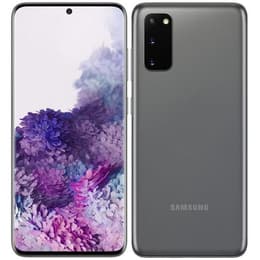


Galaxy S20 5G Vs Google Pixel 7

Galaxy S20 5G
Galaxy S20 5G
Starting at

Refurbished price:£132.00

Versus £899.00 new

See options
Google Pixel 7
Google Pixel 7
Starting at

Refurbished price:£136.00

Versus £729.00 new

See options

Ratings

The Samsung Galaxy S20 5G, released in March 2020, and the Google Pixel 7, launched in October 2022, are both smartphones that offer distinct user experiences. While the Galaxy S20 5G arrived with a focus on advanced display technology and versatile camera hardware, the Pixel 7 emphasizes a refined camera system powered by Google's computational photography and a more recent software experience. Both devices operate on the Android platform, but with different interpretations through their respective user interfaces.

Scores

Durability

When considering the longevity of these devices, several factors come into play, including their release timelines and ongoing software support.

  • Release Timeline: The Galaxy S20 5G was released in March 2020, making it an older device compared to the Google Pixel 7, which launched in October 2022. This age difference directly impacts the remaining period of official software updates.
  • OS Support: The Google Pixel 7, being a newer device, benefits from a longer expected period of major Android operating system updates and security patches directly from Google. The Galaxy S20 5G originally shipped with Android 10 and received updates up to Android 13, while the Pixel 7 launched with Android 13 and is expected to receive updates for several more years.
  • Physical Durability: Both devices feature an IP68 rating for dust and water resistance, indicating protection against immersion in water up to 1.5 meters for 30 minutes. The Galaxy S20 5G utilizes Corning Gorilla Glass 6 for screen protection, while the Pixel 7 features the more recent Corning Gorilla Glass Victus, offering enhanced scratch and drop resistance.

Year of Release

2020

2022

Compatible with latest Update

No

Yes

OS

Android

Android

Foldable

No

No

Performance

The performance of a smartphone is crucial for daily tasks, from app usage to multitasking and gaming. Both the Galaxy S20 5G and the Pixel 7 offer capable hardware, but with different approaches to processing power and memory management.

  • Processing Power: The Google Pixel 7 incorporates a newer generation processor designed by Google, which is optimized for machine learning tasks and computational photography, contributing to smooth app loading and efficient handling of demanding applications. The Galaxy S20 5G, while still offering robust performance for its generation, relies on a processor from 2020.
  • Multitasking and Storage: The Galaxy S20 5G typically comes with 12GB of RAM, providing ample capacity for extensive multitasking. It also offers 128GB of internal storage and supports expandable storage via a microSD card. The Pixel 7 generally features 8GB of RAM and is available with 128GB or 256GB of internal storage, but it does not support expandable storage.
  • Battery Performance: The Pixel 7 is equipped with a 4355 mAh battery, while the Galaxy S20 5G has a 4000 mAh battery. The Pixel 7's adaptive battery features are designed to optimize power consumption for extended usage, with users reporting it can last through a full day of typical use.

Memory (GB)

12 GB

8 GB

Screen quality

The visual experience is a key differentiator, with both devices offering high-quality displays tailored to different preferences.

  • Display Technology and Resolution: The Galaxy S20 5G features a 6.2-inch Dynamic AMOLED 2X display with a resolution of 1440 x 3200 pixels, offering a very sharp and detailed image. The Pixel 7 has a 6.3-inch AMOLED display with a resolution of 1080 x 2400 pixels.
  • Refresh Rate and Smoothness: The Galaxy S20 5G supports a 120Hz refresh rate at FHD+ resolution, providing very smooth scrolling and animations. The Pixel 7 offers a 90Hz refresh rate, which also delivers a fluid experience, though slightly less than the S20 5G's maximum.
  • Brightness and Viewing Experience: Both displays offer vibrant colors and deep blacks characteristic of AMOLED technology. The Pixel 7's display is noted for good brightness levels, making it suitable for outdoor viewing. The Galaxy S20 5G also features HDR10+ support for enhanced contrast and color in compatible content.

Resolution

1440 x 3200

1080 x 2400

Screen type

Dynamic AMOLED 2X

AMOLED

Audiovisual

Both the Galaxy S20 5G and the Google Pixel 7 are known for their camera capabilities, though they achieve their results through different hardware and software philosophies.

  • Rear Camera Systems: The Galaxy S20 5G features a triple-lens rear camera setup, including a 12 MP wide-angle lens, a 64 MP telephoto lens with 3x hybrid optical zoom, and a 12 MP ultrawide lens. The Pixel 7 has a dual-camera system with a 50 MP main wide-angle lens and a 12 MP ultrawide lens. The Pixel 7 does not have a dedicated telephoto lens, relying on its main sensor and software for zoomed shots.
  • Photography Performance: The Pixel 7 excels in computational photography, using its advanced processor to enhance image quality, particularly in low-light conditions and for features like Photo Unblur. The Galaxy S20 5G also offers strong low-light performance and versatile zoom options due to its dedicated telephoto lens.
  • Video Recording and Audio: The Galaxy S20 5G is capable of recording 8K video at 24fps, along with 4K at 30/60fps. The Pixel 7 records 4K video at 30/60fps. Both phones offer stereo speakers for media consumption and good microphone quality for calls and recordings.

Main camera

12 megapixels

50 megapixels

Front camera

10 megapixels

10.8 megapixels

Miscellaneous

Beyond the core features, several practical elements contribute to the overall user experience of these smartphones.

  • Connectivity: Both devices support 5G connectivity, Wi-Fi, and Bluetooth. The Pixel 7 features Wi-Fi 6E and Bluetooth 5.2, offering slightly newer standards compared to the Galaxy S20 5G's Wi-Fi 6 and Bluetooth 5.0. The Galaxy S20 5G supports sub-6 5G bands, while the Pixel 7 also supports sub-6 5G.
  • Ports and Biometrics: Both phones utilize a USB-C port for charging and data transfer and lack a 3.5mm headphone jack. For security, both include an in-display fingerprint sensor. The Pixel 7 additionally offers Face Unlock.
  • Physical Characteristics: The Galaxy S20 5G measures 151.7 x 69.1 x 7.9 mm and weighs 163 grams. The Pixel 7 is slightly larger and heavier at 155.6 x 73.2 x 8.7 mm and 197 grams. These differences can impact how each device feels in hand and pocket.

Weight

163 g

197 g

Screen size (in)

6.2

6.3

Mobile network

5G

5G

SIM card

Dual Physical SIM

Physical SIM + eSIM

Carrier compatibility

Unlocked

Unlocked

Connector

USB-C

USB-C + Jack 3.5mm

User feedback for the Samsung Galaxy S20 5G often praises its vibrant display, versatile camera system with a dedicated telephoto lens, and the option for expandable storage. Some users have noted its battery life as a point of consideration, especially with heavy usage. The Google Pixel 7 is frequently lauded for its exceptional camera performance, particularly in computational photography, its clean Android experience, and its strong software support. Some common criticisms have touched upon its battery life and the absence of a dedicated telephoto lens.

For users who prioritize a highly detailed display with a higher refresh rate for a smoother visual experience and the flexibility of expandable storage, the Galaxy S20 5G could be a suitable choice. Its dedicated telephoto lens also appeals to those who frequently use optical zoom in their photography. Conversely, individuals who value cutting-edge computational photography, a streamlined Android interface, and a longer period of direct software updates from Google will likely find the Pixel 7 more aligned with their needs. The Pixel 7's focus on AI-driven features provides a distinct advantage in image processing and overall system intelligence.

Both of these devices are available as quality-assured refurbished options, providing an eco-friendly alternative for consumers looking to make a sustainable choice while still enjoying premium smartphone features.

See all articles

Our recent comparisons