Compare models
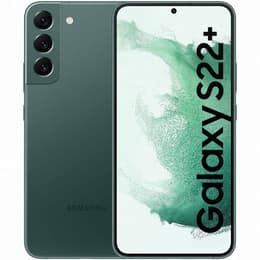
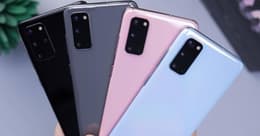
Galaxy S20 5G Vs Galaxy S22+ 5G
- 1-year minimum warranty
- Free delivery on all items
- Free 30-day returns
Differences at a glance
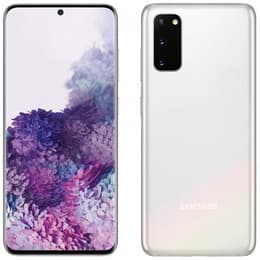
The Samsung Galaxy S20 5G, released in March 2020, and the Samsung Galaxy S22+ 5G, launched in February 2022, are both flagship Android smartphones from Samsung. While both devices offer a premium experience with 5G connectivity, the S22+ 5G introduces advancements in processing power, camera capabilities, and display technology, reflecting two years of technological evolution. Both run on the Android operating system, offering a familiar user experience with Samsung's One UI.
Available Models
Colour
Storage (GB)
Scores
Durability
When considering the long-term usability of these devices, their release timelines and software support policies are key differentiators.
- Software Longevity: The Galaxy S20 5G, released in March 2020, launched with Android 10 and received three major operating system updates, concluding with Android 13. Its security updates officially ended around March/April 2025, though some carriers provided a final patch in July 2025. In contrast, the Galaxy S22+ 5G, released in February 2022, launched with Android 12 and was promised four years of OS updates, extending to Android 16, and five years of security updates, projected through 2027. This means the S22+ 5G offers significantly longer software support.
- Physical Durability: Both devices feature an IP68 rating for dust and water resistance, indicating protection against submersion in up to 1.5 meters of freshwater for 30 minutes. The Galaxy S20 5G utilizes Corning Gorilla Glass 6 for its front and back panels, while the Galaxy S22+ 5G upgrades to the more robust Gorilla Glass Victus+ on both sides, coupled with an Armor aluminum frame for enhanced drop and scratch resistance.
- Expected Lifespan: Users prioritizing the latest software features and extended security patches will find the Galaxy S22+ 5G to be a more future-proof option due to its newer release and longer support commitment. For those who do not require the absolute latest software, the Galaxy S20 5G remains a capable device, though its official software support has concluded.
Year of Release
2020
2022
Compatible with latest Update
No
Yes
OS
Android
Android
Foldable
No
No
Performance
The performance of a smartphone is crucial for daily tasks, from app usage to demanding games and multitasking.
- Processing Power: The Galaxy S20 5G, depending on the region, is equipped with a processor that handled demanding applications and multitasking smoothly at its release. The Galaxy S22+ 5G features a newer generation processor, offering enhanced speed and efficiency for more intensive tasks, smoother app loading, and improved responsiveness across the system.
- Multitasking and Storage: The Galaxy S20 5G typically comes with 12GB of RAM, providing ample capacity for running multiple applications simultaneously without significant slowdowns. It offers 128GB of internal storage and includes a microSD card slot for expandable storage. The Galaxy S22+ 5G generally features 8GB of RAM, which is still sufficient for most users' multitasking needs, and is available with 128GB or 256GB of internal storage, though it lacks a microSD card slot.
- Battery Behavior: The Galaxy S20 5G houses a 4000 mAh battery. While capable of lasting a full day for moderate users, enabling the 120Hz refresh rate can lead to more frequent charging for heavy users. The Galaxy S22+ 5G comes with a larger 4500 mAh battery, which generally provides solid battery life, comfortably lasting a day with moderate use.
Screen quality
The display is a primary interface for smartphone interaction, and both devices offer vibrant viewing experiences.
- Display Technology and Size: Both the Galaxy S20 5G and S22+ 5G feature Dynamic AMOLED 2X displays, known for deep blacks and vibrant colors. The S20 5G has a 6.2-inch display, offering a more compact form factor. The S22+ 5G provides a larger 6.6-inch screen, which enhances the viewing experience for media consumption and productivity.
- Resolution and Brightness: The Galaxy S20 5G boasts a higher resolution of 1440 x 3200 pixels (QHD+), resulting in a very sharp image. The Galaxy S22+ 5G features a resolution of 1080 x 2340 pixels (FHD+). While the S20 5G has a higher pixel density, the S22+ 5G compensates with significantly higher peak brightness, reaching up to 1750 nits, which greatly improves outdoor visibility in bright sunlight.
- Refresh Rate and Protection: Both models offer a 120Hz refresh rate for smoother scrolling and more fluid animations. The S20 5G's 120Hz mode operates at FHD+ resolution, while the S22+ 5G maintains 120Hz at its native FHD+ resolution. The S20 5G is protected by Gorilla Glass 6, whereas the S22+ 5G features the more advanced Gorilla Glass Victus+ for increased scratch and drop resistance.
Resolution
1440 x 3200
1080 x 2340
Screen type
Dynamic AMOLED 2X
Dynamic AMOLED 2X
Audiovisual
Both smartphones are equipped with versatile camera systems designed to capture a variety of moments.
- Rear Camera System: The Galaxy S20 5G features a triple camera setup with a 12MP wide lens, a 64MP telephoto lens offering 3x hybrid optical zoom, and a 12MP ultrawide lens. The Galaxy S22+ 5G also has a triple camera system, but with a 50MP wide lens, a 10MP telephoto lens with 3x optical zoom, and a 12MP ultrawide lens. The S22+ 5G's larger main sensor and improved processing contribute to better low-light performance.
- Photography Performance: The S20 5G's camera was well-regarded at its release, capable of producing detailed images and 8K video. The S22+ 5G offers improved low-light photography, often referred to as 'Nightography,' resulting in brighter and cleaner night shots with less noise. While the S22+ 5G shows advancements, some users note that competitors might offer slightly better detail or less processing in certain conditions.
- Video and Audio: Both devices are capable of recording 8K video at 24 frames per second. Both also feature stereo speakers, providing an immersive audio experience for media consumption. Neither phone includes a 3.5mm headphone jack.
Main camera
12 megapixels
50 megapixels
Front camera
10 megapixels
10 megapixels
Miscellaneous
Beyond the core features, several practical elements contribute to the overall user experience of these smartphones.
- Connectivity and Ports: Both the Galaxy S20 5G and S22+ 5G support 5G networks, Wi-Fi, and Bluetooth. The S20 5G supports Wi-Fi 6 and Bluetooth 5.0. The S22+ 5G upgrades to Wi-Fi 6E and Bluetooth 5.2, offering potentially faster and more stable wireless connections. Both devices utilize a USB-C port for charging and data transfer and lack a 3.5mm headphone jack.
- Biometrics and Sensors: Both phones feature an in-display fingerprint sensor for secure unlocking. The S22+ 5G uses an ultrasonic sensor, which can offer faster and more reliable recognition. Both also support face recognition.
- Design and Handling: The Galaxy S20 5G is more compact and lighter, weighing 163g with dimensions of 151.7 x 69.1 x 7.9 mm, making it easier for one-handed use. The Galaxy S22+ 5G is slightly larger and heavier at 195g, with dimensions of 157.4 x 75.8 x 7.6 mm, offering a larger screen experience. Both feature a premium build with glass backs and aluminum frames.
Weight
163 g
195 g
Screen size (in)
6.2
6.6
Mobile network
5G
5G
SIM card
Dual Physical SIM
Dual Physical SIM + eSIM
Carrier compatibility
Unlocked
Unlocked
Connector
USB-C
USB-C
What the community thinks
Choosing between the Samsung Galaxy S20 5G and the Galaxy S22+ 5G depends largely on individual priorities and usage patterns. The Galaxy S20 5G, despite being an older model, was praised for its compact design, vibrant display, and capable camera system at its release. Users appreciated its 120Hz display and 8K video recording. However, common criticisms included its battery life, especially when the high refresh rate was enabled, and the eventual end of software support.
The Galaxy S22+ 5G, being a newer generation, offers several enhancements. Users frequently commend its brighter display, improved low-light camera performance, and robust build quality with Gorilla Glass Victus+. Its extended software support timeline is also a significant advantage for long-term use. While its battery life is generally solid, some users noted it wasn't a drastic improvement over its immediate predecessor.
Users prioritizing a more compact device with a high-resolution screen and expandable storage might lean towards the Galaxy S20 5G, understanding that its software support has concluded. Conversely, those who value the latest performance, a larger and brighter display, enhanced camera capabilities, and a longer period of software updates will find the Galaxy S22+ 5G better suited to their needs. Both devices represent strong options within their respective generations, and opting for a quality-assured refurbished option can provide an eco-friendly alternative for either model.