
Galaxy S23 Ultra Vs Google Pixel 9

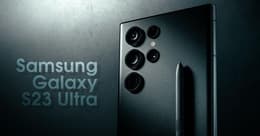
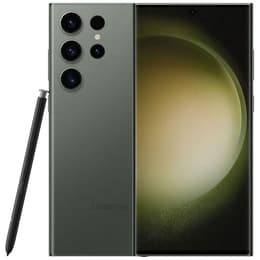
Galaxy S23 Ultra
Galaxy S23 Ultra
Starting at

Refurbished price:£299.00

Versus £1,599.00 new

See options
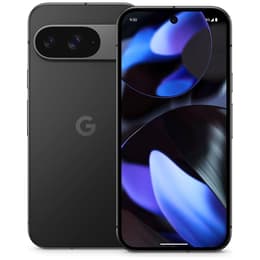
Google Pixel 9
Google Pixel 9
Starting at

Refurbished price:£327.25

Versus £890.22 new

See options

Ratings

The Samsung Galaxy S23 Ultra, released in February 2023, and the Google Pixel 9, launched in August 2024, represent distinct approaches to flagship smartphone design and functionality. While both devices operate on the Android platform, the Pixel 9 benefits from a newer release cycle, bringing updated internal components and a different philosophy towards software integration and camera processing. The S23 Ultra, on the other hand, offers a larger display and a versatile camera system with extensive zoom capabilities, alongside its integrated S Pen.

Scores

Durability

When considering the practical lifespan of these devices, their respective release timelines and software support policies are key factors.

  • Release Timeline: The Galaxy S23 Ultra was released in February 2023, making it an earlier generation device compared to the Google Pixel 9, which launched in August 2024. This difference in release date means the Pixel 9 inherently has a longer period before it reaches the end of its software support cycle.
  • OS Support Duration: The Samsung Galaxy S23 Ultra was promised 4 years of Android operating system upgrades and 5 years of security updates from its release, with support expected to end around 2028. In contrast, the Google Pixel 9 offers a more extended commitment, with 7 years of both OS and security updates from its launch. This longer support period for the Pixel 9 translates to a greater practical lifespan for receiving the latest software features and security patches.
  • Expected Practical Lifespan: Users prioritizing the longest possible software longevity and access to the newest Android versions will find the Pixel 9's extended update policy more aligned with their needs. Both devices feature durable builds with Gorilla Glass Victus 2, contributing to their physical resilience over time.

Year of Release

2023

2024

Compatible with latest Update

Yes

Yes

OS

Android

Android

Foldable

No

No

Performance

The performance of a smartphone is largely determined by its internal processing capabilities and how efficiently it manages tasks and power.

  • Processor Capabilities: The Galaxy S23 Ultra is powered by a custom-tuned processor designed for its specific hardware, enabling smooth operation for demanding applications and multitasking. The Pixel 9 features Google's own current-generation processor, which is optimized for AI and machine learning tasks, contributing to efficient performance and intelligent features. Both processors are capable of handling everyday tasks, gaming, and heavy usage without significant slowdowns.
  • Battery Behavior: The Galaxy S23 Ultra is equipped with a 5000 mAh battery, which consistently delivers excellent longevity, often lasting more than a full day of heavy use, with some users reporting up to two days on a single charge. The Pixel 9, with its 4700 mAh battery, provides reliable all-day power for moderate users and can achieve 10-12 hours of use on 5G for heavy usage, representing an improvement in efficiency over previous Pixel generations.
  • System Responsiveness and Storage: Both devices offer ample RAM, with the Pixel 9 typically featuring 12GB and the S23 Ultra available in 8GB or 12GB configurations, ensuring smooth multitasking. Storage options vary, with both offering configurations up to 256GB or more, providing sufficient space for apps, media, and files.

Memory (GB)

8 GB

12 GB

Screen quality

The visual experience on a smartphone is heavily influenced by its display technology, resolution, and brightness.

  • Display Technology and Size: The Samsung Galaxy S23 Ultra features a large 6.8-inch Dynamic AMOLED 2X display, offering vibrant colors and deep blacks. The Google Pixel 9 comes with a 6.3-inch OLED Actua display, also known for its visual clarity and energy efficiency. The S23 Ultra provides a larger canvas for media consumption and productivity.
  • Resolution and Brightness: The S23 Ultra boasts a higher WQHD+ resolution (3088x1440 pixels), resulting in a sharper image with approximately 500 pixels per inch (ppi), and can reach a peak brightness of 1750 nits. The Pixel 9 offers an FHD+ resolution (2424x1080 pixels) with 422 ppi, and an impressive peak brightness of 2700 nits, with a full-screen brightness of 1800 nits, enhancing outdoor visibility.
  • Refresh Rate and Smoothness: Both devices feature a 120Hz refresh rate for smooth scrolling and responsive interactions. The S23 Ultra utilizes LTPO technology, allowing its refresh rate to adapt dynamically from 1Hz to 120Hz for power efficiency. The Pixel 9's display switches between 60Hz and 120Hz, providing a fluid experience, though without the granular adaptability of LTPO.

Resolution

1440 x 3088

1080 x 2424

Screen type

Dynamic AMOLED 2X

OLED

Audiovisual

Both smartphones offer advanced camera systems, though they approach photography with different hardware and software philosophies.

  • Camera System Configuration: The Galaxy S23 Ultra features a quad-camera setup, highlighted by a 200MP main sensor, a 12MP ultrawide lens, and two 10MP telephoto lenses providing 3x and 10x optical zoom. This hardware configuration allows for exceptional versatility, particularly in zooming capabilities, with up to 100x digital zoom. The Google Pixel 9 employs a dual-camera system, including a 50MP main camera and a 48MP ultrawide camera with macro autofocus. The Pixel 9 does not include a dedicated telephoto lens, relying on its main sensor and computational photography for zoom up to 8x.
  • Photography Performance: The S23 Ultra is recognized for its detailed 200MP photos, strong low-light performance (Nightography), and impressive telephoto shots. Its advanced processing, aided by its powerful chipset, contributes to natural skin tones and balanced exposures. The Pixel 9 leverages Google's renowned computational photography, offering features like Night Sight, Astrophotography, Portrait Mode, and a new 'Add Me' feature for creative editing. Its main camera performs well in low light due to a larger sensor.
  • Video and Audio: Both devices are capable of high-quality video recording. The S23 Ultra supports 8K video recording and offers robust stabilization. The Pixel 9 also provides 4K 60fps video recording and includes features like Audio Magic Eraser and various video stabilization modes. For audio, both offer stereo speakers, providing an immersive media consumption experience.

Main camera

200 megapixels

50 megapixels

Front camera

12 megapixels

10.5 megapixels

Miscellaneous

Beyond core performance and camera, several practical elements contribute to the overall user experience of these smartphones.

  • Connectivity and Ports: Both the Galaxy S23 Ultra and the Google Pixel 9 support modern connectivity standards, including 5G, Wi-Fi 6E, and Bluetooth 5.3, ensuring fast and reliable wireless communication. The S23 Ultra uses a USB-C 3.2 port, while the Pixel 9 also features a USB-C port. Neither device includes a traditional 3.5mm headphone jack.
  • Sensors and Biometrics: For security and convenience, the S23 Ultra incorporates an ultrasonic in-display fingerprint sensor, while the Pixel 9 also features an in-display fingerprint sensor. Both devices offer face recognition capabilities. The S23 Ultra uniquely integrates the S Pen stylus, providing enhanced productivity for note-taking, drawing, and navigation.
  • Design and Durability: The S23 Ultra has dimensions of 163.4 x 78.1 x 8.9 mm and weighs 234g, featuring a premium build with an aluminum frame and Gorilla Glass Victus 2 on both the front and back. The Pixel 9 is a more compact device, measuring 152.8 x 72.0 x 8.5 mm and weighing 198g, also protected by Gorilla Glass Victus 2 and featuring an IP68 rating for dust and water resistance, which the S23 Ultra also shares. The Pixel 9 also introduces 'Adaptive Touch' technology, which adjusts screen sensitivity based on environmental factors like wet fingers or screen protectors.

Weight

234 g

198 g

Screen size (in)

6.8

6.3

Mobile network

5G

5G

SIM card

Dual Physical SIM + eSIM

Physical SIM + eSIM

Carrier compatibility

Unlocked

Unlocked

Connector

USB-C

USB-C

The Samsung Galaxy S23 Ultra and the Google Pixel 9 cater to slightly different user priorities, reflecting their respective design philosophies and release timelines. User feedback for the S23 Ultra often praises its exceptional battery life, versatile camera system with impressive zoom, and the integrated S Pen for productivity. Some users, however, have expressed a desire for longer software support, especially in light of newer policies from Samsung's later models.

The Pixel 9 is frequently lauded for its advanced computational photography, delivering high-quality images with strong AI integration, and its commitment to an extended software update policy. While its battery life is considered reliable for a full day, it may not match the multi-day endurance reported by some S23 Ultra users. The absence of a dedicated telephoto lens on the base Pixel 9 model is a point of distinction compared to the S23 Ultra's comprehensive zoom capabilities.

Users prioritizing a larger, higher-resolution display, a comprehensive camera system with extensive optical zoom, and the unique functionality of an integrated stylus will find the Samsung Galaxy S23 Ultra well-suited to their needs. Conversely, individuals who value a more compact device, the longest possible software support, and a camera experience heavily driven by cutting-edge AI and computational photography may lean towards the Google Pixel 9. Both devices offer a premium Android experience, and considering a quality-assured refurbished option for either model can be a sustainable choice for consumers.


See all articles

Our recent comparisons