Galaxy S20 5G Vs Galaxy S21 Ultra 5G

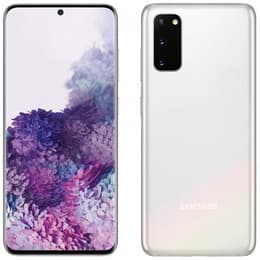
Galaxy S20 5G
Galaxy S20 5G
Starting at

Refurbished price:£133.00

Versus £899.00 new

See options
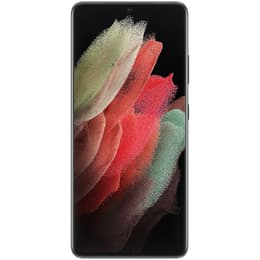
Galaxy S21 Ultra 5G
Galaxy S21 Ultra 5G
Starting at

Refurbished price:£187.00

Versus £1,800.00 new

See options

Ratings

The Samsung Galaxy S20 5G, released in February 2020, and the Samsung Galaxy S21 Ultra 5G, launched in January 2021, represent two generations of Samsung's premium Android smartphone offerings. While both devices deliver a high-end experience, the S21 Ultra 5G introduces advancements in camera technology, display capabilities, and overall processing power, building upon the foundation set by its predecessor. Both operate on the Android platform, providing a consistent software environment.

Scores

Durability

These devices present different timelines regarding software support and their practical lifespan.

  • Software Updates: The Galaxy S20 5G, having been released earlier, concluded its official software update cycle around March to April 2025, receiving its final major Android OS update and security patches. The Galaxy S21 Ultra 5G, being a year newer, benefited from an additional year of major OS updates, reaching Android 15 in May 2025, with security updates concluding around February 2026.
  • Repairability: Both models feature glass constructions, making them susceptible to damage from drops. Repairability scores for both the S20 Ultra and S21 Ultra models are generally low, often rated around 3 out of 10 by experts, primarily due to the extensive use of strong adhesive for components like the battery and display, making disassembly challenging.
  • Practical Lifespan: Users prioritizing the longest possible official software support and security patches will find the S21 Ultra 5G offers a slightly extended practical lifespan in this regard. However, both devices are constructed with durable materials and can continue to function effectively for several years beyond their official support, especially as quality-assured refurbished options.

Year of Release

2020

2021

Compatible with latest Update

No

Yes

OS

Android

Android

Foldable

No

No

Performance

Both the Galaxy S20 5G and the Galaxy S21 Ultra 5G offer robust performance, though the newer model provides incremental improvements.

  • Processing Power: The Galaxy S20 5G handles demanding applications and multitasking smoothly, providing a responsive user experience for most daily tasks. The Galaxy S21 Ultra 5G features a next-generation processor, offering a noticeable boost in overall performance, particularly for intensive tasks like advanced gaming or complex photo and video editing.
  • Multitasking and Storage: Both devices come with ample RAM, typically 12GB, ensuring smooth multitasking even with numerous applications open. The S20 5G offers 128GB of internal storage and includes a microSD card slot for expandable storage up to 1TB. The S21 Ultra 5G, while offering larger internal storage options up to 512GB, notably omits the microSD card slot, relying solely on its built-in storage.
  • Battery Behavior: The Galaxy S20 5G is equipped with a 4000mAh battery, generally providing a full day of power for typical usage, with some users reporting up to a day and a half. The S21 Ultra 5G features a larger 5000mAh battery. With its more efficient processor and adaptive display technology, the S21 Ultra 5G often extends battery life slightly further under similar usage patterns, with many users experiencing a full day and sometimes up to two days of use.

Memory (GB)

12 GB

12 GB

Screen quality

Both smartphones feature high-quality displays, but the Galaxy S21 Ultra 5G introduces several enhancements.

  • Display Technology and Clarity: Both devices utilize a Dynamic AMOLED 2X display, offering vibrant colors, deep blacks, and excellent contrast. The S20 5G has a 6.2-inch display with a resolution of 1440x3200 pixels. The S21 Ultra 5G features a larger 6.8-inch display with the same resolution, providing a more expansive viewing experience.
  • Refresh Rate and Smoothness: The S20 5G supports a 120Hz refresh rate, which provides smoother scrolling and more fluid animations, though this is typically limited to Full HD+ resolution. The S21 Ultra 5G advances this with an adaptive refresh rate that can dynamically adjust from 10Hz to 120Hz. This adaptive technology optimizes power consumption while maintaining smooth visuals across various content types and resolutions.
  • Brightness: The S21 Ultra 5G offers a higher peak brightness of 1500 nits, compared to the S20 5G's 1200 nits. This difference can result in better visibility in bright outdoor conditions and enhanced HDR content viewing on the S21 Ultra 5G.

Resolution

1440 x 3200

1440 x 3200

Screen type

Dynamic AMOLED 2X

Dynamic AMOLED 2X

Audiovisual

The camera systems on both devices are capable, but the Galaxy S21 Ultra 5G offers a more versatile and refined photography experience.

  • Rear Camera System: The Galaxy S20 5G features a triple-camera setup with a 12MP main sensor, a 64MP telephoto lens, and a 12MP ultrawide lens. The S21 Ultra 5G significantly upgrades this with a quad-camera system, including a 108MP main sensor, a 12MP ultrawide, and two 10MP telephoto lenses (one with 3x optical zoom and another periscope lens with 10x optical zoom). This dual-telephoto setup provides greater flexibility for zooming.
  • Photography Performance: Both phones are capable of capturing high-quality images in various conditions. The S21 Ultra 5G benefits from improved autofocus and enhanced zoom capabilities, making its 30x and 100x 'Space Zoom' more usable, though the highest zoom levels still produce grainy images. The S21 Ultra 5G is often praised for its overall camera system, considered one of Samsung's best.
  • Video Recording: Both devices support 8K video recording at 24 frames per second. The S21 Ultra 5G also offers features like Director's View, allowing users to see previews from multiple cameras simultaneously.
  • Front Camera: The S20 5G has a 10MP front camera. The S21 Ultra 5G features a higher-resolution 40MP front camera, capable of capturing more detailed selfies.

Main camera

12 megapixels

108 megapixels

Front camera

10 megapixels

40 megapixels

Miscellaneous

Beyond core specifications, several practical elements differentiate these two devices.

  • Connectivity: Both phones support 5G connectivity. The S20 5G supports sub-6GHz 5G and Wi-Fi 6. The S21 Ultra 5G expands on this with support for Wi-Fi 6E and Ultra-Wideband (UWB) technology, offering potentially faster and more stable wireless connections.
  • Physical Design and Handling: The Galaxy S20 5G is a more compact device, measuring 151.7 x 69.1 x 7.9 mm and weighing 163 grams, making it easier for one-handed use. The S21 Ultra 5G is larger and heavier at 165.1 x 75.6 x 8.9 mm and 227 grams, reflecting its expansive display and larger battery. Both feature an IP68 rating for dust and water resistance.
  • Stylus Support: A notable addition to the S21 Ultra 5G is its compatibility with the S Pen, a feature previously exclusive to the Galaxy Note series. While the S Pen is sold separately, it allows for note-taking and navigation, expanding the device's utility. The S20 5G does not support S Pen functionality.
  • Biometrics: Both devices include an in-display ultrasonic fingerprint sensor for secure unlocking.

Weight

163 g

227 g

Width

6,91 cm

7,56 cm

Height

15,17 cm

16,15 cm

Depth

0,79 cm

0,89 cm

Screen size (in)

6.2

6.8

Mobile network

5G

5G

SIM card

Dual Physical SIM

Dual Physical SIM + eSIM

Carrier compatibility

Unlocked

Unlocked

Connector

USB-C

USB-C

Choosing between the Galaxy S20 5G and the Galaxy S21 Ultra 5G depends on individual priorities and usage patterns. The S20 5G is often praised by users for its manageable size, vibrant display, and capable camera system. Some users, however, noted its shorter software support timeline compared to newer models. Its expandable storage via microSD card is a significant advantage for those who require more space for media and files.

The S21 Ultra 5G is frequently lauded for its more refined and versatile camera system, particularly its improved zoom capabilities and higher-resolution sensors. Its adaptive refresh rate display and slightly more efficient processor also receive positive feedback for a smoother visual experience and extended battery life. The addition of S Pen support is a key differentiator, appealing to users who value stylus functionality. Criticisms often center on the removal of the microSD card slot and its larger, heavier form factor.

Users prioritizing a more compact device, expandable storage, and a still-excellent overall experience may find the Galaxy S20 5G well-suited to their needs. Conversely, those who value the longest possible software support, a more advanced camera system, a larger display, and the option for S Pen functionality may lean toward the Galaxy S21 Ultra 5G. Both models represent compelling choices as quality-assured refurbished options, offering an eco-friendly alternative for high-end smartphone technology.
See all articles

Our recent comparisons