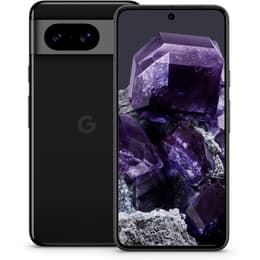

Galaxy A56 Vs Google Pixel 8

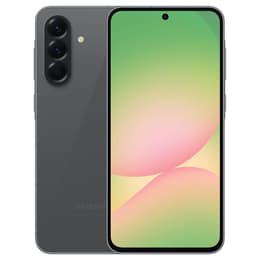
Galaxy A56
Galaxy A56
Starting at

Refurbished price:£274.00

Versus £422.50 new

See options
Google Pixel 8
Google Pixel 8
Starting at

Refurbished price:£185.99

Versus £699.99 new

See options

Ratings

The Samsung Galaxy A56 (released March 2025) and the Google Pixel 8 (released October 2023) are both modern smartphones offering distinct experiences within the Android ecosystem. While the Galaxy A56 focuses on a larger display and robust battery life, the Pixel 8 emphasizes advanced computational photography and a streamlined software experience. Both devices run on the Android operating system, with Samsung's One UI overlay on the A56 and Google's clean Pixel UI on the Pixel 8.

Scores

Durability

When considering the long-term usability of these devices, their release timelines and software support policies are key differentiators.

  • Release Timeline: The Google Pixel 8, launched in October 2023, is approximately one and a half years older than the Samsung Galaxy A56, which was released in March 2025. This difference impacts their respective software support windows.
  • Software Longevity: Google has committed to an extensive seven years of full software updates for the Pixel 8, encompassing OS upgrades, security patches, and feature drops. The Galaxy A56, on the other hand, is slated to receive six Android OS upgrades and six years of security updates, with support projected to end in 2031. This means the Pixel 8 offers a longer period of guaranteed software support.
  • Durability and Repairability: Both devices feature glass front and back panels with aluminum frames. The Pixel 8 uses Corning Gorilla Glass Victus, while the Galaxy A56 features the slightly newer Gorilla Glass Victus+ for enhanced protection. The Pixel 8 boasts an IP68 rating for dust and water resistance, offering protection in up to 1.5 meters of water for 30 minutes, whereas the Galaxy A56 has an IP67 rating, protecting against immersion in up to 1 meter of water for 30 minutes.

Year of Release

2025

2023

Compatible with latest Update

Yes

Yes

OS

Android

Android

Foldable

No

No

Performance

The performance of a smartphone is crucial for daily tasks, from app navigation to demanding applications and gaming. Both the Galaxy A56 and Pixel 8 offer capable performance, though with different underlying architectures.

  • Processor Capabilities: The Google Pixel 8 is powered by a current-generation processor designed by Google, which focuses on integrating artificial intelligence and machine learning for enhanced features and overall system fluidity. The Galaxy A56 utilizes a Samsung-developed processor, providing smooth performance for everyday use and multitasking.
  • Real-world Responsiveness: Users generally report that the Pixel 8 offers a very smooth and responsive user interface, with quick app loading and efficient multitasking. The Galaxy A56 also delivers a fluid experience, with some speed tests indicating it can be slightly quicker in opening certain applications.
  • Battery Behavior: The Galaxy A56 is equipped with a larger 5000mAh battery, often resulting in extended usage times, with some users reporting nearly two days of power on a single charge with mixed use. The Pixel 8 features a 4575mAh battery, and while smaller, its adaptive battery management and efficient software contribute to reliable all-day power for most users.

Memory (GB)

8 GB

8 GB

Screen quality

The display is a primary interface for smartphone interaction, and both devices offer vibrant and clear viewing experiences with some key distinctions.

  • Display Technology and Size: The Samsung Galaxy A56 features a larger 6.7-inch Super AMOLED display, providing expansive screen real estate. The Google Pixel 8 has a more compact 6.2-inch OLED display. Both technologies offer deep blacks and vibrant colors.
  • Resolution and Clarity: Both phones offer Full HD+ resolutions, with the Pixel 8 having a slightly higher pixel density of 428 PPI compared to the Galaxy A56's 385 PPI, resulting in marginally sharper text and images on the Pixel 8's smaller screen.
  • Brightness and Refresh Rate: Both devices feature a 120Hz refresh rate for smooth scrolling and animations. The Pixel 8 can reach a peak brightness of 2000 nits, making it highly visible in bright outdoor conditions, while the Galaxy A56 offers a peak brightness of 1900 nits, which is also very bright and suitable for outdoor use.

Resolution

1080 x 2340

1080 x 2400

Screen type

Super AMOLED

OLED

Audiovisual

Camera performance is a significant factor for many users, and both the Galaxy A56 and Pixel 8 offer capable camera systems with different strengths.

  • Rear Camera Systems: The Google Pixel 8 features a dual-camera setup with a 50MP main sensor and a 12MP ultrawide lens, known for its advanced computational photography that enhances image quality, especially in challenging conditions. The Samsung Galaxy A56 comes with a triple-camera array, including a 50MP main sensor with optical image stabilization (OIS), a 12MP ultrawide, and a 5MP macro lens, offering versatility for different types of shots.
  • Photography Performance: The Pixel 8 is widely praised for its ability to produce sharp images with accurate colors and excellent low-light performance, largely due to its software processing. The Galaxy A56 provides good image quality in well-lit conditions, with its OIS contributing to stable shots.
  • Video Recording and Audio: The Pixel 8 supports 4K video recording at up to 60 frames per second, along with advanced stabilization features. The Galaxy A56 records 4K video at 30 frames per second. Both phones offer stereo speakers, with the Galaxy A56 providing louder, Dolby Atmos-enhanced sound, while the Pixel 8 offers a more balanced audio profile.

Main camera

4K@30fps

50 megapixels

Front camera

13 megapixels

10.5 megapixels

Miscellaneous

Beyond core features, several practical elements contribute to the overall user experience and daily convenience.

  • Connectivity and Ports: Both devices support 5G connectivity and Wi-Fi 6 for fast wireless internet. The Pixel 8 features a USB Type-C 3.2 port, offering faster data transfer speeds, while the Galaxy A56 uses a USB Type-C 2.0 port. Neither phone includes a traditional 3.5mm headphone jack.
  • Biometrics and Sensors: Both smartphones incorporate an optical in-display fingerprint sensor for secure unlocking. The Pixel 8 also offers advanced facial recognition.
  • Design and Handling: The Galaxy A56 is a larger device, measuring 162.2 x 77.5 x 7.4 mm and weighing 198 grams, which may appeal to users who prefer a more expansive screen. The Pixel 8 is more compact and lighter at 150.5 x 70.8 x 8.9 mm and 187 grams, making it easier for one-handed use. Both phones feature a premium build with glass backs and aluminum frames.

Weight

197 g

187 g

Screen size (in)

6.5

6.2

Mobile network

5G

5G

SIM card

Dual Physical SIM + eSIM

Physical SIM + eSIM

Carrier compatibility

Unlocked

Unlocked

The choice between the Samsung Galaxy A56 and the Google Pixel 8 largely depends on individual priorities and usage patterns. User sentiment indicates that the Pixel 8 is highly regarded for its exceptional camera capabilities, particularly its computational photography and AI-driven features, which consistently produce high-quality images. Its clean Android experience and the promise of seven years of software updates are also frequently praised, appealing to users who prioritize long-term software support and a streamlined interface. However, some users have noted potential issues with modem performance, fingerprint sensor consistency, and occasional overheating.

Conversely, the Galaxy A56 receives positive feedback for its impressive battery life, often lasting up to two days with moderate use, and its vibrant, larger Super AMOLED display, making it suitable for media consumption. Its stereo speakers with Dolby Atmos are also a highlight for audio enthusiasts. While its camera system is capable, it generally relies more on hardware than the Pixel's software-driven approach. Some users find its performance for everyday tasks to be very smooth, with some even noting faster app opening speeds in certain scenarios.

Users prioritizing a compact device with a class-leading camera and the longest possible software support will find the Google Pixel 8 well-suited to their needs. Those who value a larger, immersive display, extended battery life, and robust audio for media consumption may lean toward the Samsung Galaxy A56. Both devices represent quality-assured options, and considering refurbished models can provide an eco-friendly alternative for either choice.


See all articles

Our recent comparisons