
Compare models
Galaxy A53 5G Vs Galaxy S20 5G
- 1-year minimum warranty
- Free delivery on all items
- Free 30-day returns
Differences at a glance
The Samsung Galaxy A53 5G, released in March 2022, and the Samsung Galaxy S20 5G, launched in February 2020, represent different segments of Samsung's smartphone lineup. While both devices offer 5G connectivity and a smooth Android experience, the Galaxy S20 5G was a flagship model in its time, emphasizing high-end performance and camera capabilities, whereas the Galaxy A53 5G is a more recent mid-range offering focusing on extended software support and battery longevity. These differences translate into distinct user experiences, particularly concerning processing power, display resolution, and camera versatility.
Available Models
Colour
Storage (GB)
Scores
Durability
The expected practical lifespan of a smartphone is significantly influenced by its release timeline and the manufacturer's commitment to software updates.
- Release Timeline and OS Support: The Galaxy A53 5G, being a newer device released in March 2022, benefits from Samsung's updated software policy, promising four generations of Android OS upgrades (up to Android 16) and five years of security updates, extending its support until 2027. The Galaxy S20 5G, launched in February 2020, typically received three major Android OS updates, concluding its major OS support around Android 13 (One UI 5.1).
- Repairability: The Galaxy A53 5G is considered relatively repairable, with a score of 6.75 out of 10, though it requires tools like a heat gun to access internal components due to adhesive. The Galaxy S20 series, including the S20 5G, generally received lower repairability scores, with some variants scoring as low as 3 out of 10, primarily due to strong adhesives and the difficulty of screen replacement.
- Software Longevity: Users prioritizing the longest possible software support and security patches will find the Galaxy A53 5G offers a more extended official update timeline, ensuring access to newer Android features and continued security for a longer duration.
Year of Release
2022
2020
Compatible with latest Update
Yes
No
OS
Android
Android
Foldable
No
No
Performance
Performance in daily use, from app responsiveness to multitasking, is shaped by a device's internal components and optimization.
- Processor Capabilities: The Galaxy S20 5G features a processor that was a flagship-tier component at its release, providing robust performance for demanding applications and graphically intensive games. The Galaxy A53 5G is equipped with a mid-range processor, which handles everyday tasks smoothly and offers decent performance for most mobile games, though it may not match the raw power of the S20 5G for very heavy workloads.
- Storage and RAM: Both devices offer 128 GB and 256 GB storage options, with expandable storage via microSD cards. The Galaxy S20 5G typically comes with 12 GB of RAM, providing ample capacity for extensive multitasking, while the Galaxy A53 5G offers 6 GB or 8 GB of RAM, which is sufficient for most users' multitasking needs.
- Battery Behavior: The Galaxy A53 5G includes a larger 5000 mAh battery, and users frequently report excellent battery life, often extending to two days with moderate usage. The Galaxy S20 5G has a 4000 mAh battery, which provides a full day of use for many, but may require more frequent charging for heavy users.
Screen quality
The visual experience is a primary consideration for many users, and both devices offer high-quality displays with distinct characteristics.
- Display Technology and Resolution: Both the Galaxy A53 5G and Galaxy S20 5G feature Super AMOLED displays, known for vibrant colors and deep blacks. The Galaxy S20 5G boasts a higher WQHD+ resolution (1440 x 3200 pixels) on its 6.2-inch screen, resulting in a sharper image with a higher pixel density. The Galaxy A53 5G has a 6.5-inch display with FHD+ resolution (1080 x 2400 pixels), which still provides clear and detailed visuals for most content.
- Brightness and Refresh Rate: Both phones offer a 120Hz refresh rate, contributing to smooth scrolling and fluid animations. The Galaxy S20 5G can reach a peak brightness of 1200 nits, enhancing visibility in bright outdoor conditions, while the Galaxy A53 5G offers 800 nits HBM (High Brightness Mode), which is also suitable for outdoor use.
- Viewing Experience: The Galaxy S20 5G's higher resolution and peak brightness provide a slightly more refined and immersive viewing experience, particularly for high-resolution media. The Galaxy A53 5G's larger screen offers more expansive viewing, and its 120Hz refresh rate ensures a responsive feel.
Resolution
1080 x 2400
1440 x 3200
Screen type
Super AMOLED
Dynamic AMOLED 2X
Audiovisual
The camera systems on these devices cater to different photographic priorities, offering varied capabilities for capturing images and videos.
- Rear Camera Systems: The Galaxy A53 5G features a quad-camera setup with a 64 MP main sensor (with OIS), a 12 MP ultrawide, a 5 MP macro, and a 5 MP depth sensor. The Galaxy S20 5G has a triple-camera system, including a 12 MP main sensor (with OIS and larger pixels for better light capture), a 64 MP telephoto lens offering 3x optical zoom, and a 12 MP ultrawide lens.
- Photography Performance: The Galaxy S20 5G excels with its dedicated telephoto lens for optical zoom and its main sensor's ability to capture more light, which can be beneficial in various conditions. The Galaxy A53 5G provides versatile photography with its high-megapixel main sensor and ultrawide, performing well in good lighting, and includes a night mode.
- Video Recording and Front Camera: Both devices are capable of recording 4K video at 30fps, with the S20 5G also supporting 8K video at 24fps and 4K at 60fps. The Galaxy A53 5G has a 32 MP front camera, while the Galaxy S20 5G has a 10 MP front camera, both capable of capturing detailed selfies and supporting video calls.
Main camera
64 megapixels
12 megapixels
Front camera
32 megapixels
10 megapixels
Miscellaneous
Beyond core performance and display, several practical elements contribute to the overall user experience and device utility.
- Connectivity and Ports: Both smartphones support 5G connectivity, enabling faster mobile data speeds. They both feature USB Type-C ports for charging and data transfer, but neither includes a traditional 3.5mm headphone jack. The Galaxy S20 5G supports Wi-Fi 6, while the Galaxy A53 5G supports Wi-Fi 5.
- Sensors and Biometrics: Both devices incorporate in-display fingerprint sensors for secure unlocking. The Galaxy S20 5G uses an ultrasonic sensor, while the Galaxy A53 5G uses an optical sensor. Both also include essential sensors like accelerometers, gyroscopes, and compasses.
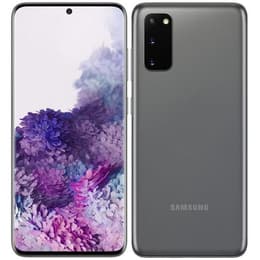
- Build and Handling: The Galaxy S20 5G features a more premium construction with a glass front and back, and an aluminum frame, offering IP68 dust and water resistance. The Galaxy A53 5G has a plastic back with a matte finish and is rated IP67 for dust and water resistance. The S20 5G is slightly more compact and lighter at 163 grams compared to the A53 5G's 189 grams.
Weight
189 g
163 g
Screen size (in)
6.5
6.2
Mobile network
5G
5G
SIM card
Dual Physical SIM
Physical SIM + eSIM
Carrier compatibility
Unlocked
Unlocked
What the community thinks
The Samsung Galaxy A53 5G and Galaxy S20 5G offer distinct advantages tailored to different user needs. Users often praise the Galaxy A53 5G for its exceptional battery life, with many reporting it can comfortably last two days on a single charge. Its extended software support policy is also a significant draw, ensuring the device remains current with Android updates and security patches for a longer period. However, some users have noted that its performance, while sufficient for daily tasks, can feel less responsive under heavy loads compared to higher-end devices.
Conversely, the Galaxy S20 5G is frequently lauded for its powerful performance, which remains capable of handling demanding applications and games smoothly, even years after its release. Its higher-resolution display and versatile camera system, particularly the dedicated telephoto lens, are also common points of praise. Criticisms sometimes revolve around its battery life, which, while adequate, is not as long-lasting as the A53 5G, and its shorter software update cycle compared to newer models.
Users prioritizing long-term software support, superior battery endurance, and a slightly larger screen for media consumption may find the Galaxy A53 5G well-suited to their needs. This device is a practical choice for those seeking a reliable daily driver with a focus on longevity and sustained performance for typical usage. On the other hand, users who value a more premium build, higher display resolution, a more powerful processor for intensive tasks, and a dedicated optical zoom camera will likely lean towards the Galaxy S20 5G. This device caters to individuals who prioritize high-end performance and advanced photographic capabilities. Both models are available as quality-assured refurbished options, providing an eco-friendly alternative for consumers.