
Galaxy A53 5G Vs Galaxy S10+

Galaxy A53 5G
Galaxy A53 5G
Starting at

Refurbished price:£109.00

Versus £459.00 new

See options
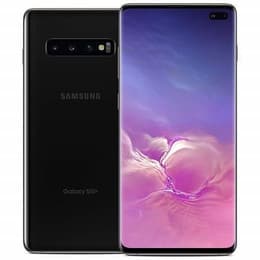
Galaxy S10+
Galaxy S10+
Starting at

Refurbished price:£115.32

Versus £330.00 new

See options

Ratings

The Samsung Galaxy A53 5G, released in March 2022, and the Samsung Galaxy S10 Plus, launched in March 2019, represent different segments and generations within Samsung's smartphone lineup. While the A53 5G is a more recent mid-range offering with a focus on extended software support and 5G connectivity, the S10 Plus was a flagship device in its time, known for its premium build and advanced features. Both devices run on Samsung's One UI atop the Android operating system, though their update timelines differ significantly.

Scores

Durability

When considering the practical lifespan of these devices, their release timelines and software support policies are key differentiators.

  • Release Timeline: The Galaxy A53 5G is a newer device, released in March 2022, while the Galaxy S10 Plus launched significantly earlier in March 2019. This age difference directly impacts their remaining software support and overall longevity.
  • Software Longevity: The Galaxy A53 5G benefits from Samsung's commitment to four generations of Android OS upgrades and five years of security updates, meaning it is expected to receive updates up to Android 16 and security patches until 2027. In contrast, the Galaxy S10 Plus received three major OS updates (up to Android 12) and its security updates concluded in March 2023.
  • Repairability and Build: The Galaxy A53 5G features a plastic back and frame with Gorilla Glass 5 on the front, and an IP67 rating for dust and water resistance. It has a repairability score of 6.75 out of 10, indicating it is relatively repairable. The Galaxy S10 Plus boasts a more premium construction with Gorilla Glass 6 on the front and Gorilla Glass 5 on the back, encased in an aluminum frame, and carries an IP68 rating for dust and water resistance. However, its repairability score is lower at 3 out of 10, suggesting more difficulty in repairs.

Year of Release

2022

2019

Compatible with latest Update

Yes

No

OS

Android

Android

Foldable

No

No

Performance

The performance of these two smartphones reflects their original market positioning and the advancements in mobile technology over time.

  • Processing Power: The Galaxy A53 5G is equipped with a processor designed for efficient mid-range performance, capable of handling everyday applications and multitasking smoothly. The Galaxy S10 Plus, as a former flagship, features a powerful processor that delivered high-end performance for its era, excelling in demanding applications and gaming.
  • Multitasking and Storage: Both devices offer various storage configurations, with the Galaxy A53 5G typically available with 6GB or 8GB of RAM and 128GB or 256GB of internal storage, expandable via microSD. The Galaxy S10 Plus offered more generous options, including 8GB or 12GB of RAM and up to 1TB of internal storage, also with microSD expansion.
  • Battery Behavior: The Galaxy A53 5G houses a larger 5000 mAh battery, which generally provides over a day of use for many users, even with moderate to heavy usage. The Galaxy S10 Plus has a 4100 mAh battery, which was considered strong for its time, often lasting a full day of use, though heavy users might find it needing a charge by evening.

Memory (GB)

4 GB

8 GB

Screen quality

Both devices feature vibrant AMOLED displays, but there are notable differences in their specifications and viewing experiences.

  • Display Technology and Clarity: The Galaxy A53 5G features a 6.5-inch Super AMOLED display with a resolution of 1080 x 2400 pixels, offering clear visuals and vibrant colors. The Galaxy S10 Plus comes with a 6.4-inch Dynamic AMOLED 2X display, providing a higher resolution of 1440 x 3040 pixels, resulting in a sharper image with greater detail.
  • Refresh Rate and Smoothness: A key difference is the refresh rate; the A53 5G offers a 120Hz refresh rate, contributing to smoother scrolling and a more fluid user experience. The S10 Plus has a standard 60Hz refresh rate, which is still smooth for general use but does not offer the same level of fluidity as the A53 5G.
  • Brightness and Outdoor Visibility: The A53 5G's display can reach a peak brightness of 800 nits in high brightness mode, making it suitable for outdoor viewing. The S10 Plus also offers excellent brightness and outdoor visibility, characteristic of Samsung's flagship AMOLED panels.

Resolution

1080 x 2400

1440 x 3040

Screen type

Super AMOLED

Dynamic AMOLED

Audiovisual

The camera systems on both smartphones offer distinct capabilities for capturing photos and videos.

  • Rear Camera Systems: The Galaxy A53 5G features a quad-camera setup with a 64 MP main sensor with optical image stabilization (OIS), a 12 MP ultrawide lens, and dedicated 5 MP macro and depth sensors. The Galaxy S10 Plus has a triple-camera system, including a 12 MP main sensor with OIS and a variable aperture, a 12 MP telephoto lens with OIS and 2x optical zoom, and a 16 MP ultrawide lens.
  • Photography Performance: The A53 5G's higher megapixel main sensor can capture detailed images in good lighting, and its ultrawide lens provides a broad field of view. The S10 Plus, with its telephoto lens, offers optical zoom capabilities, which is beneficial for capturing distant subjects without significant loss of quality. Its main camera, with variable aperture, adapts well to different lighting conditions.
  • Video Recording and Front Camera: Both devices are capable of recording 4K video. The A53 5G has a 32 MP front camera, suitable for high-resolution selfies and video calls. The S10 Plus features a dual front camera setup with a 10 MP main sensor and an 8 MP depth sensor, which assists in producing more natural-looking portrait mode selfies.

Main camera

64 megapixels

12 megapixels

Front camera

32 megapixels

10 megapixels

Miscellaneous

Beyond the core features, several other elements contribute to the overall user experience of these devices.

  • Connectivity and Ports: The Galaxy A53 5G supports 5G connectivity, offering faster mobile data speeds where available, along with Wi-Fi 5 and Bluetooth 5.1. It features a USB-C 2.0 port but lacks a 3.5mm headphone jack. The Galaxy S10 Plus supports 4G LTE, Wi-Fi 6, and Bluetooth 5.0. It includes a USB-C 3.1 port and retains the 3.5mm headphone jack.
  • Biometric Security: Both phones incorporate under-display fingerprint sensors for secure unlocking. The A53 5G uses an optical sensor, while the S10 Plus features an ultrasonic sensor.
  • Design and Handling: The A53 5G has dimensions of 159.6 x 74.8 x 8.1 mm and weighs 189g, with a design that includes a plastic back and frame. The S10 Plus is slightly more compact at 157.6 x 74.1 x 7.8 mm and weighs 175g, featuring a more premium glass back and aluminum frame.

Weight

189 g

175 g

Screen size (in)

6.5

6.4

Mobile network

5G

4G

SIM card

Dual Physical SIM

Dual Physical SIM

Carrier compatibility

Unlocked

Unlocked

User sentiment for the Galaxy A53 5G often praises its vibrant 120Hz AMOLED display, long-lasting battery, and Samsung's commitment to extended software updates. Some common criticisms include its processing performance, which some users find less snappy compared to competitors, and the absence of a 3.5mm headphone jack and a charger in the box. The Galaxy S10 Plus, despite its age, is still lauded by users for its premium build quality, excellent display resolution, and the inclusion of a headphone jack. However, its main drawbacks in current times are the end of software support and potentially diminished battery health on older units.

Users prioritizing long-term software support, 5G connectivity, and a high refresh rate display may find the Galaxy A53 5G well-suited to their needs. It offers a reliable experience for everyday tasks and media consumption. Conversely, users who value a higher-resolution display, a more premium build, and the convenience of a 3.5mm headphone jack might lean toward the Galaxy S10 Plus, understanding that its software support has concluded. For those seeking a quality-assured refurbished option, both models can provide a practical and sustainable choice depending on individual priorities.


See all articles

Our recent comparisons