
Compare models
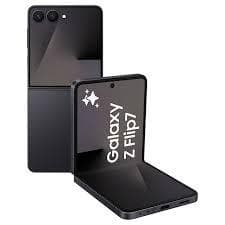
Galaxy A36 Vs Galaxy Z Flip7
- 1-year minimum warranty
- Free delivery on all items
- Free 30-day returns
Differences at a glance
The Samsung Galaxy A36 (2025) and the Samsung Galaxy Z Flip7 (2025) represent two entirely distinct approaches to modern smartphone engineering within the same brand ecosystem. While the Galaxy A36 follows a traditional, sturdy slate form factor focused on everyday reliability, the Galaxy Z Flip7 introduces an innovative clamshell foldable design equipped with a flexible inner display and a larger outer cover screen. Both devices run on Android with Samsung's customized interface, yet they cater to radically different user preferences through their physical construction and daily utility.
Available Models
Colour
Storage (GB)
Scores
Durability
Built with different hardware configurations and physical architectures, both smartphones offer long-term software support, though their structural durability varies due to their respective designs.
- Software longevity: Both devices benefit from multi-year operating system and security update commitments from Samsung, ensuring they remain secure and current for years of regular use.
- Structural resilience: The Galaxy A36 utilizes a traditional slab body with reinforced glass and standard dust and water resistance, whereas the Galaxy Z Flip7 features a complex mechanical hinge and a flexible inner screen that requires careful handling against sharp impacts.
- Expected lifespan: Users who prioritize straightforward mechanical simplicity will find the slate build straightforward to maintain, while foldable users benefit from robust software support paired with modern folding innovations.
Year of Release
2025
2025
OS
Android
Android
Foldable
No
Yes
Performance
Performance capabilities differ significantly between the two models, influencing how smoothly they handle multitasking, demanding applications, and daily power management.
- System responsiveness: The Galaxy Z Flip7 features high-tier internal components paired with generous RAM capacity, allowing intensive applications, multitasking, and gaming to run with maximum fluidity.
- Everyday multitasking: The Galaxy A36 handles daily tasks, web browsing, and social media smoothly with its capable mid-range processor, though heavy gaming may require moderate graphic adjustments.
- Battery behavior: The Galaxy A36 includes a larger battery capacity designed to comfortably span a full day of mixed tasks, while the Galaxy Z Flip7 balances a compact folding footprint with efficient power management for daily usage.
Screen quality
Display technology is a primary differentiator, contrasting a traditional expansive flat panel with an innovative foldable screen experience.
- Display technology: The Galaxy A36 features a flat, vibrant AMOLED panel with high brightness and sharp clarity, while the Galaxy Z Flip7 deploys a foldable AMOLED main screen alongside a functional outer cover display for quick notifications.
- Outdoor visibility: Both models achieve high peak brightness levels, ensuring clear legibility and contrast when used under direct sunlight.
- Visual smoothness: Both screens support high refresh rates, resulting in fluid scrolling through web pages, menus, and supported applications.
Resolution
1080 x 2340
1080x2520
Audiovisual
Imaging hardware and media playback setups vary, offering distinct capabilities for photography, video recording, and audio consumption.
- Camera versatility: The Galaxy Z Flip7 leverages high-resolution main sensors and advanced image processing for detailed low-light shots and flexible angles enabled by its folding frame, while the Galaxy A36 provides dependable main and ultra-wide lenses for everyday photography.
- Video and audio: Both devices record sharp high-resolution video with steady stabilization, and each includes stereo speaker setups that deliver clear sound for media playback and hands-free calls.
- Content consumption: The immersive display formats on both handsets provide engaging viewing experiences for streaming videos and browsing media.
Front camera
12
10 megapixels
Miscellaneous
Practical daily features, connectivity standards, and physical dimensions define how easily each device integrates into a traveler's or professional's routine.
- Connectivity: Both models support modern 5G networks, fast Wi-Fi standards, and Bluetooth connectivity for reliable peripheral pairing.
- Physical handling: The Galaxy A36 offers a traditional, lightweight slab footprint, whereas the Galaxy Z Flip7 folds in half to fit easily into smaller pockets and bags during travel.
- Biometrics: Both options incorporate secure authentication methods, including fast facial recognition and fingerprint scanners integrated either into the side power key or beneath the screen.
Weight
195 g
188 g
Screen size (in)
6,74
6.9
Mobile network
5G
5G
SIM card
Dual Physical SIM + eSIM
Physical SIM + eSIM
Carrier compatibility
Unlocked
Unlocked
Connector
USB-C
USB-C
What the community thinks
User discussions and community feedback highlight distinct preferences for each device based on everyday habits. Owners of the Galaxy A36 frequently praise its reliable battery performance, straightforward durability, and consistent everyday responsiveness. Conversely, users of the Galaxy Z Flip7 often emphasize appreciation for its compact pocket-friendly folded size, versatile flexible angles for photography, and distinct modern design. Common discussions occasionally note that foldable screens require more mindful handling over time compared to traditional glass slabs.
Users prioritizing a traditional, sturdy build with dependable battery life may prefer the Galaxy A36, while users looking for a pocket-friendly folding design and advanced multitasking capabilities will lean toward the Galaxy Z Flip7. For those exploring sustainable purchasing routes, choosing a quality-assured refurbished option provides an eco-friendly alternative that reduces electronic waste without compromising on performance standards. Ultimately, the choice depends entirely on whether a traditional slab format or a compact folding form factor best suits individual daily workflows.