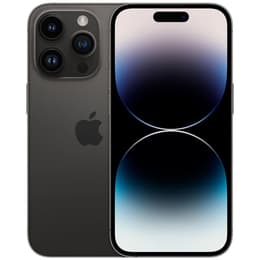

Galaxy A36 Vs iPhone 14 Pro

Galaxy A36
Galaxy A36
Starting at

Refurbished price:£206.00

Versus £369.00 new

See options
iPhone 14 Pro
iPhone 14 Pro
Starting at

Refurbished price:£304.00

Versus £1,099.00 new

See options

Ratings

The Samsung Galaxy A36, a smartphone released in March 2025, and the Apple iPhone 14 Pro, launched in September 2022, represent different segments and release cycles within the smartphone market. While both offer robust smartphone experiences, they cater to varying user priorities through their distinct operating systems and hardware philosophies. The Galaxy A36 operates on Android with Samsung's One UI, while the iPhone 14 Pro runs on Apple's iOS platform. Key differentiators include their display sizes, processing power, and camera systems.

Scores

Durability

When considering the long-term usability of these devices, their respective release timelines and software support policies are important factors.

  • Software Longevity: The Samsung Galaxy A36, released in March 2025, is guaranteed to receive six major Android OS upgrades and six years of security updates, extending its software support until at least March 2031 or 2032. The iPhone 14 Pro, launched in September 2022, typically receives 5-6 years of major iOS updates from its release date, suggesting support until around September 2027 or 2028.
  • Physical Durability: The Galaxy A36 features Corning Gorilla Glass Victus+ for screen protection and an IP67 rating for dust and water resistance. The iPhone 14 Pro is equipped with a Ceramic Shield front cover and boasts an IP68 rating, offering slightly enhanced water resistance.
  • Repairability: The Galaxy A36 has a repairability score of 8.4 out of 10, indicating a moderate ease of repair, though strong adhesives are used for some components. Information on the iPhone 14 Pro's repairability score is not explicitly detailed in the provided search results, but iPhones generally offer moderate repairability.

Year of Release

2025

2022

OS

Android

iOS

Foldable

No

No

Performance

The performance capabilities of these two smartphones are influenced by their internal components and software optimization, impacting how smoothly they handle various tasks.

  • Processing Power: The iPhone 14 Pro is powered by a high-performance processor designed for demanding applications and efficient multitasking, ensuring a responsive user experience across the iOS ecosystem. The Galaxy A36 features a current-generation mid-range processor, which provides smooth operation for everyday tasks and general usage.
  • Multitasking and Storage: The Galaxy A36 is available with 8GB or 12GB of RAM and offers 128GB or 256GB of internal storage, with the added flexibility of expandable storage via a microSD card. The iPhone 14 Pro comes with 6GB of RAM and offers a wider range of storage options from 128GB up to 1TB, though it does not support expandable storage.
  • Battery Behavior: The Galaxy A36 is equipped with a 5000 mAh battery, which typically provides a full day of use, and in some tests, can extend to nearly two days with moderate usage. The iPhone 14 Pro has a 3200 mAh battery, generally offering a full day of power for most users, though heavy usage or the always-on display feature can lead to more frequent charging.

Memory (GB)

6 GB

6 GB

Screen quality

The visual experience on both devices is shaped by their display technology, resolution, and brightness levels.

  • Display Technology and Size: The Galaxy A36 features a larger 6.7-inch Super AMOLED display, offering vibrant colors and deep blacks. The iPhone 14 Pro has a 6.1-inch Super Retina XDR OLED display, also known for its rich colors and contrast.
  • Resolution and Clarity: Both phones offer high-resolution displays, with the Galaxy A36 providing FHD+ (2340 x 1080p) and the iPhone 14 Pro featuring a 2556x1179 pixel resolution, resulting in sharp and clear visuals for text and images.
  • Brightness and Smoothness: The Galaxy A36's display reaches a peak brightness of 1200 nits (typical) or up to 1900 nits (some sources), with a 120Hz refresh rate for smooth scrolling. The iPhone 14 Pro's display offers a typical brightness of 1000 nits, peaking at 1600 nits for HDR content and up to 2000 nits outdoors, and features ProMotion technology for an adaptive refresh rate up to 120Hz.

Resolution

1080 x 2340

1179 x 2556

Audiovisual

The camera systems on both devices are designed to capture moments, but they approach photography and videography with different strengths.

  • Rear Camera Capabilities: The Galaxy A36 features a triple rear camera setup with a 50MP main sensor, an 8MP ultra-wide lens, and a 5MP macro lens, capable of 4K video recording at 30fps. The iPhone 14 Pro boasts a Pro camera system including a 48MP main sensor, a 12MP ultra-wide, and a 12MP telephoto lens, offering 6x optical zoom range and up to 15x digital zoom, with advanced computational photography features like Photonic Engine and Night mode.
  • Low-Light and Video Performance: The iPhone 14 Pro is noted for its strong low-light photography and video capabilities, with users reporting impressive results even in challenging conditions. The Galaxy A36's camera system is considered capable for everyday photography, with 4K video recording.
  • Front Camera and Audio: For selfies and video calls, the Galaxy A36 has a 12MP front camera with HDR video recording. The iPhone 14 Pro features a 12MP TrueDepth front camera with autofocus. Both devices include stereo speakers for media consumption.

Front camera

12

12 megapixels

Miscellaneous

Beyond core specifications, several practical elements contribute to the overall user experience and daily functionality of these smartphones.

  • Connectivity and Ports: Both the Galaxy A36 and iPhone 14 Pro support 5G connectivity, Wi-Fi 6, and Bluetooth 5.3 for modern wireless communication. The Galaxy A36 utilizes a USB Type-C port for charging and data transfer, while the iPhone 14 Pro features Apple's proprietary Lightning port.
  • Biometric Security: The Galaxy A36 incorporates an in-display optical fingerprint sensor for secure unlocking and authentication. The iPhone 14 Pro relies on Face ID, Apple's facial recognition system, for biometric security.
  • Design and Handling: The Galaxy A36 measures 162.90 x 78.20 x 7.40mm and weighs 195g, offering a comfortable in-hand feel. The iPhone 14 Pro is more compact at 147.5 x 71.5 x 7.85 mm and weighs 206g, with some users noting its weight. The iPhone 14 Pro also introduces the Dynamic Island, a dynamic area around the front camera that displays alerts and background activities.

Weight

195 g

206 g

Screen size (in)

6,74

6.1

Mobile network

5G

5G

SIM card

Dual Physical SIM + eSIM

Physical SIM + eSIM

Carrier compatibility

Unlocked

Unlocked

Connector

USB-C

Lightning

The Samsung Galaxy A36 and iPhone 14 Pro offer distinct smartphone experiences, each with its own set of advantages tailored to different user preferences. Users frequently praise the Galaxy A36 for its vibrant Super AMOLED display, extended software update policy, and robust battery life, making it a compelling option for those prioritizing multimedia consumption and long-term Android support. Some users, however, note that while capable, it may not offer significant advancements over its direct predecessor in certain areas.

The iPhone 14 Pro is often lauded for its powerful performance, advanced camera system with strong low-light capabilities, and the innovative Dynamic Island feature. Common feedback includes observations about its weight and the camera's behavior in specific scenarios, such as close-up focusing or potential overheating during intensive RAW photo or video sessions.

Users prioritizing a larger display, extensive battery life, expandable storage, and a longer software support commitment within the Android ecosystem may find the Galaxy A36 well-suited to their needs. Conversely, individuals who value a more compact device, a highly optimized flagship-level performance, a sophisticated camera system with a dedicated telephoto lens, and the iOS ecosystem will likely lean towards the iPhone 14 Pro. Both devices are available as quality-assured refurbished options, providing an eco-friendly alternative for consumers.


See all articles

Our recent comparisons