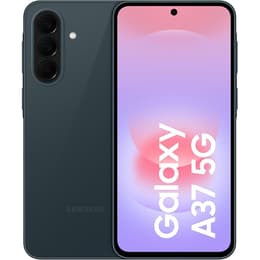

Compare models
Galaxy A36 Vs Galaxy A37
- 1-year minimum warranty
- Free delivery on all items
- Free 30-day returns
Differences at a glance
The Samsung Galaxy A36 (2025) and the Samsung Galaxy A37 (2026) represent successive generations of Samsung's popular mid-range smartphone series. While both devices share a similar physical footprint and core design language, the newer model introduces an updated processor and a newer operating system version out of the box. Understanding how these incremental updates influence everyday functionality helps buyers determine which iteration aligns best with their specific usage needs.
Available Models
Colour
Storage (GB)
Scores
Durability
When evaluating the long-term viability of these two devices, release timelines and software update commitments play a central role in shaping their expected practical lifespans.
- Release Timeline and Software Support: The Galaxy A36 launched in early 2025 running Android, whereas the Galaxy A37 arrived in early 2026 with a subsequent Android iteration pre-installed. Both models benefit from extended software support timelines covering multiple years of operating system upgrades and security patches, though the newer model naturally extends update relevance by one additional year.
- Build Integrity and Repairability: Both smartphones feature sealed glass-and-plastic construction with dust and water resistance ratings designed to withstand daily environmental exposure. Maintenance and part replacements follow standardized mid-range repair guidelines, meaning both units offer predictable long-term durability when handled with standard care.
Year of Release
2025
2026
OS
Android
Android
Foldable
No
No
Performance
Day-to-day responsiveness and multitasking efficiency differ slightly between the two devices due to internal processor variations and memory configuration options.
- Processing Capabilities: The Galaxy A36 handles routine applications, web browsing, and casual gaming smoothly using its efficient mid-range processor. The Galaxy A37 incorporates a slightly revised processor architecture that yields minor improvements in sustained thermal management and app launch speeds during demanding multi-app workflows.
- Memory and Storage Configurations: Both devices offer identical tiers of internal storage and multiple RAM variants, supporting seamless switching between background tasks and media streaming without noticeable stuttering.
- Battery Endurance: Each smartphone packs a 5000 mAh battery paired with fast-charging capabilities, easily lasting through a full day of mixed usage encompassing messaging, navigation, and video playback.
Screen quality
Visual immersion and panel characteristics remain largely consistent, offering bright and crisp viewing experiences for media consumption and daily navigation.
- Display Technology: Both models utilize large Super AMOLED panels spanning 6.7 inches with high definition resolution, delivering deep contrast levels and saturated color reproduction.
- Refresh Rate and Fluidity: A smooth 120 Hz refresh rate is standard across both generations, ensuring fluid scrolling through social media feeds, web pages, and user interface menus.
- Outdoor Legibility: The newer Galaxy A37 introduces a higher peak brightness rating, which assists with screen readability under direct sunlight compared to its predecessor.
Resolution
1080 x 2340
1080x2340
Audiovisual
Multimedial capabilities and capture hardware provide reliable photography options for everyday documentation and video calls.
- Camera Array: Both phones feature versatile triple-lens rear systems anchored by a 50-megapixel main sensor equipped with optical image stabilization, accompanied by ultra-wide and macro options for varied perspectives.
- Low-Light and Video Performance: The Galaxy A37 benefits from a revised primary sensor iteration that marginally improves light gathering and edge sharpness in dim environments. Both devices record stable video at high resolutions suitable for casual sharing.
- Audio Output: Stereo speaker setups on both models deliver clear sound output for hands-free calling, podcast listening, and video playback without requiring external speakers.
Miscellaneous
Practical physical traits and connectivity standards determine how comfortably each device integrates into daily travel and accessory ecosystems.
- Connectivity and Ports: Both models support modern 5G networks, stable Wi-Fi standards, and Bluetooth pairing, utilizing USB-C ports for charging and data transfer.
- Physical Dimensions and Handling: Sharing nearly identical height, width, and weight measurements around 195 grams, both handsets offer balanced ergonomics that fit comfortably in standard pockets and bags.
- Security Sensors: Responsive optical in-display fingerprint sensors and facial recognition capabilities are standard on both units for secure unlocking.
Weight
195 g
196 g
Screen size (in)
6,74
6.7
Mobile network
5G
5G
SIM card
Dual Physical SIM + eSIM
Carrier compatibility
Unlocked
Unlocked
What the community thinks
User discussions across community forums often highlight the consistent battery endurance, smooth high-refresh-rate displays, and reliable build quality found in both generations. Common points of discussion center on the omission of expandable storage slots in both models, requiring buyers to select their internal storage capacity carefully at the time of acquisition. Overall sentiment notes that while the design evolution is minimal, internal refinements provide subtle efficiency gains for daily tasks.
Users prioritizing extended software longevity and slightly brighter outdoor screen performance may lean toward the newer Galaxy A37. Conversely, users who find a quality-assured refurbished option of the Galaxy A36 will secure a similarly capable device that handles daily communication, media consumption, and multitasking with ease. Evaluating individual preferences for software lifecycles helps guide an optimal, sustainable choice.