Galaxy S21 Ultra 5G Vs iPhone 11 Pro

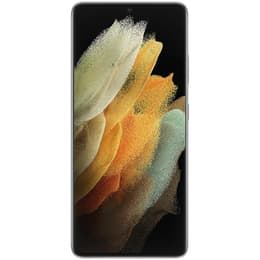
Galaxy S21 Ultra 5G
Galaxy S21 Ultra 5G
Starting at

Refurbished price:£186.00

Versus £1,800.00 new

See options
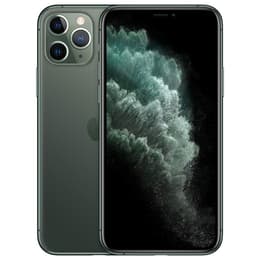
iPhone 11 Pro
iPhone 11 Pro
Starting at

Refurbished price:£151.00

Versus £639.00 new

See options

Ratings

The Samsung Galaxy S21 Ultra 5G, released in January 2021, and the iPhone 11 Pro, launched in September 2019, represent flagship smartphones from their respective manufacturers. While both devices offer premium experiences, the Galaxy S21 Ultra 5G arrived with a focus on advanced camera capabilities and a larger display, running on Android. The iPhone 11 Pro, operating on iOS, emphasized a refined user experience and a powerful, integrated camera system. These differences cater to distinct user preferences in terms of ecosystem and hardware priorities.

Scores

Durability

Evaluating the practical lifespan of these devices involves considering their release timelines, software support, and physical resilience.

  • Release Timeline: The iPhone 11 Pro was released in September 2019, making it an older device compared to the Galaxy S21 Ultra 5G, which launched in January 2021. This difference in release date impacts the remaining period of official software support.
  • OS Support Duration: Apple typically provides iOS updates for 5-6 years from a device's release, suggesting the iPhone 11 Pro will receive updates for a shorter period than the Galaxy S21 Ultra 5G. Samsung generally offers 4-5 years of Android OS updates and security patches for its flagship devices.
  • Physical Durability: Both devices feature robust builds with glass fronts and backs and are rated for IP68 water and dust resistance, indicating they can withstand submersion in water up to 4 meters for 30 minutes. The Galaxy S21 Ultra 5G utilizes Gorilla Glass Victus for enhanced scratch and drop protection.

Year of Release

2021

2019

Compatible with latest Update

Yes

Yes

OS

Android

iOS

Foldable

No

No

Performance

Performance is a key differentiator, influencing how smoothly applications run and how efficiently the devices handle demanding tasks.

  • System Responsiveness: The Galaxy S21 Ultra 5G features a newer generation processor, which translates to faster app loading times and smoother multitasking. Users generally report a fluid experience even with intensive applications and gaming. The iPhone 11 Pro, while still capable, relies on an older processor, which may show slight differences in speed when handling the most current and demanding software.
  • Battery Behavior: The Galaxy S21 Ultra 5G is equipped with a larger battery capacity, often translating to extended usage times for many users, potentially lasting through a full day of heavy use. The iPhone 11 Pro has a smaller battery, which may require more frequent charging for users with high usage patterns.
  • Storage Options: Both devices offer various internal storage configurations. The Galaxy S21 Ultra 5G provides options up to 512GB, with higher RAM configurations available for the larger storage models. The iPhone 11 Pro also offers up to 512GB of storage, but with a consistent RAM across all storage variants.

Memory (GB)

12 GB

4 GB

Screen quality

The visual experience is significantly shaped by the display technology and specifications of each smartphone.

  • Display Technology and Size: The Galaxy S21 Ultra 5G boasts a larger 6.8-inch Dynamic AMOLED 2X display, offering vibrant colors and deep blacks. The iPhone 11 Pro features a 5.8-inch Super Retina XDR OLED display, also known for its color accuracy and contrast.
  • Resolution and Refresh Rate: The Galaxy S21 Ultra 5G provides a higher resolution of 3200 x 1440 pixels and an adaptive refresh rate of up to 120Hz, contributing to smoother scrolling and more detailed visuals. The iPhone 11 Pro has a resolution of 2436 x 1125 pixels and a standard 60Hz refresh rate.
  • Brightness Levels: Both displays offer high peak brightness for HDR content, with the Galaxy S21 Ultra 5G reaching up to 1500 nits and the iPhone 11 Pro up to 1200 nits, ensuring good visibility in various lighting conditions.

Resolution

1440 x 3200

1125 x 2436

Screen type

Dynamic AMOLED 2X

Super Retina XDR OLED

Audiovisual

Both devices offer advanced camera systems, but with different approaches to photography and videography.

  • Camera System Configuration: The Galaxy S21 Ultra 5G features a versatile quad-camera setup, including a 108MP main sensor, an ultrawide lens, and two telephoto lenses (3x and 10x optical zoom), providing extensive zoom capabilities. The iPhone 11 Pro has a triple 12MP camera system, comprising wide, ultrawide, and telephoto lenses (2x optical zoom), known for its consistent image processing across lenses.
  • Photography Performance: The Galaxy S21 Ultra 5G excels in capturing highly detailed images, especially with its 108MP sensor, and offers advanced features like 100x Space Zoom and improved low-light performance with AI processing. The iPhone 11 Pro introduced Night Mode for improved low-light photography and Deep Fusion for enhanced texture and detail in various lighting conditions.
  • Video Recording Capabilities: The Galaxy S21 Ultra 5G supports 8K video recording and 4K video recording at 60 frames per second across all its cameras. The iPhone 11 Pro records 4K video at up to 60 frames per second and offers cinematic video stabilization.

Main camera

108 megapixels

12 megapixels

Front camera

40 megapixels

12 megapixels

Miscellaneous

Beyond core features, several practical elements contribute to the overall user experience.

  • Connectivity Options: The Galaxy S21 Ultra 5G supports 5G connectivity and Wi-Fi 6E, offering faster mobile and wireless internet speeds. The iPhone 11 Pro supports 4G LTE and Wi-Fi 6, but lacks 5G capabilities.
  • Port Types and Biometrics: The Galaxy S21 Ultra 5G uses a USB-C port for charging and data transfer and features an ultrasonic in-display fingerprint sensor. The iPhone 11 Pro utilizes Apple's proprietary Lightning port and relies on Face ID for biometric authentication.
  • Physical Characteristics: The Galaxy S21 Ultra 5G is a larger and heavier device, measuring 165.1 x 75.6 x 8.9 mm and weighing 227-229 grams. The iPhone 11 Pro is more compact and lighter at 144 x 71.4 x 8.1 mm and 188 grams, making it easier for one-handed use for some users.

Weight

227 g

188 g

Screen size (in)

6.8

5.8

Mobile network

5G

4G

SIM card

Dual Physical SIM + eSIM

Physical SIM + eSIM

Carrier compatibility

Unlocked

Unlocked

Connector

USB-C

Lightning

Users often praise the Galaxy S21 Ultra 5G for its expansive and vibrant display, its highly versatile camera system with impressive zoom capabilities, and its robust performance for demanding tasks. Common criticisms sometimes point to its larger size and weight, which might not suit all users, and the regional variations in processor performance.

The iPhone 11 Pro is frequently lauded for its consistent and reliable camera performance, its premium build quality, and the smooth, integrated experience of the iOS ecosystem. Some users have noted its 60Hz display refresh rate as a point of comparison to newer devices, and its battery life, while good for its time, may not match the endurance of more recent models.

For users prioritizing a large, high-refresh-rate display, extensive camera zoom features, and the latest 5G connectivity, the Galaxy S21 Ultra 5G may be a more suitable choice. Its larger form factor and Android ecosystem cater to those who prefer a more expansive and customizable experience. Conversely, users who value a more compact device, a highly optimized software experience, and a consistently performing camera system for everyday photography might lean towards the iPhone 11 Pro. Both devices are available as quality-assured refurbished options, providing an eco-friendly alternative for consumers.

See all articles

Our recent comparisons