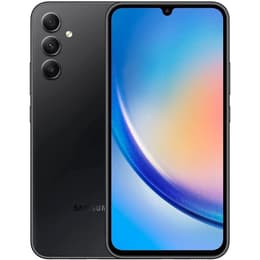
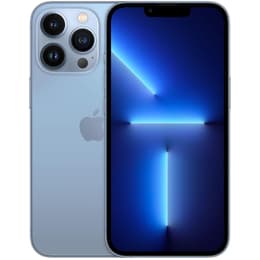

Galaxy A34 Vs iPhone 13 Pro

Galaxy A34
Galaxy A34
Starting at

Refurbished price:£105.00

Versus £399.00 new

See options
iPhone 13 Pro
iPhone 13 Pro
Starting at

Refurbished price:£232.00

Versus £949.00 new

See options

Ratings

The Samsung Galaxy A34, released in 2023, and the Apple iPhone 13 Pro, launched in 2021, represent two distinct approaches to the modern smartphone experience. While the Galaxy A34 serves as a contemporary mid-range device with a focus on a large display and long-lasting battery, the iPhone 13 Pro remains a high-performance flagship known for its advanced camera system and robust build quality. These devices operate on different ecosystems—Android and iOS respectively—offering unique user interfaces and software integrations tailored to their specific audiences.

Scores

Durability

The Galaxy A34 and iPhone 13 Pro offer different expectations regarding their physical resilience and software support timelines over the coming years.

  • Software Longevity: The Galaxy A34, being a newer release from 2023, benefits from a modern update policy that provides several years of operating system and security patches. However, the iPhone 13 Pro, despite its 2021 launch, is supported by a manufacturer known for providing extended software updates that often keep devices functional and secure for six years or more from their original release date.
  • Build Resilience: The iPhone 13 Pro features a stainless steel frame and a specialized glass front designed for high impact resistance, while the Galaxy A34 utilizes a reinforced plastic construction that is lightweight and durable against minor drops and daily wear.
  • Repairability: Both manufacturers have made strides in making components more accessible for professional technicians, though the Galaxy A34's simpler internal layout often allows for more straightforward screen or battery replacements compared to the more complex internal assembly of the iPhone 13 Pro.

Year of Release

2023

2021

Compatible with latest Update

Yes

Yes

OS

Android

iOS

Foldable

No

No

Performance

While both smartphones handle daily tasks with ease, they cater to different levels of processing intensity and multitasking needs for modern users.

  • System Responsiveness: The iPhone 13 Pro utilizes high-performance internal hardware that ensures demanding applications, such as high-definition video editors or complex mobile games, run with consistent smoothness and minimal loading times. The Galaxy A34 provides a reliable experience for standard activities like social media, web browsing, and streaming, though it may show slight pauses when switching between many heavy apps simultaneously.
  • Battery Endurance: The Galaxy A34 is equipped with a high-capacity battery that comfortably supports over a full day of intensive use, making it a strong choice for those who are often away from a power source. The iPhone 13 Pro manages its power efficiently through software optimization, though users with very high screen-on time may find themselves needing a charge more frequently than with the Samsung.
  • Storage Flexibility: Both devices offer various internal storage capacities to house photos and applications, though the iPhone 13 Pro provides higher maximum storage tiers for users who record significant amounts of high-resolution video.

Memory (GB)

6 GB

6 GB

Screen quality

The viewing experience on these two devices differs primarily in physical size and the specific technology used to manage motion and brightness levels.

  • Display Technology: Both phones feature OLED-based screens, which provide deep black levels and high contrast for an immersive viewing experience. The iPhone 13 Pro uses a specialized variable refresh rate technology that adjusts the smoothness of the screen based on the content, while the Galaxy A34 maintains a high, fixed refresh rate for fluid scrolling across all menus.
  • Size and Clarity: The Galaxy A34 offers a larger 6.6-inch canvas, which is well-suited for watching movies or reading long documents. In contrast, the iPhone 13 Pro features a more compact 6.1-inch display that provides higher pixel density, resulting in exceptionally sharp text and fine details during close-up viewing.
  • Outdoor Visibility: Both screens are designed to remain legible under direct sunlight, though the iPhone 13 Pro can reach higher peak brightness levels, making it slightly easier to view in very bright outdoor environments like direct midday sun.

Resolution

1080 x 2340

1170 x 2532

Screen type

Super AMOLED

Super Retina XDR OLED

Audiovisual

Photography and media consumption are central to both devices, though the iPhone 13 Pro includes more specialized tools for creative enthusiasts.

  • Camera Versatility: The iPhone 13 Pro features a triple-lens system including a dedicated telephoto lens for optical zoom and a specialized sensor for depth mapping, which aids in low-light focusing. The Galaxy A34 uses a high-resolution main sensor that captures clear, detailed images in daylight, supported by an ultra-wide lens for landscapes and a macro lens for close-up photography.
  • Video Capabilities: Users who frequently record video will find the iPhone 13 Pro offers advanced stabilization and professional-grade recording formats that maintain high detail. The Galaxy A34 provides stable 4K recording suitable for social media and personal memories, though it lacks the advanced cinematic features found on the Apple device.
  • Audio Experience: Both smartphones deliver clear stereo sound through dual speakers, but the iPhone 13 Pro provides a wider soundstage and more balanced bass, which enhances the experience when watching films or listening to music without headphones.

Main camera

48 megapixels

12 megapixels

Front camera

13 megapixels

12 megapixels

Miscellaneous

Practical features such as connectivity and physical handling play a significant role in the daily user experience of these smartphones.

  • Biometrics and Security: The Galaxy A34 utilizes an optical fingerprint sensor located under the display for secure access, while the iPhone 13 Pro relies on advanced facial recognition technology that works even in complete darkness.
  • Physical Handling: Due to its plastic build, the Galaxy A34 is surprisingly light for its size, making it comfortable to hold for long periods. The iPhone 13 Pro, while smaller, feels more substantial in the hand due to the weight of its stainless steel and glass materials.
  • Connectivity and Ports: Both devices support 5G networks for fast mobile data. The Galaxy A34 uses the universal USB-C port for charging and data transfer, whereas the iPhone 13 Pro uses the proprietary Lightning connector, which may require specific cables for those transitioning from other electronics.

Weight

199 g

203 g

Screen size (in)

6.6

6.1

Mobile network

5G

5G

SIM card

Dual Physical SIM

Physical SIM + eSIM

Carrier compatibility

Unlocked

Unlocked

Connector

USB-C

Lightning

User feedback from various community forums highlights distinct strengths for both the Galaxy A34 and the iPhone 13 Pro. Owners of the Galaxy A34 frequently praise the device for its exceptional battery life and the expansive screen, which many find ideal for media consumption and long workdays. Some users note that while the plastic build is durable and lightweight, it does not feel as substantial as flagship models. Conversely, iPhone 13 Pro users often cite the camera's consistency and the overall speed of the interface as primary reasons for their satisfaction, though some mention the device's weight can be noticeable during extended one-handed use.

Users who prioritize a large viewing area and a battery that can last through long days of travel or work may find the Galaxy A34 aligns well with their needs. Those who require a more compact device with professional-grade photography tools and a highly responsive interface for demanding tasks might lean toward the iPhone 13 Pro. Choosing a quality-assured refurbished option for either model allows users to access these features while making a sustainable choice for the environment. Both smartphones remain capable choices in 2026, providing reliable performance for different types of mobile users without compromising on core functionality.


See all articles

Our recent comparisons