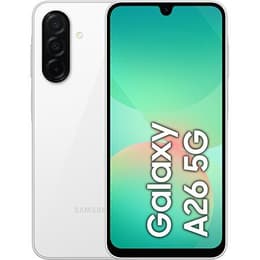
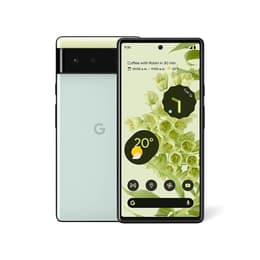

Galaxy A26 Vs Google Pixel 6

Galaxy A26
Galaxy A26
Starting at

Refurbished price:£152.00

Versus £419.55 new

See options
Google Pixel 6
Google Pixel 6
Starting at

Refurbished price:£101.00

Versus £649.99 new

See options

Ratings

The Samsung Galaxy A26, released in March 2025, and the Google Pixel 6, launched in October 2021, represent different approaches to the smartphone experience. While the Galaxy A26 focuses on a modern mid-range offering with extended software support, the Pixel 6, originally a flagship device, emphasizes advanced camera capabilities and a streamlined Android experience. These devices cater to users with varying priorities, from software longevity to photographic prowess.

Scores

Durability

When considering the practical lifespan of these devices, their release timelines and software support policies are key factors.

  • Release Timeline: The Galaxy A26 is a much newer device, having been released in March 2025. In contrast, the Google Pixel 6 launched in October 2021, making it over three years older at the time of this comparison. This age difference inherently impacts how long each device will continue to receive official support and remain current with software advancements.
  • OS Support Duration: The Galaxy A26 is notable for its commitment to longevity, promising six major Android operating system upgrades and six years of security updates, extending its support until approximately 2031. The Google Pixel 6, while initially offering three years of OS updates, later had its policy extended to five years of both OS and security updates, meaning its support is expected to conclude around late 2026 for OS updates and security patches.
  • Durability Features: Both devices offer a degree of physical resilience. The Galaxy A26 features Corning Gorilla Glass Victus+ on both its front and back, coupled with an IP67 rating for dust and water resistance. The Pixel 6 also includes Gorilla Glass Victus protection for its display and back, alongside an IP68 rating, indicating a slightly higher level of water resistance.

Year of Release

2024

2021

Compatible with latest Update

Yes

Yes

OS

Android

Android

Foldable

No

No

Performance

The performance of a smartphone is crucial for daily use, influencing everything from app responsiveness to multitasking efficiency.

  • Processor Capabilities: The Galaxy A26 is powered by a current-generation mid-range processor, which handles everyday tasks and general usage smoothly. Users can expect reliable performance for common applications and light gaming. The Google Pixel 6, on the other hand, features a processor that was designed for flagship performance at its release. This allows it to manage demanding applications, complex photo editing, and multitasking with a high degree of responsiveness.
  • Multitasking and Responsiveness: The Galaxy A26, with its 6GB or 8GB of RAM, provides a capable experience for switching between apps, though some users have noted occasional minor delays during heavy multitasking or navigating system settings. The Pixel 6, equipped with 8GB of RAM, generally offers a very fluid and responsive user experience, with smooth app animations and efficient handling of multiple applications simultaneously.
  • Storage Options: The Galaxy A26 offers 128GB or 256GB of internal storage and includes a microSD card slot for further expansion, providing flexibility for users who need more space for media and files. The Google Pixel 6 comes with 128GB or 256GB of internal storage but does not offer expandable storage.
  • Battery Behavior: The Galaxy A26 is equipped with a 5000 mAh battery, typically providing over a full day of moderate use, with some reports suggesting it can extend to nearly two days with very light usage. The Pixel 6 has a 4614 mAh battery, which generally delivers a full day of power for most users, often achieving around 6-7 hours of screen-on time.

Memory (GB)

8 GB

8 GB

Screen quality

The display is a primary interface for smartphone interaction, and both devices offer distinct viewing experiences.

  • Display Technology and Size: The Samsung Galaxy A26 features a 6.7-inch Super AMOLED display, providing vibrant colors and deep blacks. The Google Pixel 6 has a slightly smaller 6.4-inch OLED display, also known for its rich contrast and color accuracy.
  • Resolution and Clarity: Both phones offer Full HD+ resolution (1080 x 2340 pixels for the A26 and 1080 x 2400 pixels for the Pixel 6), ensuring sharp text and clear images for everyday viewing.
  • Refresh Rate and Smoothness: The Galaxy A26 boasts a 120Hz refresh rate, contributing to smoother scrolling and a more fluid visual experience, particularly noticeable in fast-paced content or general navigation. The Pixel 6 features a 90Hz refresh rate, which still provides a noticeably smoother experience compared to standard 60Hz displays, enhancing the overall responsiveness of the interface.
  • Brightness for Outdoor Use: The Galaxy A26's display offers good brightness, making it usable outdoors, though direct sunlight can sometimes challenge visibility. The Pixel 6's display also maintains good clarity in sunny outdoor conditions, with responsive auto-brightness adjustments.

Resolution

1080 x 2340

1080 x 2400

Audiovisual

Camera capabilities are a significant consideration for many users, and these devices offer different strengths in photography and videography.

  • Rear Camera Systems: The Galaxy A26 features a triple-camera setup with a 50 MP main sensor (with OIS), an 8 MP ultrawide lens, and a 2 MP macro lens. The Google Pixel 6 has a dual-camera system, comprising a 50 MP wide-angle main camera (with OIS) and a 12 MP ultrawide camera.
  • Everyday Photography Performance: The Galaxy A26's main camera performs well in daylight, offering good dynamic range, though colors can sometimes appear muted, and detail in portrait shots could be improved. The Pixel 6 is widely recognized for its exceptional photographic output, consistently producing sharp, clear, and well-lit images with accurate colors and excellent HDR, even in challenging conditions.
  • Low-Light Performance: The Pixel 6 excels in low-light scenarios, capturing crisp results with fine detail and minimal grain. The Galaxy A26's low-light performance, while functional, leaves room for improvement in delivering sharper results.
  • Video Recording and Audio: Both phones support 4K video recording at 30fps, with the Pixel 6 also offering 4K at 60fps and various slow-motion options. The Galaxy A26's video stabilization is noted as not being particularly strong. For audio, the Pixel 6 includes stereo speakers, providing a more immersive sound experience for media consumption, while the Galaxy A26 features a single bottom-firing speaker.

Front camera

13 megapixels

8 megapixels

Miscellaneous

Beyond core features, several practical elements contribute to the overall user experience and device utility.

  • Connectivity Options: Both devices support 5G connectivity for fast mobile data. The Galaxy A26 includes Wi-Fi 802.11 a/b/g/n/ac and Bluetooth 5.3. The Google Pixel 6 offers Wi-Fi 802.11 a/b/g/n/ac/ax (Wi-Fi 6E) and Bluetooth 5.2, providing access to newer, faster Wi-Fi standards.
  • Ports and Sensors: Both phones utilize a USB-C port for charging and data transfer, with the Pixel 6 featuring USB-C 3.1 and the A26 using USB-C 2.0. Neither device includes a 3.5mm headphone jack. The Galaxy A26 integrates a side-mounted fingerprint sensor within the power button, which is generally fast and reliable. The Pixel 6 uses an optical under-display fingerprint sensor, which some users have found to be slower or less consistent than traditional sensors.
  • Build Materials and Handling: The Galaxy A26 features a design with a glass front and back, and a plastic frame, contributing to a weight of 200g. The Pixel 6 also has a glass front and back, but with an aluminum frame, weighing 207g. Both phones offer a solid in-hand feel, with the Pixel 6 often described as having a premium build.

Weight

197 g

207 g

Screen size (in)

6.5

6.4

Mobile network

5G

5G

SIM card

Dual Physical SIM

Physical SIM + eSIM

Carrier compatibility

Unlocked

Unlocked

The Samsung Galaxy A26 and Google Pixel 6 cater to different user needs, reflecting their distinct market positions and release timelines. Users frequently praise the Galaxy A26 for its modern design, vibrant 120Hz Super AMOLED display, and Samsung's commitment to six years of software updates, making it a strong contender for those prioritizing long-term software support and a smooth visual experience. However, some users have noted that its processor, while capable for daily tasks, might show occasional lag with heavy multitasking, and its low-light camera performance could be improved.

The Google Pixel 6, despite being an older device, continues to receive high marks for its exceptional camera quality, particularly its ability to capture detailed and color-accurate photos in various conditions. Its flagship-tier processor at launch still provides a very responsive and fluid Android experience. Common criticisms for the Pixel 6 include its under-display fingerprint sensor, which some users found inconsistent, and reports of the device getting warm under heavy use.

Users prioritizing extended software longevity, a larger, higher refresh rate display, and expandable storage may find the Samsung Galaxy A26 well-suited to their needs. Conversely, individuals who place a premium on advanced computational photography, a consistently fluid user interface, and stereo speakers might lean towards the Google Pixel 6. Both devices offer a quality-assured refurbished option, providing an eco-friendly alternative for consumers seeking reliable technology with a reduced environmental impact.


See all articles

Our recent comparisons