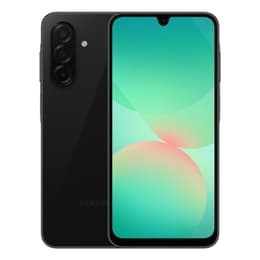
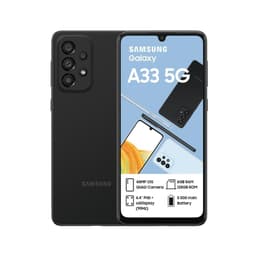
Galaxy A26 Vs Galaxy A33 5G

Galaxy A26
Galaxy A26
Starting at

Refurbished price:£152.00

Versus £419.55 new

See options
Galaxy A33 5G
Galaxy A33 5G
Starting at

Refurbished price:£102.00

Versus £389.00 new

See options

Ratings

The Samsung Galaxy A26 5G, released in March 2025, and the Samsung Galaxy A33 5G, launched in April 2022, represent different generations within Samsung's mid-range smartphone lineup. While both devices offer 5G connectivity and a focus on essential features, the A26 5G introduces a more recent design, an updated processor, and enhanced display characteristics compared to its predecessor. Both run on the Android operating system, with the A26 5G benefiting from a newer version at launch and extended software support.

Scores

Durability

When considering the practical lifespan of these devices, several factors come into play, primarily their release timelines and software support commitments.

  • Release Timeline: The Galaxy A26 5G, being a 2025 model, is significantly newer than the Galaxy A33 5G, which was released in 2022. This three-year difference inherently gives the A26 5G a longer potential lifespan from the current date.
  • Software Longevity: Samsung has committed to providing the Galaxy A26 5G with six generations of Android OS upgrades and six years of security updates, extending its support until 2031. In contrast, the Galaxy A33 5G was promised four generations of Android OS updates and five years of security updates from its launch, meaning its software support will conclude sooner.
  • Durability Features: The Galaxy A26 5G features Corning Gorilla Glass Victus+ on both its front and back, along with a plastic frame, offering robust protection. The Galaxy A33 5G also includes Gorilla Glass for screen protection, though the specific version is not always detailed, and it has an IP67 rating for dust and water resistance, a feature also present in the A26 5G.

Year of Release

2024

2022

Compatible with latest Update

Yes

Yes

OS

Android

Android

Foldable

No

No

Performance

The performance of these smartphones is largely dictated by their internal components, influencing how smoothly they handle daily tasks and more demanding applications.

  • Processor Capabilities: The Galaxy A26 5G is equipped with a newer generation processor, the Exynos 1380 in most regions, which offers improved processing power and efficiency compared to the Exynos 1280 found in the Galaxy A33 5G. This translates to snappier app launches and more fluid navigation on the A26 5G.
  • System Responsiveness: For everyday use, both devices provide a responsive experience. However, the A26 5G's more advanced processor and higher refresh rate display contribute to a perceptibly smoother overall system responsiveness, particularly during multitasking or when running graphically intensive applications. Users of the A26 5G may notice less lag when switching between apps or during prolonged usage.
  • Storage and Multitasking: Both models offer configurations with 6GB or 8GB of RAM and 128GB or 256GB of internal storage, expandable via a microSD card. This ample RAM ensures competent multitasking, allowing multiple applications to run in the background without significant slowdowns on either device.

Memory (GB)

8 GB

6 GB

Screen quality

The visual experience on a smartphone is heavily influenced by its display, and both the Galaxy A26 5G and A33 5G feature vibrant Super AMOLED panels, though with distinct differences.

  • Display Technology and Size: The Galaxy A26 5G boasts a larger 6.7-inch Super AMOLED Infinity-U Display, providing an expansive viewing area. The Galaxy A33 5G features a 6.4-inch Super AMOLED Infinity-U display. Both offer FHD+ resolution (1080 x 2400 pixels), ensuring clear and detailed visuals.
  • Refresh Rate and Smoothness: A key differentiator is the refresh rate. The A26 5G features a 120Hz refresh rate, which results in noticeably smoother scrolling and more fluid animations, enhancing the overall user interaction. The A33 5G has a 90Hz refresh rate, which is still smoother than standard 60Hz displays but not as fluid as the A26 5G.
  • Brightness Levels: The Galaxy A26 5G offers a peak brightness of 1000 nits, which improves visibility in bright outdoor conditions. While the A33 5G's peak brightness is not consistently specified across sources, the A26 5G's higher rating suggests better outdoor legibility.

Resolution

1080 x 2340

1080 x 2400

Audiovisual

Both the Galaxy A26 5G and Galaxy A33 5G are equipped with versatile camera systems designed to capture a variety of moments, each with its own strengths.

  • Rear Camera System: The Galaxy A26 5G features a triple-camera setup with a 50MP main sensor that includes Optical Image Stabilization (OIS), an 8MP ultrawide lens, and a 2MP macro lens. The Galaxy A33 5G comes with a quad-camera array, comprising a 48MP main sensor with OIS, an 8MP ultrawide, a 5MP macro, and a 2MP depth sensor. The A26 5G's main sensor offers a slightly higher resolution, while the A33 5G includes a dedicated depth sensor for improved portrait effects.
  • Photography Performance: Both devices are capable of capturing detailed images in good lighting conditions. The OIS on their main cameras helps in reducing blur from handshakes, particularly in challenging light. The A26 5G's camera is noted for decent dynamic range, though colors can appear muted, and low-light performance could be improved. Both support 4K video recording at 30 frames per second.
  • Front Camera and Features: Both smartphones feature a 13MP front-facing camera for selfies and video calls. The A26 5G also includes AI-powered camera features like Object Eraser and Edit Suggestion, enhancing the post-capture editing experience.

Front camera

13 megapixels

13 megapixels

Miscellaneous

Beyond the core specifications, several practical elements contribute to the overall user experience and daily usability of these devices.

  • Connectivity and Ports: Both the Galaxy A26 5G and A33 5G support 5G networks, Wi-Fi 802.11 a/b/g/n/ac (dual-band), and NFC for contactless payments. The A26 5G features Bluetooth 5.3, a slight upgrade from the A33 5G's Bluetooth 5.1, potentially offering more stable and efficient connections with accessories. Both utilize a USB-C 2.0 port for charging and data transfer and notably lack a 3.5mm headphone jack.
  • Biometric Security: The Galaxy A26 5G integrates a side-mounted fingerprint sensor, which can be quick and intuitive for unlocking. The Galaxy A33 5G features an in-display fingerprint sensor, offering a more integrated look. Both also support face recognition.
  • Design and Handling: The A26 5G has dimensions of 164 x 77.5 x 7.7 mm, while the A33 5G measures 159.7 x 74 x 8.1 mm and weighs 186 grams. The A26 5G is slightly larger and thinner, potentially offering a different feel in hand. The A26 5G features a single bottom-firing speaker, whereas the A33 5G is generally understood to offer stereo sound, providing a more immersive audio experience for media consumption.

Weight

197 g

186 g

Screen size (in)

6.5

6.4

Mobile network

5G

5G

SIM card

Dual Physical SIM

Dual Physical SIM

Carrier compatibility

Unlocked

Unlocked

Connector

USB-C

USB-C

The Samsung Galaxy A26 5G and Galaxy A33 5G cater to users seeking reliable Android smartphones, but their differing release dates and feature sets align with distinct priorities. Users often praise the Galaxy A33 5G for its balanced performance and solid camera capabilities for its time, with its IP67 rating and stereo speakers being frequently appreciated features. Some criticisms for the A33 5G have occasionally pointed to its 90Hz display as being less fluid than some competitors, and its processor, while capable, is now a few generations old.

The Galaxy A26 5G, as a newer model, benefits from several advancements. Users frequently highlight its larger, smoother 120Hz display and the extended software support as significant advantages. The updated processor also contributes to a more responsive user experience, particularly for those who engage in more demanding tasks. Common feedback for the A26 5G notes its robust build with Gorilla Glass Victus+ and the inclusion of AI features in its camera. Some users might find the single bottom-firing speaker a step down from devices offering stereo sound.

Users prioritizing a more current device with a larger, smoother display and a longer commitment to software updates will find the Galaxy A26 5G well-suited to their needs. Its enhanced durability and newer processor offer a more future-proof experience. Conversely, users who value a slightly more compact form factor, a dedicated depth camera, and potentially stereo audio output might still find the Galaxy A33 5G a competent option, especially if their usage patterns are less demanding. For those looking for an eco-friendly alternative, considering a quality-assured refurbished option for either model can provide excellent value while supporting sustainable choices.


See all articles

Our recent comparisons