
Galaxy A26 Vs iPhone 14

Galaxy A26
Galaxy A26
Starting at

Refurbished price:£152.00

Versus £419.55 new

See options
iPhone 14
iPhone 14
Starting at

Refurbished price:£232.00

Versus £599.00 new

See options

Ratings

The Samsung Galaxy A26, released in early 2025, and the Apple iPhone 14, which debuted in late 2022, offer distinct experiences within the smartphone market. While the iPhone 14 was originally positioned as a flagship device, the Galaxy A26 serves as a modern mid-range alternative with updated connectivity and display standards. The primary difference lies in their operating systems, with the iPhone running iOS and the Galaxy utilising Android, alongside significant variations in physical size and screen technology. This comparison explores how these two devices perform in real-world scenarios to help you decide which fits your lifestyle.

Scores

Durability

The two devices follow different release cycles, which impacts their long-term software support and physical resilience over several years of use.

  • Software Longevity: The iPhone 14 typically receives operating system updates for approximately six to seven years from its launch, meaning it remains current until roughly 2028 or 2029. In contrast, the Galaxy A26, being a much newer release from 2025, benefits from Samsung's extended support policy, often providing security patches and system updates well into the early 2030s.
  • Build and Repair: The iPhone 14 features a toughened glass front and an aluminium frame designed for high impact resistance, while the Galaxy A26 uses reinforced materials that prioritise a lightweight feel. Both manufacturers have made strides in repairability, though the iPhone's internal layout is often noted for its modularity in specific components like the battery and screen.
  • Practical Lifespan: Users can expect both devices to function reliably for several years, but the Galaxy A26 may have a slight edge in future-proofing due to its more recent entry into the market and later hardware standards.

Year of Release

2024

2022

Compatible with latest Update

Yes

Yes

OS

Android

iOS

Foldable

No

No

Performance

Everyday tasks and multitasking are handled differently by these two handsets based on their internal hardware optimisations and power management.

  • System Responsiveness: The iPhone 14 is known for its fluid animations and rapid app switching, maintaining a high level of speed even when running demanding software or modern mobile games. The Galaxy A26 provides a stable experience for daily activities such as web browsing, social media, and video streaming, though it may show slight pauses when under heavy multitasking loads compared to the flagship-grade internals of the iPhone.
  • Battery and Charging: The Galaxy A26 typically houses a larger physical battery capacity, which supports extended use throughout a full day for most users. The iPhone 14, while having a smaller battery, benefits from deep software integration that manages power consumption efficiently, often lasting a full work day on a single charge.
  • Storage Flexibility: Both models generally start with 128GB of internal storage, which is sufficient for most photo libraries and applications, though the iPhone 14 offers higher fixed storage tiers for those who do not wish to rely on cloud services.

Memory (GB)

8 GB

6 GB

Screen quality

The visual experience differs significantly between these models, particularly regarding the physical size and how motion is displayed on the screen.

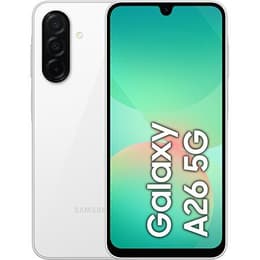
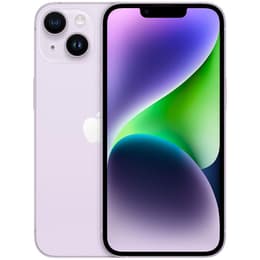
  • Display Technology: The iPhone 14 uses a 6.1-inch OLED display that provides deep blacks and high contrast, making it excellent for viewing high-definition video content. The Galaxy A26 features a larger 6.5-inch AMOLED screen, offering a more expansive canvas for reading and gaming, which many users find more immersive for media consumption.
  • Motion Smoothness: A key differentiator is the refresh rate; the Galaxy A26 often includes a higher refresh rate, resulting in smoother scrolling and more fluid transitions across the interface. The iPhone 14 maintains a standard refresh rate, which is consistent and reliable but lacks the ultra-smooth visual feedback found on the newer Galaxy model.
  • Outdoor Visibility: Both screens are designed to be legible in bright sunlight, with high peak brightness levels that ensure text and images remain clear even when used outdoors during the day.

Resolution

1080 x 2340

1170 x 2532

Audiovisual

Photography and media playback are central to both devices, though they prioritise different camera configurations and processing styles.

  • Camera Versatility: The Galaxy A26 usually features a triple-camera system, including a high-resolution main sensor, an ultra-wide lens, and a dedicated lens for close-up photography. The iPhone 14 employs a dual-camera setup that focuses on image processing and colour accuracy, producing natural-looking photos that are highly regarded for their consistency across different lighting conditions.
  • Video Capabilities: The iPhone 14 is frequently cited for its stable and high-quality video recording, offering features like cinematic mode which adds a professional depth-of-field effect to clips. The Galaxy A26 provides capable video recording for social sharing, though it may lack some of the advanced stabilisation found in the iPhone's hardware.
  • Audio Experience: Both smartphones feature stereo speakers that deliver clear audio for calls and media. The iPhone 14 is often noted for its balanced sound profile, while the Galaxy A26 provides loud and clear output suitable for hands-free use and casual listening.

Front camera

13 megapixels

12 megapixels

Miscellaneous

Practical features such as ports, biometrics, and physical handling play a large role in the daily user experience and accessory compatibility.

  • Connectivity and Ports: The Galaxy A26 utilises the universal USB-C port, which is compatible with a wide range of modern accessories and charging cables. The iPhone 14 uses the Lightning connector, which may require specific cables but remains a standard for many existing Apple accessories. Both devices support 5G connectivity for fast mobile data speeds.
  • Security and Biometrics: The iPhone 14 relies on Face ID, a facial recognition system that is integrated into the software for secure unlocking and payments. The Galaxy A26 typically features a fingerprint sensor, often located on the side power button or under the display, providing a tactile and quick way to access the device.
  • Dimensions and Weight: The iPhone 14 is more compact and lighter, making it easier to use with one hand for extended periods. The Galaxy A26 is larger and slightly heavier, which accommodates its bigger screen but may require two-handed use for some tasks.

Weight

197 g

172 g

Screen size (in)

6.5

6.1

Mobile network

5G

5G

SIM card

Dual Physical SIM

Physical SIM + eSIM

Carrier compatibility

Unlocked

Unlocked

Connector

USB-C

Lightning

User feedback from various online communities suggests that the iPhone 14 remains a popular choice for those who value a compact design and a reliable, consistent camera experience. Many users praise its video quality and the seamless way it integrates with other Apple services. However, some long-term owners have noted that the battery health can decline after a few years of heavy use, and the standard screen refresh rate can feel less fluid compared to newer alternatives. On the other hand, the Galaxy A26 is often highlighted for its large, smooth display and modern charging port. Users appreciate the value of having a newer battery and a more expansive screen for media, though some find the build materials less substantial than flagship models.

Users prioritising a compact form factor, high-quality video recording, and a long history of software reliability may find the iPhone 14 better suited to their needs. Conversely, users who prefer a larger screen for gaming or watching videos, along with the convenience of USB-C and a more recent release date, may lean toward the Galaxy A26. Choosing a quality-assured refurbished option for either model is an eco-friendly alternative that provides a high-standard device while reducing electronic waste. Ultimately, both smartphones offer robust features that cater to different lifestyle requirements, and opting for a sustainable choice like a refurbished device ensures you receive a functional, tested product that supports a circular economy.

See all articles

Our recent comparisons