
Compare models
Galaxy A25 Vs Galaxy A53 5G
- 1-year minimum warranty
- Free delivery on all items
- Free 30-day returns
Differences at a glance
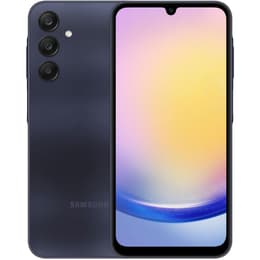
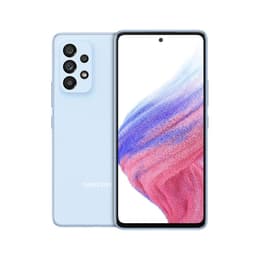
The Samsung Galaxy A25 5G (released in late 2023) and the Samsung Galaxy A53 5G (released in early 2022) are both mid-range smartphones from Samsung's popular A series. While they share a similar core processor and battery capacity, the A25 offers a more recent software starting point and a traditional headphone jack, whereas the A53 features a higher-resolution camera system and official water and dust resistance.
Available Models
Colour
Storage (GB)
Scores
Durability
When considering the practical lifespan of these devices, their release timelines and software support policies are key factors.
- Release Timeline: The Galaxy A25 5G was released in December 2023, making it a newer device compared to the Galaxy A53 5G, which launched in March 2022. This difference in release date directly impacts their remaining software support.
- OS Support Duration: Both models are part of Samsung's policy to provide four generations of Android OS updates and five years of security updates. The A25 5G launched with Android 14, meaning it is expected to receive updates up to Android 18. The A53 5G launched with Android 12, and is expected to receive updates up to Android 16.
- Expected Practical Lifespan: Due to its later release and more current starting OS, the Galaxy A25 5G will receive software and security updates for a longer period into the future, potentially extending its usable life for users who prioritize the latest software features and security patches. The Galaxy A53 5G has an IP67 rating for dust and water resistance, offering an additional layer of protection against environmental factors, which can contribute to its physical longevity.
Year of Release
2023
2022
Compatible with latest Update
Yes
Yes
OS
Android
Android
Foldable
No
No
Performance
Both the Galaxy A25 5G and Galaxy A53 5G utilize the same internal processing unit, leading to comparable performance characteristics in many scenarios.
- Everyday Task Handling: Both devices are capable of handling common daily applications, web browsing, and social media with general smoothness. Users can expect responsive navigation through menus and quick app launches for typical usage.
- Multitasking and Gaming: For more demanding tasks like multitasking with several applications open or playing graphically intensive games, both phones offer a similar experience. While they can manage these activities, some users of the A53 5G have reported occasional stutters or minor delays, particularly when navigating system menus or during heavy use. The A25 5G, despite having the same processor, has also received mixed feedback regarding its performance, with some users noting potential lag, especially in configurations with less RAM.
- Storage and Battery Behavior: Both models come with options for 128GB or 256GB of internal storage and support microSD card expansion up to 1TB, providing ample space for apps and media. They also feature a 5000 mAh battery, which generally provides a full day of use for most users. Both support 25W fast charging.
Screen quality
The display experience on both the Galaxy A25 5G and Galaxy A53 5G is a highlight, offering vibrant visuals and smooth interactions.
- Display Technology and Clarity: Both smartphones feature a 6.5-inch Super AMOLED display with a Full HD+ resolution (1080 x 2340 for A25, 1080 x 2400 for A53), providing sharp images and rich colors. This technology delivers deep blacks and high contrast, enhancing the viewing experience for videos and photos.
- Brightness and Refresh Rate: Both devices boast a 120Hz refresh rate, contributing to smoother scrolling and more fluid animations. The Galaxy A25 5G's display can reach a peak brightness of 1000 nits, offering good visibility in bright outdoor conditions. The Galaxy A53 5G's display has a peak brightness of 800 nits.
- Design Elements: The Galaxy A53 5G features a punch-hole cutout for its front camera, while the Galaxy A25 5G utilizes a notch design. Both displays are protected by Corning Gorilla Glass 5.
Resolution
1080 x 2340
1080 x 2400
Screen type
Super AMOLED
Super AMOLED
Audiovisual
The camera systems on these two Galaxy phones offer different capabilities, particularly in terms of sensor resolution and overall versatility.
- Rear Camera System: The Galaxy A53 5G features a quad-camera setup with a 64MP main sensor (with OIS), a 12MP ultrawide lens, a 5MP macro lens, and a 5MP depth sensor. The Galaxy A25 5G comes with a triple-camera array, including a 50MP main sensor (with OIS), an 8MP ultrawide lens, and a 2MP macro lens. The A53 5G's higher resolution ultrawide and dedicated depth sensor may offer more detailed wide-angle shots and improved portrait mode effects.
- Photography Performance: Both phones are capable of capturing good photos in well-lit conditions. However, user feedback suggests that low-light photography can be a challenge for both, with the A25 5G specifically noted for struggling in such environments. The A53 5G has also been mentioned to have some camera shutter lag.
- Front Camera and Audio: For selfies and video calls, the A53 5G is equipped with a 32MP front camera, offering higher resolution compared to the A25 5G's 13MP front camera. Both devices feature stereo speakers, providing a more immersive audio experience for media consumption.
Main camera
50 megapixels
64 megapixels
Front camera
13 megapixels
32 megapixels
Miscellaneous
Beyond the core specifications, several practical features differentiate the user experience of these two Samsung Galaxy smartphones.
- Connectivity and Ports: Both devices support 5G connectivity and modern Wi-Fi standards. A notable difference is the inclusion of a 3.5mm headphone jack on the Galaxy A25 5G, which is absent on the Galaxy A53 5G. Both use a USB-C port for charging and data transfer.
- Biometric Security: The Galaxy A25 5G features a side-mounted fingerprint sensor integrated into the power button, which some users find intuitive. In contrast, the Galaxy A53 5G utilizes an in-display optical fingerprint sensor. Both methods offer secure unlocking, though the speed and reliability can vary by user preference.
- Build and Durability: The Galaxy A53 5G boasts an IP67 rating, indicating resistance to dust and water immersion. The Galaxy A25 5G does not have an official IP rating, though its display is protected by Gorilla Glass 5. In terms of physical dimensions, the A25 5G is slightly taller and heavier at 161mm and 197g, compared to the A53 5G's 159.6mm and 189g, which might influence handling for some users.
Weight
197 g
189 g
Screen size (in)
6.5
6.5
Mobile network
5G
5G
SIM card
Dual Physical SIM
Dual Physical SIM
Carrier compatibility
Unlocked
Unlocked
Connector
USB-C
USB-C
What the community thinks
The Samsung Galaxy A25 5G and Galaxy A53 5G both offer compelling features within the mid-range smartphone segment, each with distinct advantages. User sentiment for both devices often highlights the quality of their Super AMOLED displays and reliable battery life. However, the shared Exynos 1280 processor has been a point of mixed feedback, with some users reporting occasional performance stutters or lag on both models, particularly the A53 5G.
Users prioritizing a longer period of software updates and the convenience of a traditional headphone jack may find the Galaxy A25 5G more appealing. Its newer release date means it will receive Android OS and security updates further into the future. On the other hand, those who value a more advanced camera system with a higher-resolution ultrawide lens, a dedicated depth sensor, and official dust and water resistance might lean towards the Galaxy A53 5G. Its in-display fingerprint sensor also offers a different user experience for unlocking.
Ultimately, the choice between these two devices depends on individual priorities. For users seeking the most extended software longevity and a headphone jack, the A25 5G is a strong contender. For those who prioritize camera versatility and certified environmental protection, the A53 5G remains a solid option. Both devices are available as quality-assured refurbished options, providing an eco-friendly alternative for consumers.