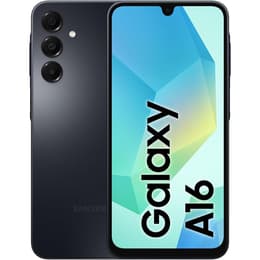
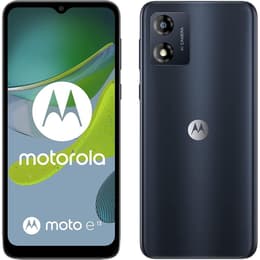

Galaxy A16 Vs Motorola Moto E13

Galaxy A16
Galaxy A16
Starting at

Refurbished price:£100.62

Versus £206.96 new

See options
Motorola Moto E13
Motorola Moto E13
Starting at

Refurbished price:£74.00

Versus £83.99 new

See options

Ratings

The Samsung Galaxy A16, released in late 2024 and early 2025, and the Motorola Moto E13, launched in early 2023, are both smartphones designed for users seeking essential functionality. While the Moto E13 focuses on core features with a streamlined Android experience, the Galaxy A16 offers a more advanced display, enhanced camera capabilities, and a significantly longer software support commitment. Both devices operate on the Android platform, but their approaches to software longevity and hardware specifications present distinct choices for different user needs.

Scores

Durability

The longevity of a smartphone is influenced by its release timeline, software support, and physical durability. The Galaxy A16 and Moto E13 present different propositions in this regard.

  • Release Timeline and Software Support: The Samsung Galaxy A16, with its release in late 2024 and early 2025, benefits from a much more extended support window. It is promised six generations of Android OS upgrades and six years of security updates, with support extending until October 2030. This commitment is a significant advantage for users who prefer to keep their devices for many years. In contrast, the Motorola Moto E13, released in January 2023, runs on Android 13 Go Edition and is expected to receive fewer major OS updates, typical for devices in its category.
  • Durability Features: Both devices offer a degree of protection against environmental elements. The Galaxy A16 features an IP54 rating for dust and splash resistance, providing a reasonable safeguard against everyday spills and dust exposure. The Moto E13 also comes with an IP52 rating, indicating resistance to dust and light splashes. Both phones utilize plastic for their back and frame, contributing to a lighter build while maintaining a practical level of resilience for daily handling.
  • Expected Practical Lifespan: For users prioritizing long-term software relevance and security, the Galaxy A16's extended update policy makes it a more future-proof option. The Moto E13, while durable for its class, will likely see its software become outdated sooner, potentially impacting compatibility with newer applications over time.

Year of Release

2024

2023

Compatible with latest Update

Yes

No

OS

Android

Android

Foldable

No

No

Performance

Performance is a key differentiator, with the newer Galaxy A16 generally offering a more capable experience compared to the Moto E13.

  • Processor Capabilities: The Samsung Galaxy A16 is powered by either a Mediatek Helio G99 (4G variant) or an Exynos 1330/Dimensity 6300 (5G variant). These processors are designed to handle everyday tasks smoothly, including app loading and general navigation. While capable for basic use, some users have noted occasional stuttering during heavy multitasking or demanding gaming sessions. The Motorola Moto E13 utilizes a Unisoc T606 processor, which is suitable for fundamental smartphone functions. However, it can exhibit slower performance, particularly when running multiple applications simultaneously or engaging in more intensive tasks.
  • RAM and Multitasking: The Galaxy A16 offers various RAM configurations, including 4GB, 6GB, and 8GB, which contribute to smoother multitasking and app switching. The Moto E13 is available with 2GB, 4GB, or 8GB of RAM. The 2GB RAM variant, in particular, can lead to noticeable slowdowns when managing several apps concurrently, as Android Go Edition is optimized for lower memory devices.
  • Battery Behavior: Both devices are equipped with a 5000mAh battery, providing substantial power for daily use. The Galaxy A16 consistently delivers excellent battery life, often lasting up to two full days for moderate usage, supported by its energy-efficient display and processor. It also supports 25W fast charging for quicker power replenishment. The Moto E13 also offers good battery endurance, frequently lasting a full day or more, though its 10W charging speed means longer charging times.

Memory (GB)

4 GB

2 GB

Screen quality

The visual experience differs significantly between these two smartphones, primarily due to their display technologies and resolutions.

  • Display Technology and Clarity: The Samsung Galaxy A16 features a 6.7-inch Super AMOLED display with Full HD+ resolution (2340x1080 pixels). This technology provides deep blacks, vibrant colors, and excellent contrast, resulting in a clear and immersive viewing experience for videos and images. The Motorola Moto E13 comes with a 6.5-inch IPS LCD display with HD+ resolution (1600x720 pixels). While it offers decent colors, the clarity and contrast are not as pronounced as on an AMOLED panel.
  • Brightness and Refresh Rate: The Galaxy A16's display boasts a 90Hz refresh rate, contributing to smoother scrolling and more fluid animations compared to standard 60Hz screens. It also offers a peak brightness of 800 nits, which aids in visibility when using the phone outdoors, though direct sunlight can still pose a challenge. The Moto E13 has a standard 60Hz refresh rate, which is adequate for general use but less fluid. Its brightness levels are sufficient for indoor environments but may require being maxed out for comfortable viewing under bright outdoor conditions.
  • Viewing Experience: Users who consume a lot of media or appreciate sharper details and richer colors will find the Galaxy A16's Super AMOLED display more appealing. The larger screen size also enhances the overall viewing area. The Moto E13's display is functional for everyday tasks like browsing and messaging, but it offers a more basic visual experience.

Resolution

1080 x 2340

720 x 1600

Screen type

Super AMOLED

IPS LCD

Audiovisual

Camera performance is an area where the Galaxy A16 generally offers more versatility and better image quality, especially in favorable lighting conditions.

  • Rear Camera System: The Samsung Galaxy A16 features a triple-camera setup on the rear, including a 50-megapixel main sensor, a 5-megapixel ultrawide lens, and a 2-megapixel macro camera. The main sensor is capable of capturing sharp and vibrant photos in good daylight, with Samsung's characteristic color tuning. The ultrawide camera adds flexibility for wider shots. The Motorola Moto E13 is equipped with a single 13-megapixel rear camera. It can produce decent images in well-lit environments, but its overall detail and dynamic range are more limited.
  • Low-Light and Video Performance: In challenging low-light conditions, the Galaxy A16's main camera performs adequately, though noise can become more apparent. The 5G variant of the A16 supports 4K video recording, and both 4G and 5G variants offer electronic image stabilization (EIS) for smoother footage, though optical image stabilization (OIS) is absent. The Moto E13 struggles more in low light, often producing noisy and less detailed images. Its video recording is limited to 1080p at 30 frames per second, and the camera application itself has been noted for being slow to launch and capture.
  • Front Camera and Audio: The Galaxy A16 has a 13-megapixel front camera that captures clear selfies. The Moto E13 features a 5-megapixel front camera, which is suitable for basic video calls and selfies but offers less detail. For audio, the Moto E13 includes a 3.5mm headphone jack and supports Dolby Atmos for an enhanced listening experience through its single speaker. The Galaxy A16, however, does not include a 3.5mm headphone jack, relying on USB-C or wireless audio solutions.

Main camera

50 megapixels

13 megapixels

Front camera

13 megapixels

5 megapixels

Miscellaneous

Beyond core features, several practical elements contribute to the overall user experience of these devices.

  • Connectivity Options: The Samsung Galaxy A16 offers modern connectivity, with a 5G variant providing faster mobile data speeds where available. Both the 4G and 5G models support dual-band Wi-Fi (802.11 a/b/g/n/ac) and Bluetooth v5.3, enabling efficient wireless connections. The Galaxy A16 also includes NFC for contactless payments. The Motorola Moto E13 is a 4G-only device, supporting dual-band Wi-Fi (802.11 a/b/g/n/ac) and Bluetooth 5.0. It lacks NFC, which might be a consideration for users who frequently use mobile payment systems.
  • Ports and Biometrics: The Galaxy A16 features a USB Type-C port for charging and data transfer, and it includes a side-mounted fingerprint sensor for secure and convenient unlocking. The Moto E13 also uses a USB Type-C port and notably retains a 3.5mm headphone jack, which is a benefit for users with wired audio accessories. However, the Moto E13 does not include a fingerprint sensor, relying instead on face unlock or traditional PIN/pattern methods for security.
  • Design and Handling: The Galaxy A16 measures approximately 164.4 x 77.9 x 7.9 mm and weighs around 200 grams. The Moto E13 is slightly more compact and lighter at about 164.19 x 74.95 x 8.47 mm and 179.5 grams. Both devices feature a plastic construction, which contributes to their lighter feel and practical durability. The choice between them in terms of handling often comes down to personal preference for screen size and overall device footprint.

Weight

200 g

181 g

Screen size (in)

6.7

6.5

Mobile network

4G

4G

SIM card

Dual Physical SIM

Dual Physical SIM

Carrier compatibility

Unlocked

Unlocked

The Samsung Galaxy A16 and Motorola Moto E13 cater to different segments of the entry-level smartphone market, each with distinct strengths and trade-offs. User feedback for the Galaxy A16 often praises its vibrant Super AMOLED display, exceptional battery life that can last up to two days, and Samsung's industry-leading commitment to six years of software and security updates. However, some users note that its performance, while adequate for daily tasks, can feel sluggish under heavier loads, and the secondary cameras are not as impressive as the main sensor. The absence of a 3.5mm headphone jack is also a point of criticism for some.

The Motorola Moto E13 is frequently lauded for its robust battery life, often providing a full day or more of usage, and its inclusion of a 3.5mm headphone jack. Users also appreciate its clean Android Go Edition software for a streamlined experience. Common criticisms, however, include its lower-resolution LCD display, less powerful processor which can lead to slower performance, and a camera system that is often described as slow to operate and limited in low-light conditions. The lack of a fingerprint sensor and NFC are also noted drawbacks.

Users prioritizing a modern display, long-term software support, and a more capable main camera will find the Samsung Galaxy A16 well-suited to their needs. Its 5G connectivity option also makes it a more future-ready choice for mobile data. Conversely, users who value a traditional headphone jack, a lighter device, and a very straightforward Android experience for basic communication and media consumption may prefer the Motorola Moto E13. For those considering either device, exploring quality-assured refurbished options can provide an eco-friendly alternative, offering access to these features while extending the product's lifecycle.
See all articles

Our recent comparisons