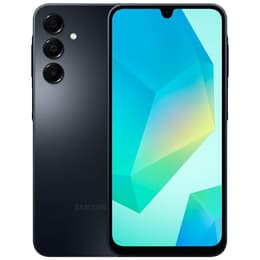
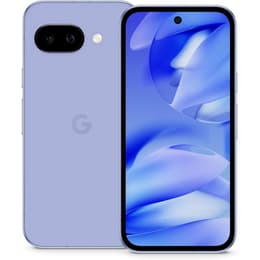

Galaxy A16 Vs Google Pixel 9a

Galaxy A16
Galaxy A16
Starting at

Refurbished price:£100.62

Versus £206.96 new

See options
Google Pixel 9a
Google Pixel 9a
Starting at

Refurbished price:£319.00

Versus £499.00 new

See options

Ratings

The Samsung Galaxy A16, released in late 2024, and the Google Pixel 9A, launched in early 2025, represent compelling options in the smartphone market. Both devices operate on the Android platform, offering distinct approaches to user experience and hardware. The Galaxy A16 focuses on a large display and extensive storage expansion, while the Pixel 9A emphasizes advanced camera capabilities and a streamlined software experience.

Scores

Durability

When considering the longevity of these devices, both offer substantial software support, a key factor in their practical lifespan.

  • Software Updates: The Google Pixel 9A is notable for its commitment to seven years of operating system and security updates, ensuring it remains current and secure for an extended period. The Samsung Galaxy A16 also provides a generous six years of OS and security updates, extending its usability until at least October 2030.
  • Repairability: The Pixel 9A generally receives positive remarks for its repairability, with some components like the display being relatively easy to replace. However, some reports indicate challenges with battery replacement due to adhesive application. The Galaxy A16, while not having widely published repairability scores, typically features a design that allows for component replacement, though specific ease of repair can vary.
  • Durability Features: The Pixel 9A includes IP68 water and dust resistance, offering robust protection against environmental elements. The Galaxy A16 comes with an IP54 rating, providing splash and dust resistance, which is suitable for everyday encounters with moisture.

Year of Release

2024

2025

Compatible with latest Update

Yes

Yes

OS

Android

Android

Foldable

No

No

Performance

Both smartphones deliver capable performance for daily tasks, though they approach processing power with different philosophies.

  • Everyday Responsiveness: The Google Pixel 9A, powered by a current-generation processor, handles demanding applications and multitasking smoothly, offering a responsive user experience. The Samsung Galaxy A16 provides solid performance for essential functions like web browsing, email, and media consumption, though users might notice occasional delays when switching between multiple applications or during intensive tasks.
  • Battery Endurance: The Pixel 9A features a 5100mAh battery, which contributes to its impressive battery life, often lasting more than a full day even with heavy usage. The Galaxy A16 is equipped with a 5000mAh battery, consistently delivering excellent battery life that can extend to two days with moderate use.
  • Storage and Multitasking: The Pixel 9A comes with 8GB of RAM and offers storage options of 128GB or 256GB, without expandable storage. The Galaxy A16 offers more flexible storage with options for 4GB, 6GB, or 8GB of RAM and 128GB or 256GB of internal storage, which can be expanded significantly via a microSD card up to 1.5TB.

Memory (GB)

4 GB

8 GB

Screen quality

The visual experience on both devices is designed to be engaging, with differences in display technology and features.

  • Display Technology and Size: The Samsung Galaxy A16 features a 6.7-inch Super AMOLED display, providing vibrant colors and deep blacks. The Google Pixel 9A has a slightly smaller 6.3-inch OLED display, also known for its rich colors and contrast.
  • Resolution and Clarity: Both phones offer Full HD+ resolutions, ensuring sharp and clear visuals for content consumption and daily use. The Galaxy A16 has a resolution of 1080x2340 pixels, while the Pixel 9A features 1080x2424 pixels.
  • Brightness and Smoothness: The Pixel 9A's display can reach a peak brightness of 2700 nits, making it highly visible even in bright outdoor conditions, and features an adaptive refresh rate that can go up to 120Hz for smooth scrolling. The Galaxy A16 offers a 90Hz refresh rate for smooth animations and a maximum brightness of 800 nits, which is bright indoors but may struggle in direct sunlight.

Resolution

1080 x 2340

2424 x 1080

Audiovisual

Both smartphones offer capable camera systems, each with its strengths in capturing moments.

  • Rear Camera System: The Google Pixel 9A features a dual-camera setup with a 48MP main sensor that includes optical and electronic image stabilization, alongside a 13MP ultrawide lens. It excels in low-light scenarios and offers a macro focus mode. The Samsung Galaxy A16 comes with a triple-camera system, including a 50MP main sensor, a 5MP ultrawide, and a 2MP macro lens. Its main camera produces sharp and vibrant daylight photos.
  • Photography Performance: The Pixel 9A is praised for its accurate colors and good lighting in photos, with its main lens performing well across various conditions. The Galaxy A16's main camera delivers good detail and dynamic range in well-lit environments, though its secondary lenses are considered less impactful.
  • Video Recording and Audio: The Pixel 9A's video quality is generally good in bright conditions, but low-light video can show noise. The Galaxy A16 records video at 1080p at 30 frames per second, with some reviews noting a lack of optical image stabilization leading to jittery footage. For audio, the Pixel 9A offers a clear speaker output, while the Galaxy A16 typically features a single speaker, which may not provide the same richness as stereo setups.

Front camera

13 megapixels

13 megapixels

Miscellaneous

Beyond core features, several practical elements differentiate these two devices in daily use.

  • Connectivity Standards: Both phones support 5G connectivity (for the 5G variant of the A16), ensuring fast mobile data speeds. The Pixel 9A includes Wi-Fi 6E for enhanced wireless network performance, while the Galaxy A16 supports dual-band Wi-Fi. Both also feature Bluetooth 5.3.
  • Ports and Biometrics: Both devices utilize a USB-C port for charging and data transfer. The Pixel 9A incorporates an under-display fingerprint sensor for secure unlocking. The Galaxy A16 features a side-mounted fingerprint sensor. Neither phone includes a traditional 3.5mm headphone jack.
  • Physical Design and Handling: The Pixel 9A has a compact form factor, measuring 154.7 x 73.3 x 8.9mm and weighing 185.9 grams, making it comfortable for one-handed use. The Galaxy A16 is slightly larger and heavier at 164.4 x 77.9 x 7.9mm and 200 grams, offering a more expansive screen experience.

Weight

200 g

186 g

Screen size (in)

6.7

6.3

Mobile network

4G

5G

SIM card

Dual Physical SIM

Physical SIM + eSIM

Carrier compatibility

Unlocked

Unlocked

Connector

USB-C

USB-C

User feedback for the Google Pixel 9A frequently highlights its exceptional camera performance, particularly in challenging lighting conditions, and its long-lasting battery as major strengths. Users also appreciate the extended software support, ensuring the device remains up-to-date for many years. Some common criticisms revolve around the lack of expandable storage and, for some, the design changes compared to previous Pixel models. The Samsung Galaxy A16 is consistently praised for its impressive battery life, often lasting multiple days on a single charge, and its vibrant Super AMOLED display. Its expandable storage is also a significant advantage for users who need ample space for media and apps. However, some users note that its overall performance can be less fluid during demanding tasks compared to more powerful devices, and the secondary cameras are not as strong as the main sensor.

Users prioritizing a device with a highly capable camera, especially for low-light photography, and a commitment to long-term software updates will find the Google Pixel 9A well-suited to their needs. Its compact size and robust water resistance also make it a good choice for those seeking a durable and portable option. Conversely, users who value a larger, vibrant display, exceptional battery endurance, and the flexibility of expandable storage may lean toward the Samsung Galaxy A16. It is an ideal choice for individuals who consume a lot of media or require extensive local storage.

For those considering either of these devices, exploring quality-assured refurbished options can provide an eco-friendly alternative, offering a sustainable choice without compromising on functionality.


See all articles

Our recent comparisons