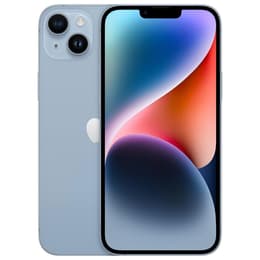

Galaxy A16 5G Vs iPhone 14 Plus

Galaxy A16 5G
Galaxy A16 5G
Starting at

Refurbished price:£103.00

Versus £205.87 new

See options
iPhone 14 Plus
iPhone 14 Plus
Starting at

Refurbished price:£242.00

Versus £699.00 new

See options

Ratings

The Samsung Galaxy A16 5G and the iPhone 14 Plus are two smartphones that cater to different segments of the market, offering distinct experiences. The Galaxy A16 5G, released in late 2024 and early 2025, operates on Android, while the iPhone 14 Plus, launched in late 2022, runs on iOS. A primary distinction lies in their performance tiers and software ecosystems, with the Galaxy A16 5G positioned as a capable mid-range device and the iPhone 14 Plus offering a premium, large-screen iOS experience.

Scores

Durability

When considering the longevity of these devices, their release timelines and software support policies are key factors.

  • Software Updates: The Samsung Galaxy A16 5G, being a newer device released in late 2024 and early 2025, is notable for its commitment to extended software support, with Samsung promising six years of OS and security updates, expected to continue until October 2030. The iPhone 14 Plus, released in October 2022, typically receives iOS updates for approximately five to six years from its launch, meaning its software support will likely conclude sooner than the Galaxy A16 5G. [3, 4, 5, 7, 16, 25]
  • Physical Durability: The iPhone 14 Plus features a Ceramic Shield front cover and an IP68 rating, indicating robust resistance to dust and water submersion. The Galaxy A16 5G, while offering a solid build, comes with an IP54 rating, providing protection against dust and splashes but not full submersion. [12, 15, 25, 26]
  • Practical Lifespan: Both devices are built to offer a practical lifespan extending several years. The Galaxy A16 5G's extended software support aims to keep it functional and secure for a longer period, while the iPhone 14 Plus benefits from Apple's consistent performance optimization, ensuring smooth operation even with older hardware.

Year of Release

2024

2022

Compatible with latest Update

Yes

Yes

OS

Android

iOS

Foldable

No

No

Performance

The performance of a smartphone significantly impacts daily usage, from app responsiveness to handling demanding tasks.

  • System Responsiveness: The iPhone 14 Plus, powered by a robust processor, delivers consistently smooth and fluid performance across applications and multitasking scenarios. Users report that it handles demanding apps and graphic-intensive games without noticeable slowdowns. [2, 14, 24] The Galaxy A16 5G, while generally capable for everyday tasks, has been noted by some users to exhibit occasional sluggishness and stuttering, particularly during heavy multitasking or gaming. [18, 22]
  • Multitasking Capabilities: The iPhone 14 Plus comes with 6GB of RAM, contributing to its ability to manage multiple applications efficiently in the background. The Galaxy A16 5G is available with 4GB, 6GB, or 8GB of RAM, but some configurations with 4GB have been cited as potentially limiting for extensive multitasking on Android. [3, 5, 7, 16, 18, 19, 20, 22]
  • Storage Options: Both devices offer various internal storage configurations. The iPhone 14 Plus is available with 128GB, 256GB, or 512GB of storage. The Galaxy A16 5G offers 128GB or 256GB internal storage, with the added flexibility of expandable storage via a microSD card up to 1.5TB. [1, 3, 7, 8, 12, 15, 19, 20]

Memory (GB)

4 GB

6 GB

Screen quality

The display is a primary interface for smartphone interaction, and both devices offer large screens with distinct characteristics.

  • Display Technology and Clarity: The iPhone 14 Plus features a 6.7-inch Super Retina XDR OLED display, known for its deep blacks, vibrant colors, and high contrast ratio, providing a sharp resolution of 2778x1284 pixels at 458 pixels per inch. The Samsung Galaxy A16 5G also boasts a 6.7-inch Super AMOLED display with a Full HD+ resolution of 2340x1080 pixels, offering punchy and vibrant colors. [1, 3, 9, 11, 12, 15, 19, 20]
  • Brightness and Outdoor Visibility: The iPhone 14 Plus achieves a typical maximum brightness of 800 nits and a peak HDR brightness of 1200 nits, ensuring good visibility even in bright outdoor conditions. The Galaxy A16 5G has a typical peak brightness of 800 nits, though some tests indicate a lower maximum brightness in certain conditions, which might present challenges for outdoor visibility. [1, 3, 12, 18, 25, 26]
  • Refresh Rate: A notable difference is the refresh rate; the Galaxy A16 5G offers a 90Hz refresh rate for smoother scrolling and animations, while the iPhone 14 Plus maintains a standard 60Hz refresh rate. [8, 11, 19, 22, 24, 26]

Resolution

1080 x 2340

1284 x 2778

Screen type

Super AMOLED

Super Retina XDR OLED

Audiovisual

Camera capabilities are a significant consideration for many users, and both phones provide different photographic and videographic strengths.

  • Rear Camera Systems: The iPhone 14 Plus is equipped with a dual-camera system featuring a 12MP main camera with sensor-shift optical image stabilization (OIS) and a 12MP ultra-wide camera. The Galaxy A16 5G offers a triple rear camera setup, including a 50MP main sensor, a 5MP ultra-wide lens, and a 2MP macro camera. [1, 11, 12, 19, 20]
  • Photography Performance: The iPhone 14 Plus benefits from Apple's computational photography features like Photonic Engine and Deep Fusion, contributing to detailed photos with good dynamic range, even in challenging lighting. The Galaxy A16 5G's 50MP main camera performs well for everyday shots, with users noting good color reproduction, though some reviews suggest overall photo quality can be average. [1, 12, 14, 18, 24]
  • Video Recording and Front Camera: The iPhone 14 Plus excels in video recording, supporting up to 4K Dolby Vision HDR at 60 frames per second, along with features like Cinematic mode and Action mode for stabilization. Its 12MP front camera includes autofocus. The Galaxy A16 5G records video up to Full HD at 30 frames per second and features a 13MP front camera, but lacks 4K video recording and OIS. [1, 11, 12, 18, 19, 24]

Main camera

50 megapixels

12 megapixels

Front camera

13 megapixels

12 megapixels

Miscellaneous

Beyond core features, several practical elements contribute to the overall user experience of these smartphones.

  • Connectivity and Ports: Both devices support 5G connectivity, ensuring access to faster mobile networks. The iPhone 14 Plus uses a Lightning port for charging and data transfer, while the Galaxy A16 5G features a more widely adopted USB Type-C port. The iPhone 14 Plus supports Wi-Fi 6 and Bluetooth 5.3, while the Galaxy A16 5G supports Wi-Fi 5 (802.11ac) and Bluetooth 5.3. [11, 12, 15, 19]
  • Biometric Security and Sensors: The iPhone 14 Plus relies on Face ID for secure facial recognition. The Galaxy A16 5G typically incorporates a side-mounted fingerprint sensor for biometric authentication. The iPhone 14 Plus also includes advanced safety features like Crash Detection and Emergency SOS via satellite. [2, 10, 12, 17, 19, 24]
  • Design and Handling: The iPhone 14 Plus has an aluminum frame with a glass back, weighing 203 grams. The Galaxy A16 5G features a plastic back and glass front, with a similar weight of approximately 200 grams. The iPhone 14 Plus, in its US models, exclusively uses eSIM, whereas the Galaxy A16 5G offers dual SIM capabilities with a physical SIM slot and hybrid microSD option. [3, 12, 15, 19, 21]

Weight

200 g

203 g

Screen size (in)

6.7

6.7

Mobile network

5G

5G

SIM card

Dual Physical SIM

Physical SIM + eSIM

Carrier compatibility

Unlocked

Unlocked

Connector

USB-C

Lightning

The Samsung Galaxy A16 5G and the iPhone 14 Plus offer distinct advantages tailored to different user preferences. The iPhone 14 Plus is frequently praised for its exceptional camera quality, particularly its video capabilities and low-light performance, as well as its robust battery life that often extends beyond a single day. Users also appreciate its consistent performance for demanding applications and the intuitive iOS ecosystem. Some common criticisms include its 60Hz display refresh rate and the absence of a telephoto lens, features found in more premium models or some Android counterparts. [14, 21, 24, 26]

The Galaxy A16 5G receives positive feedback for its impressive battery life, often lasting a full day even with heavy use, and its vibrant Super AMOLED display with a smoother 90Hz refresh rate. Its extended software support commitment is also a significant draw for users seeking long-term device longevity. However, some users have noted concerns regarding occasional performance stuttering, especially during intensive multitasking, and the average quality of its secondary camera lenses. [13, 18, 22]

Users prioritizing a consistently smooth and powerful performance, advanced video recording capabilities, and a highly integrated ecosystem may find the iPhone 14 Plus well-suited to their needs. Conversely, those who value a more recent device with a higher display refresh rate, expandable storage, and an extended software update policy, along with a strong battery life, might lean towards the Galaxy A16 5G. Both devices represent solid choices within their respective categories, and considering a quality-assured refurbished option for either model can be an eco-friendly alternative for making an informed purchasing decision.


See all articles

Our recent comparisons