
Galaxy S24 Vs Galaxy S25+

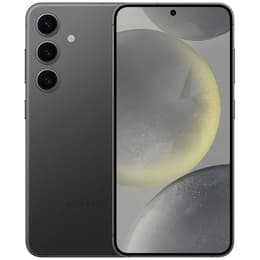
Galaxy S24
Galaxy S24
Starting at

Refurbished price:£271.00

Versus £817.67 new

See options
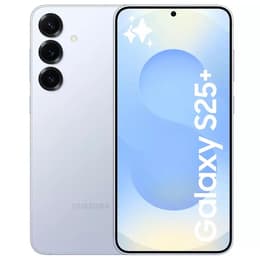
Galaxy S25+
Galaxy S25+
Starting at

Refurbished price:£549.00

Versus £958.39 new

See options

Ratings

The Samsung Galaxy S24, released in January 2024, and the Samsung Galaxy S25 Plus, launched in February 2025, represent successive generations within Samsung's flagship smartphone lineup. While both devices offer a premium Android experience, the S25 Plus introduces a higher-resolution display, a more advanced processor, and enhanced camera software. Both phones run on Samsung's One UI, built on the Android operating system, providing a consistent user experience with a focus on smart features and connectivity.

Scores

Durability

When considering the longevity of these devices, several factors come into play, including their release timelines, software support, and physical durability.

  • Release Timeline: The Galaxy S24 was released in January 2024, while the Galaxy S25 Plus followed in February 2025, giving the latter a one-year advantage in its lifecycle.
  • Software Support: Both models are expected to receive extensive software support, with Samsung typically offering seven years of operating system updates and security patches. The S25 Plus, being the newer device, will benefit from this support for an additional year compared to the S24.
  • Physical Durability: Both the Galaxy S24 and S25 Plus feature an Armor Aluminum frame and Gorilla Glass Victus 2 on the front and back, contributing to their robust build. They also carry an IP68 rating for dust and water resistance, meaning they can withstand submersion in fresh water. However, some drop tests for the S24 series indicated that while the screen showed good scratch resistance, the devices could suffer significant shatter damage upon impact, potentially rendering them unusable.

Year of Release

2024

2025

OS

Android

Android

Foldable

No

No

Performance

Performance is a key area where generational advancements often bring notable improvements, impacting how smoothly applications run and how efficiently the device handles demanding tasks.

  • Processor Capabilities: The Galaxy S24 is powered by either the Snapdragon 8 Gen 3 for Galaxy or the Exynos 2400, depending on the region, offering strong performance for everyday use and multitasking. The Galaxy S25 Plus features the newer Snapdragon 8 Elite chipset, manufactured on a more efficient 3nm process, which provides a significant leap in processing power, leading to smoother animations and enhanced AI capabilities.
  • Multitasking and Storage: The Galaxy S24 typically comes with 8GB of RAM, while the S25 Plus is equipped with 12GB of RAM, allowing the latter to manage more applications simultaneously without slowdowns. Both devices offer ample storage options, utilizing UFS 4.0 for faster data access in most configurations.
  • Battery Behavior: The Galaxy S24 has a 4000 mAh battery, while the S25 Plus maintains the 4900 mAh battery capacity seen in its direct predecessor. Despite similar battery capacities, the S25 Plus is expected to offer improved battery life due to the greater power efficiency of its newer 3nm processor. The S24 series demonstrated good battery endurance, with the S24 lasting over 13 hours in web surfing tests and the S24 Plus approaching 16 hours.

Memory (GB)

8 GB

12 GB

Screen quality

The display is a primary interface for smartphone interaction, and both models offer high-quality viewing experiences with some key distinctions.

  • Display Technology and Resolution: Both the Galaxy S24 and S25 Plus feature Dynamic AMOLED 2X displays with a 120Hz adaptive refresh rate, ensuring smooth scrolling and vibrant visuals. A notable difference is the resolution: the S24 has an FHD+ (2340 x 1080) display, while the S25 Plus upgrades to a QHD+ (3120 x 1440) resolution, offering a sharper and more detailed image.
  • Brightness and Clarity: Both devices boast a peak brightness of 2600 nits, providing excellent visibility even in bright outdoor conditions. The S25 Plus also introduces ProScaler, an AI-based upscaling technology optimized for its QHD+ resolution, designed to enhance lower-resolution content for a clearer appearance.
  • Screen Size and Protection: The Galaxy S24 features a 6.2-inch display, offering a compact form factor. The S25 Plus has a larger 6.7-inch display, providing a more expansive viewing area. Both are protected by Corning Gorilla Glass Victus 2.

Resolution

1080 x 2340

1440x3120

Audiovisual

The camera systems on both the Galaxy S24 and S25 Plus are designed to capture high-quality photos and videos, with the newer model introducing software enhancements.

  • Rear Camera System: Both phones feature a versatile triple-camera setup on the rear. This includes a 50MP main sensor with optical image stabilization (OIS), a 12MP ultrawide lens, and a 10MP telephoto lens capable of 3x optical zoom with OIS. The S24's camera delivers detailed images with vibrant colors, and its 3x optical zoom is effective for distant subjects.
  • Front Camera and Video: Both models are equipped with a 12MP front-facing camera that includes autofocus, ensuring clear selfies and video calls. Both support 8K video recording at 30 frames per second, offering high-resolution video capture. The S24 also offers 4K 120fps slow-motion video.
  • Imaging Enhancements: While the core camera hardware remains largely consistent, the Galaxy S25 Plus benefits from Samsung's Pro Visual Engine and AI-driven features like AI RePhoto and Nightography AI Zoom, which aim to improve image quality, object recognition, and low-light performance. The ultrawide camera on both models lacks autofocus, which can limit its use for close-up shots.

Miscellaneous

Beyond the core specifications, several practical features and design elements contribute to the overall user experience of these smartphones.

  • Connectivity and Ports: The Galaxy S24 supports Wi-Fi 6E/7 and Bluetooth 5.3, while the S25 Plus is expected to offer Wi-Fi 7 and Bluetooth 5.4, providing faster and more reliable wireless connections. Both devices utilize a USB Type-C port for charging and data transfer, with USB 3.2 capabilities. Neither phone includes a traditional 3.5mm headphone jack.
  • Biometric Security: Both models feature an ultrasonic in-display fingerprint sensor for secure and convenient unlocking. They also support face recognition.
  • Design and Handling: The Galaxy S24 is a more compact device, weighing 168 grams. The S25 Plus is slightly larger and heavier at 190 grams, offering a more substantial feel. Both phones feature flat metal edges and a matte glass back, contributing to a premium feel.

Weight

167 g

190 g

Screen size (in)

6.2

6.7

Mobile network

5G

5G

SIM card

Dual Physical SIM + eSIM

Dual Physical SIM

Carrier compatibility

Unlocked

Unlocked

The Samsung Galaxy S24 and Galaxy S25 Plus both deliver a high-end smartphone experience, but cater to slightly different user priorities. Users frequently praise the Galaxy S24 for its balanced performance, capable camera system, and improved battery life over its predecessors, making it a solid choice for those seeking a premium device in a more compact form factor. Its software stability and long-term support are also commonly highlighted as significant advantages. Some users, however, noted that while its camera is very good, it might not always surpass competitors in specific scenarios like extreme low-light video or macro photography.

The Galaxy S25 Plus builds upon this foundation, with users appreciating its sharper QHD+ display, the enhanced performance of its newer processor, and the subtle but impactful improvements in camera software. The larger screen size is often a draw for media consumption and productivity. While its battery capacity remains the same as its predecessor, the more efficient chipset is expected to translate into better real-world endurance, a point of positive anticipation among users. Criticisms, if any, often revolve around the incremental nature of some hardware upgrades, particularly in the camera, though the software advancements aim to compensate for this.

Ultimately, users prioritizing a more compact device with excellent all-around performance and long-term software support may find the Galaxy S24 well-suited to their needs. Conversely, those who value a larger, higher-resolution display, the latest generational performance boost, and advanced AI-driven camera features will likely lean towards the Galaxy S25 Plus. Both devices represent quality-assured options, and considering a refurbished model can be an eco-friendly alternative for acquiring these advanced smartphones.


See all articles

Our recent comparisons