Galaxy S23 Vs Galaxy S24

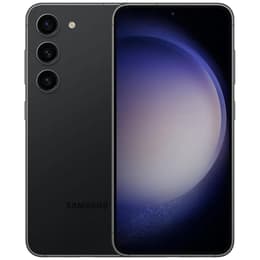
Galaxy S23
Galaxy S23
Starting at

Refurbished price:£186.84

Versus £1,019.00 new

See options
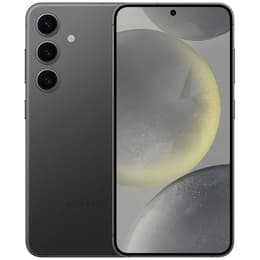
Galaxy S24
Galaxy S24
Starting at

Refurbished price:£271.00

Versus £817.67 new

See options

Ratings

The Samsung Galaxy S23 (released February 2023) and the Samsung Galaxy S24 (released January 2024) are both compact flagship smartphones from Samsung's S series. While they share a similar design philosophy and core functionalities, the newer Galaxy S24 introduces notable enhancements in display brightness, processor efficiency, and an extended software support policy, alongside subtle design refinements.

Scores

Durability

When considering the long-term usability of these devices, their release timelines and software support policies are key differentiators.

  • Software Longevity: The Galaxy S24 offers a significantly extended software commitment, promising up to seven years of operating system and security updates from its release. In contrast, the Galaxy S23 launched with a commitment of four years of OS updates and five years of security updates. This means the S24 will receive updates for a considerably longer period, potentially doubling the effective software lifespan compared to the S23.
  • Physical Durability: Both models feature an IP68 rating for dust and water resistance, indicating robust protection against environmental elements. The Galaxy S24 introduces a new Armor Aluminum frame with a matte finish, which some users find less prone to fingerprints and scratches compared to the S23's glossy frame.
  • Practical Lifespan: Users who prioritize having the latest software features and security patches for an extended duration will find the Galaxy S24's update policy more appealing. For those who typically upgrade their devices within a few years, the S23 still offers ample software support. Opting for a quality-assured refurbished option for either model can also extend its practical life by giving it a second cycle of use.

Year of Release

2023

2024

Compatible with latest Update

Yes

Yes

OS

Android

Android

Foldable

No

No

Performance

Both the Galaxy S23 and S24 deliver strong performance for everyday tasks and demanding applications, though the newer model offers generational improvements.

  • Processing Power: The Galaxy S24 features a newer generation processor, which translates to faster CPU and GPU speeds, particularly noticeable in regions receiving the Snapdragon variant. While the S23's processor still handles demanding apps and multitasking smoothly, the S24 provides more performance headroom for future applications and intensive gaming.
  • Real-World Responsiveness: In daily use, both phones offer a fluid and responsive experience, with apps opening quickly and seamless transitions between tasks. However, the S24 may exhibit slightly faster game load times and improved performance in tasks like large photo exports. Both devices typically come with 8GB of RAM, ensuring capable multitasking.
  • Storage Speed: While both models offer 128GB storage with UFS 3.1, higher storage configurations (256GB and 512GB) on the S24 utilize faster UFS 4.0 technology, which can contribute to quicker app loading and data transfer speeds.

Memory (GB)

8 GB

8 GB

Screen quality

The display experience on both devices is vibrant and clear, with the Galaxy S24 bringing notable advancements in brightness and adaptive refresh rate technology.

  • Display Technology and Clarity: Both smartphones feature a Dynamic AMOLED 2X display with a Full HD+ resolution (1080 x 2340 pixels), providing sharp images and excellent color reproduction with deep blacks and high contrast.
  • Brightness and Outdoor Visibility: The Galaxy S24 significantly boosts peak brightness to 2600 nits, compared to the S23's 1750 nits. This enhancement makes the S24's screen considerably easier to view and read in bright outdoor conditions.
  • Adaptive Refresh Rate: Both displays support a 120Hz adaptive refresh rate for smooth scrolling and animations. However, the S24's display can dynamically lower its refresh rate to as little as 1Hz, while the S23 can only go down to 10Hz. This wider adaptive range on the S24 contributes to better power efficiency when viewing static content.

Resolution

1080 x 2340

1080 x 2340

Screen type

Dynamic AMOLED 2X

Dynamic LTPO AMOLED 2X

Audiovisual

The camera systems on the Galaxy S23 and S24 share identical hardware, with the primary differences stemming from software processing enhancements in the newer model.

  • Camera Hardware: Both devices are equipped with a versatile triple-camera setup on the rear, consisting of a 50-megapixel main sensor, a 12-megapixel ultrawide lens, and a 10-megapixel telephoto lens with 3x optical zoom. The front camera on both is a 12-megapixel sensor.
  • Image Processing: The Galaxy S24 benefits from improved image processing, which results in more natural-looking colors, better exposure, and enhanced dynamic range compared to the S23. Users may notice less oversharpening and better detail resolution in low-light photos on the S24.
  • Video and Audio: Video recording capabilities are largely similar between the two, offering comparable resolutions and frame rates. While the S24's speakers might be slightly louder, the S23's speakers have been noted to offer a bit more depth and bass.

Main camera

50 megapixels

50 megapixels

Front camera

12 megapixels

12 megapixels

Miscellaneous

Beyond core specifications, several practical elements differentiate the user experience between the Galaxy S23 and S24.

  • Design and Handling: The Galaxy S24 features a flat frame with slightly rounded corners and a matte finish, which some users find more comfortable to hold and less prone to fingerprints than the S23's rounded frame with a glossy finish. The S24 is also marginally taller and has slightly thinner bezels, resulting in a 6.2-inch screen compared to the S23's 6.1-inch display, despite similar overall physical dimensions.
  • Connectivity and Ports: Both models offer modern connectivity options, including 5G, Wi-Fi 6E, and Bluetooth 5.3. They both feature a USB-C port for charging and data transfer, and neither includes a traditional headphone jack.
  • Biometrics and AI Features: Both phones incorporate a fast and secure ultrasonic fingerprint reader embedded in the display. The S24 launched with new Galaxy AI features, such as Circle to Search and advanced photo editing capabilities, which have since been made available to the S23 through software updates.

Weight

350 g

167 g

Screen size (in)

6.1

6.2

Mobile network

5G

5G

SIM card

Physical SIM + eSIM

Dual Physical SIM + eSIM

Carrier compatibility

Unlocked

Unlocked

Connector

USB-C

USB-C

The Samsung Galaxy S23 and Galaxy S24 are both capable and well-rounded smartphones, each offering a premium Android experience. User sentiment often highlights the S24's extended software support and brighter display as significant advantages. Some users appreciate the S24's updated design with flat edges and a matte frame. However, common criticisms for the S24 often revolve around the regional variations in its processor, with some users in Exynos regions noting potential differences in performance or battery efficiency compared to the Snapdragon version.

The Galaxy S23 is frequently praised for its consistent performance, reliable battery life, and compact size. User feedback suggests that its camera system, despite being technically older, still produces excellent results, with some preferring its color processing. A frequent concern for the S23, especially when compared to the S24, is its shorter software update commitment.

Users prioritizing long-term software support and maximum screen brightness will find the Galaxy S24 well-suited to their needs. Its updated design and slightly larger display also cater to those seeking a more modern feel. Conversely, users who value a slightly more compact form factor and are content with a still-powerful device that receives regular updates for several years may lean toward the Galaxy S23. Both devices represent solid choices, and considering a refurbished option for either model can be an eco-friendly alternative for acquiring a quality device.
See all articles

Our recent comparisons