Compare models
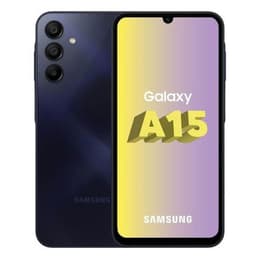
Galaxy A15 Vs iPhone Air
- 1-year minimum warranty
- Free delivery on all items
- Free 30-day returns
Differences at a glance
The Samsung Galaxy A15 (2023) and the Apple iPhone Air (2025) represent entirely different approaches to modern smartphone design, targeting distinct market segments with contrasting engineering philosophies. While the Galaxy A15 focuses on delivering accessible core features within an Android environment, the iPhone Air prioritizes an ultra-slim profile and advanced internals running on iOS. These two devices diverge significantly in their release years, operating systems, and hardware capabilities, offering unique experiences for prospective users.
Available Models
Colour
Storage
Scores
Durability
When evaluating structural longevity and software support, both devices handle updates differently based on their respective release schedules and manufacturer policies.
- Software lifecycle: The Galaxy A15 receives multiple generations of Android OS updates and several years of security patches, while the iPhone Air benefits from Apple's extended iOS support window starting from its recent 2025 launch.
- Build endurance: The Galaxy A15 utilizes a sturdy plastic frame and back, whereas the iPhone Air incorporates a grade-5 titanium frame and reinforced glass construction designed to withstand everyday wear.
- Repair practicality: Both smartphones feature standardized component layouts that facilitate authorized repairs, though overall physical lifespan depends heavily on individual handling and battery maintenance habits.
Year of Release
2023
2025
Compatible with latest Update
Yes
Yes
OS
Android
iOS
Foldable
No
No
Performance
Underneath the exterior, these smartphones offer contrasting capabilities for multitasking, storage management, and daily operational smoothness.
- System responsiveness: The iPhone Air handles demanding applications and heavy multitasking effortlessly with its high-performance configuration, while the Galaxy A15 manages everyday messaging, web browsing, and casual apps reliably.
- Storage configurations: The Galaxy A15 offers expandable storage via a microSD card slot alongside standard internal tiers, whereas the iPhone Air provides fixed high-capacity internal storage options without expansion slots.
- Battery endurance: The Galaxy A15 includes a high-capacity battery designed to easily clear a full day of typical use, while the iPhone Air balances a slim physical profile with power-efficient internal components.
Screen quality
Display characteristics differ notably between the two models, impacting media consumption, outdoor legibility, and visual fluidity.
- Panel technology: The Galaxy A15 features a vibrant Super AMOLED display with deep contrast levels, while the iPhone Air utilizes an advanced OLED panel equipped with high peak outdoor brightness.
- Refresh rate: The iPhone Air supports an adaptive high refresh rate up to 120Hz for seamless scrolling, whereas the Galaxy A15 operates at a fixed 90Hz refresh rate.
- Viewing space: Both devices offer spacious screen dimensions around 6.5 inches, providing ample viewing area for videos, documents, and browsing tasks.
Resolution
1080 x 2340
2736x1260
Screen type
Super AMOLED
Super Retina XDR
Audiovisual
Optics and media playback capabilities vary to match the distinct hardware design goals of each manufacturer.
- Camera versatility: The Galaxy A15 features a triple-lens rear setup incorporating main, ultra-wide, and macro sensors, while the iPhone Air employs a single high-resolution 48-megapixel main camera system.
- Video and low light: The iPhone Air delivers advanced video recording stabilization and strong low-light processing, whereas the Galaxy A15 captures dependable everyday photos in standard lighting conditions.
- Audio output: The iPhone Air relies on a focused single speaker configuration for media playback, matching the mono speaker output found on the Galaxy A15.
Main camera
50 megapixels
48 megapixels
Front camera
13 megapixels
18 megapixels
Miscellaneous
Practical everyday features, connectivity standards, and physical dimensions shape the handling and usability of both smartphones.
- Connectivity standards: The iPhone Air supports modern Wi-Fi 7 and Bluetooth 6.0 standards alongside digital-only eSIM profiles, whereas the Galaxy A15 includes physical SIM slot flexibility and standard wireless protocols.
- Physical handling: The iPhone Air emphasizes an exceptionally thin and lightweight titanium profile, while the Galaxy A15 features a slightly thicker, traditional slate form factor with a textured rear grip.
- Authentication sensors: The Galaxy A15 integrates a side-mounted fingerprint sensor into the power button, while the iPhone Air utilizes facial recognition technology for secure unlocking.
Weight
200 g
165 g
Screen size (in)
6.5
6.5
Mobile network
4G
5G
SIM card
Dual Physical SIM
eSIM
Carrier compatibility
Unlocked
Unlocked
What the community thinks
User feedback highlights distinct preferences for each device depending on daily workflow priorities. Owners of the Galaxy A15 frequently praise its reliable battery longevity, expandable storage flexibility, and everyday practicality. Conversely, users of the iPhone Air highlight its remarkably thin titanium construction, fluid high-refresh display, and smooth system responsiveness, though some note the limitations of a single rear camera lens and a digital-only SIM setup.
Users prioritizing a lightweight, ultra-thin form factor and advanced operating system performance may prefer the iPhone Air. Meanwhile, users prioritizing expandable storage, physical SIM card flexibility, and a dependable everyday battery lean toward the Galaxy A15. Quality-assured refurbished options for both models provide an eco-friendly alternative for conscious consumers looking to reduce electronic waste. Ultimately, the choice depends on which feature set aligns best with your specific daily requirements.