
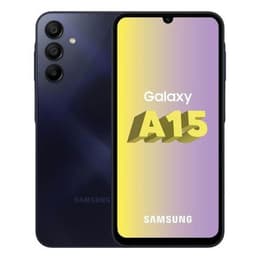


Galaxy A15 Vs Google Pixel 8

Galaxy A15
Galaxy A15
Starting at

Refurbished price:£88.00

Versus £169.00 new

See options
Google Pixel 8
Google Pixel 8
Starting at

Refurbished price:£189.00

Versus £699.99 new

See options

Ratings

The Samsung Galaxy A15 and the Google Pixel 8 are both Android smartphones, but they cater to different segments of the market. The Galaxy A15, released in December 2023, is positioned as a device offering essential smartphone features with a focus on display quality and battery longevity. The Google Pixel 8, launched in October 2023, emphasizes advanced camera capabilities, a premium software experience, and a longer software support timeline. Both devices run on the Android operating system, providing access to a vast ecosystem of applications and services.

Scores

Durability

The expected lifespan of a smartphone is significantly influenced by its release date and the manufacturer's commitment to software updates.

  • Release Timeline: The Google Pixel 8 was released in October 2023, while the Samsung Galaxy A15 followed in December 2023, with a US release in January 2024. This means the Pixel 8 is slightly older, but both are relatively recent devices.
  • OS Support Duration: Google offers an extensive seven years of OS, security, and Feature Drop updates for the Pixel 8, providing a long period of software longevity. Samsung commits to four years of OS upgrades and five years of security patches for the Galaxy A15.
  • Repairability: The Google Pixel 8 generally receives moderate repairability scores, with some sources giving it a 7 out of 10, indicating that self-repairs are possible for some components, though not always recommended for beginners. The screen is often noted as being relatively easy to remove. Information on the Galaxy A15's specific repairability score is less detailed, but budget phones often present challenges due to construction methods.

Year of Release

2023

2023

Compatible with latest Update

Yes

Yes

OS

Android

Android

Foldable

No

No

Performance

Performance in smartphones is about how smoothly tasks are handled, from everyday browsing to more demanding applications.

  • Storage and RAM: The Galaxy A15 offers various configurations, including 4GB, 6GB, or 8GB of RAM, paired with 128GB or 256GB of internal storage, which is expandable via a microSD card up to 1TB. The Pixel 8 comes with 8GB of RAM and storage options of 128GB or 256GB, but it does not offer expandable storage.
  • Everyday Task Handling: The Galaxy A15 handles daily tasks like web browsing, social media, and video streaming smoothly. However, users might notice some delays when loading demanding applications or switching between many apps, particularly on lower RAM configurations. The Pixel 8 provides a more responsive experience, handling demanding apps and multitasking with greater fluidity, making it well-suited for users who frequently engage in more intensive mobile activities.
  • Battery Behavior: The Galaxy A15 features a 5000 mAh battery, which typically provides a full day of use for most users, with some reports indicating it can last up to two days on a single charge. The Pixel 8 has a 4575 mAh battery, offering good but not exceptional battery life, generally lasting 8-10 hours of screen-on time for mixed usage, though heavy users might need a midday charge. Some Pixel 8 users have noted faster battery drain when relying heavily on mobile data.

Memory (GB)

4 GB

8 GB

Screen quality

The display is a primary interface for smartphone interaction, and its quality significantly impacts the user experience.

  • Display Technology and Clarity: The Galaxy A15 features a 6.5-inch Super AMOLED display with a Full HD+ resolution (1080x2340 pixels), offering vibrant colors and deep blacks. The Pixel 8 has a slightly smaller 6.2-inch OLED 'Actua display' with a higher Full HD+ resolution (2400x1080 pixels), also known for its color accuracy and contrast.
  • Brightness Levels: The Galaxy A15's display can reach up to 800 nits in High Brightness Mode, providing good visibility in various lighting conditions, including direct sunlight. The Pixel 8's display is notably brighter, capable of reaching 1400 nits in HBM and a peak brightness of 2000 nits, which enhances outdoor visibility and HDR content viewing.
  • Refresh Rate and Smoothness: The Galaxy A15 offers a 90Hz refresh rate, contributing to smoother scrolling and a more fluid visual experience compared to standard 60Hz displays. The Pixel 8 features a variable refresh rate that ranges from 60Hz to 120Hz, allowing for even smoother animations and responsiveness, particularly noticeable during gaming or fast-paced content.

Resolution

1080 x 2340

1080 x 2400

Screen type

Super AMOLED

OLED

Audiovisual

Camera performance is a key differentiator for many smartphone users, encompassing both still photography and video capabilities.

  • Camera System Configuration: The Galaxy A15 features a triple rear camera setup with a 50MP main sensor, a 5MP ultrawide lens, and a 2MP macro lens. Its front camera is 13MP. The Pixel 8 has a dual rear camera system, including a 50MP main sensor with optical image stabilization and a 12MP ultrawide lens with autofocus that also supports macro photography. The front camera on the Pixel 8 is 10.5MP.
  • Photography Performance: The Galaxy A15's main camera performs well in good lighting conditions, producing decent photos with good color balance. However, its ultrawide and macro lenses are less capable, and low-light performance is generally poor. The Pixel 8 excels in photography across various conditions, offering excellent detail, dynamic range, and color reproduction, particularly benefiting from its computational photography for impressive low-light shots and advanced features.
  • Video Recording Quality: Both the Galaxy A15 and its front camera are capable of recording video at 1080p resolution at 30 frames per second. The Pixel 8 offers more advanced video capabilities, supporting 4K recording at 24, 30, or 60 frames per second, with strong stabilization and features like Magic Audio for improved sound quality.

Main camera

50 megapixels

50 megapixels

Front camera

13 megapixels

10.5 megapixels

Miscellaneous

Beyond core features, several practical elements contribute to the overall user experience and device utility.

  • Connectivity and Ports: Both devices support 5G connectivity. The Galaxy A15 includes Wi-Fi 5 (802.11ac), Bluetooth 5.3, NFC (region-dependent), a USB-C 2.0 port, and notably, retains a 3.5mm headphone jack. The Pixel 8 features newer Wi-Fi 7, Bluetooth 5.3, NFC, and a faster USB-C 3.2 port, but it does not include a headphone jack.
  • Biometric Security: The Galaxy A15 utilizes a side-mounted fingerprint sensor for secure unlocking. The Pixel 8 offers both an in-display fingerprint scanner and face recognition for biometric authentication.
  • Build Materials and Durability: The Galaxy A15 features a plastic frame and back with a glass front. The Pixel 8 has a more premium build with a glass front (Gorilla Glass Victus) and back, an aluminum frame, and an IP68 rating for dust and water resistance, offering greater protection against environmental elements.

Weight

200 g

187 g

Screen size (in)

6.5

6.2

Mobile network

4G

5G

SIM card

Dual Physical SIM

Physical SIM + eSIM

Carrier compatibility

Unlocked

Unlocked

User feedback for the Samsung Galaxy A15 often praises its vibrant Super AMOLED display and its long-lasting 5000 mAh battery, which many users find sufficient for a full day or more of use. Criticisms frequently point to its less powerful processor, which can lead to noticeable slowdowns with heavier use, and its camera performance, which is considered adequate in good light but struggles in challenging conditions. The ultrawide and macro cameras are also often noted as being less impactful.

For the Google Pixel 8, common praise centers around its exceptional camera system, particularly its computational photography capabilities that deliver impressive results in various lighting, and its long-term software support commitment. Users also appreciate its bright, smooth display and the clean Android experience. Some criticisms include battery life, which, while improved over previous generations, is not considered a standout feature by all users, especially under heavy mobile data usage. The fixed-focus front camera is also sometimes mentioned.

Users prioritizing a long-lasting battery, a vivid display for media consumption, and expandable storage may find the Samsung Galaxy A15 well-suited to their needs. It's a practical choice for those who value core smartphone functions and extended software support without requiring top-tier performance. Conversely, users who prioritize an advanced camera system, a premium and consistently updated software experience, and a more robust build quality will likely lean toward the Google Pixel 8. Its performance and camera features are designed for those who demand more from their device for photography, gaming, and overall responsiveness.

For those considering either device, exploring quality-assured refurbished options can provide an eco-friendly alternative, offering access to these technologies while supporting sustainable consumption.


See all articles

Our recent comparisons





