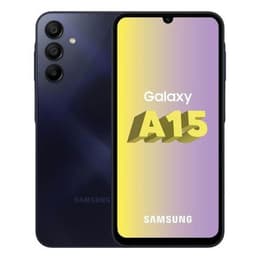
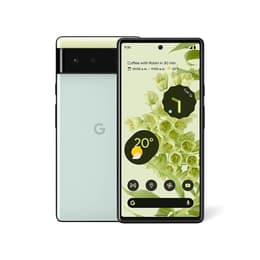

Galaxy A15 Vs Google Pixel 6

Galaxy A15
Galaxy A15
Starting at

Refurbished price:£88.00

Versus £169.00 new

See options
Google Pixel 6
Google Pixel 6
Starting at

Refurbished price:£101.00

Versus £649.99 new

See options

Ratings

The Samsung Galaxy A15, released in late 2023, and the Google Pixel 6, launched in late 2021, are Android smartphones that cater to different user priorities. While the Galaxy A15 focuses on extended software support and practical features, the Pixel 6 emphasizes advanced camera capabilities and a streamlined Android experience. Both devices run on the Android operating system, offering distinct approaches to mobile technology.

Scores

Durability

The longevity of a smartphone is influenced by its release timeline, software support, and physical durability. These two devices present different profiles in this regard.

  • Release Timeline: The Galaxy A15 was released in December 2023, making it a more recent device compared to the Google Pixel 6, which launched in October 2021. This difference in release date impacts their remaining software support cycles.
  • Software Longevity: The Galaxy A15 is promised four generations of Android OS upgrades and five years of security patches from its release, extending its software support until approximately 2029. The Google Pixel 6 typically receives three years of major OS updates and five years of security updates from its launch. Having launched with Android 12, it is upgradable to Android 16, suggesting a similar number of OS upgrades.
  • Physical Durability: The Pixel 6 features Gorilla Glass Victus on its display and a glass back, offering a more robust feel. The Galaxy A15 utilizes a plastic frame and back, which can be more resistant to shattering from drops, though it may show wear more readily. Both devices are generally repairable, with components available for service.

Year of Release

2023

2021

Compatible with latest Update

Yes

Yes

OS

Android

Android

Foldable

No

No

Performance

Performance is a key differentiator, impacting how smoothly applications run and how responsive the overall user experience feels.

  • Processor Capabilities: The Google Pixel 6 is equipped with a processor designed for advanced machine learning and artificial intelligence tasks, resulting in a highly responsive user interface and efficient handling of demanding applications and complex computational photography. The Galaxy A15 features a processor that capably handles everyday tasks such as web browsing, social media, and video streaming. While it offers a smooth experience for general use, some users may notice occasional stutters during intensive multitasking or graphically demanding games, particularly on models with less RAM.
  • Multitasking and Responsiveness: With its more powerful internal components and typically 8GB of RAM, the Pixel 6 provides a fluid experience when switching between multiple applications and running several processes simultaneously. The Galaxy A15, available with 4GB, 6GB, or 8GB of RAM, performs well for typical daily usage, but models with lower RAM configurations might exhibit slower app loading times and less seamless transitions when many applications are open.
  • Storage Options: Both devices offer 128GB and 256GB internal storage options. The Galaxy A15 further provides the flexibility of expandable storage via a microSD card, allowing users to increase their storage capacity for photos, videos, and apps.

Memory (GB)

4 GB

8 GB

Screen quality

The display is the primary interface for interaction, and both phones offer vibrant viewing experiences with some notable differences.

  • Display Technology and Clarity: Both the Galaxy A15 and the Google Pixel 6 feature AMOLED displays, known for their deep blacks and vibrant colors. The Pixel 6's display supports HDR10+, which enhances the dynamic range and color accuracy for compatible content, providing a richer viewing experience. The Galaxy A15 includes a Vision Booster feature to improve visibility in bright conditions.
  • Refresh Rate and Smoothness: Both devices offer a 90Hz refresh rate, which contributes to smoother scrolling and a more fluid feel during navigation and app usage compared to standard 60Hz displays.
  • Brightness and Size: The Galaxy A15 has a 6.5-inch display with a typical brightness of up to 800 nits in High Brightness Mode, ensuring good outdoor visibility. The Pixel 6 features a 6.4-inch display, also offering good brightness and clarity for various lighting conditions.

Resolution

1080 x 2340

1080 x 2400

Screen type

Super AMOLED

AMOLED

Audiovisual

Camera capabilities are a significant factor for many users, and these two phones approach photography with different strengths.

  • Rear Camera System: The Google Pixel 6 features a dual-camera setup with a 50 MP wide main sensor and a 12 MP ultrawide sensor. It is highly regarded for its computational photography, delivering consistent image quality, strong low-light performance, and advanced features. The Galaxy A15 offers a triple-camera system, including a 50 MP main sensor, a 5 MP ultrawide, and a 2 MP macro lens. Its main camera performs well in good lighting, but the ultrawide and macro lenses are less capable, and low-light performance is generally average.
  • Video Recording: The Pixel 6 can record video at up to 4K resolution at 60 frames per second, providing detailed and smooth footage. The Galaxy A15 records video at a maximum of 1080p resolution at 30 frames per second, with digital stabilization for video.
  • Front Camera and Audio: For selfies and video calls, the Pixel 6 has an 8 MP front camera, while the Galaxy A15 features a 13 MP front camera. Both devices offer stereo speakers for media consumption, though the Pixel 6's audio output is generally considered more robust. The Galaxy A15 includes a 3.5mm headphone jack, a feature absent on the Pixel 6.

Main camera

50 megapixels

50 megapixels

Front camera

13 megapixels

8 megapixels

Miscellaneous

Beyond core performance and display, several practical features contribute to the overall user experience.

  • Connectivity and Ports: The Google Pixel 6 supports 5G connectivity and Wi-Fi 6E, offering faster wireless speeds where available. It features a USB Type-C port for charging and data transfer. The Galaxy A15 (5G variant) also supports 5G and Wi-Fi 5 (802.11ac), and includes a USB Type-C 2.0 port. A notable inclusion on the Galaxy A15 is a 3.5mm headphone jack, which allows for wired audio connections without an adapter.
  • Biometric Security: The Pixel 6 incorporates an under-display optical fingerprint scanner for secure unlocking. The Galaxy A15 features a side-mounted fingerprint sensor, integrated into the power button, offering a quick and accessible authentication method.
  • Design and Handling: The Pixel 6 has a distinctive design with a prominent camera bar and a premium build using Gorilla Glass Victus on both the front and back, along with an aluminum frame. It weighs 207g. The Galaxy A15 has a more conventional design with a plastic back and frame, weighing 200g. Its dimensions are slightly different, impacting how each device feels in hand.

Weight

200 g

207 g

Screen size (in)

6.5

6.4

Mobile network

4G

5G

SIM card

Dual Physical SIM

Physical SIM + eSIM

Carrier compatibility

Unlocked

Unlocked

Choosing between the Samsung Galaxy A15 and the Google Pixel 6 involves weighing different strengths and user priorities. Users often praise the Pixel 6 for its exceptional camera performance, clean Android experience, and robust build quality. Its computational photography capabilities are a frequent highlight, making it a strong contender for those who prioritize advanced imaging. However, some users have noted its battery life under heavy use as a potential concern.

The Galaxy A15 is frequently lauded for its impressive battery life, extended software support, and the practical inclusion of a headphone jack. Its display is also a common point of praise. Criticisms sometimes point to its less powerful processor and more basic camera system compared to higher-end alternatives, with some users reporting occasional lag with extensive multitasking.

Users prioritizing a top-tier camera, a premium build, and a powerful processor for demanding tasks will find the Pixel 6 well-suited to their needs. Conversely, those who value extended software longevity, excellent battery life, and the convenience of a headphone jack will likely lean towards the Galaxy A15. Both devices offer a solid Android experience, but cater to different segments of the market. For those considering a sustainable choice, both models are available as quality-assured refurbished options, providing an eco-friendly alternative to purchasing new.


See all articles

Our recent comparisons