
Galaxy A15 5G Vs Galaxy A16 5G

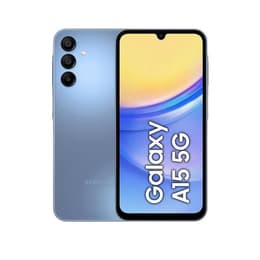
Galaxy A15 5G
Galaxy A15 5G
Starting at

Refurbished price:£99.00

Versus £212.30 new

See options
Galaxy A16 5G
Galaxy A16 5G
Starting at

Refurbished price:£103.00

Versus £205.87 new

See options

Ratings

The Samsung Galaxy A15 5G, released in December 2023, and the Samsung Galaxy A16 5G, launched in October 2024, are both smartphones designed for everyday use. While they share a similar design philosophy and operate on the Android platform, the newer Galaxy A16 5G introduces an extended software support period and a slightly larger display, aiming to enhance the user experience in key areas.

Scores

Durability

When considering the longevity of these devices, their release timelines and software support policies are key factors. The Galaxy A16 5G offers a notable advantage in terms of future-proofing.

  • Release Timeline: The Galaxy A15 5G was released in December 2023, while the Galaxy A16 5G followed in October 2024, making the A16 5G the newer model.
  • Software Support: The Galaxy A15 5G is expected to receive four major Android operating system upgrades and five years of security patches, extending its support until approximately 2028 or 2029. In contrast, the Galaxy A16 5G comes with a more extensive commitment, offering six years of Android updates and security patches, ensuring support until October 2030.
  • Practical Lifespan: Users prioritizing the longest possible software support and access to the latest Android features will find the Galaxy A16 5G better suited for extended use. Both devices feature plastic builds, which are generally durable for daily handling, though neither has an official IP rating for water and dust resistance, with the A16 5G being described as splashproof.

Year of Release

2023

2024

Compatible with latest Update

Yes

Yes

OS

Android

Android

Foldable

No

No

Performance

Both the Galaxy A15 5G and A16 5G are equipped to handle daily smartphone tasks, though their performance characteristics cater to different expectations for responsiveness and multitasking.

  • Everyday Responsiveness: The Galaxy A15 5G, powered by its processor, capably manages routine applications and web browsing. However, some users have noted occasional sluggishness and a slight delay in app loading, particularly with more demanding applications or extensive multitasking.
  • Multitasking and App Handling: The Galaxy A16 5G features a newer generation processor, which provides a modest improvement in overall system responsiveness. While it handles light multitasking and social media scrolling smoothly, power users might still experience occasional stutters in the user interface, especially with multiple applications running simultaneously.
  • Storage and Battery Behavior: Both models offer various RAM configurations, typically ranging from 4GB to 8GB, and storage options up to 256GB, expandable via microSD, providing ample space for apps and media. Both devices are equipped with a 5000 mAh battery, supporting 25W wired charging. The Galaxy A15 5G is noted for its excellent battery life, often lasting a full day and into a second with moderate use. The Galaxy A16 5G also offers solid battery performance, with users reporting all-day usage, though some reviews suggest its active use battery life might be slightly less than its predecessor.

Memory (GB)

4 GB

4 GB

Screen quality

The visual experience on both the Galaxy A15 5G and A16 5G is characterized by vibrant displays, though there are differences in size and outdoor visibility.

  • Display Technology and Clarity: Both smartphones feature Super AMOLED displays with Full HD+ resolution (1080x2340 pixels), delivering deep blacks and vibrant colors for an engaging viewing experience.
  • Size and Refresh Rate: The Galaxy A15 5G comes with a 6.5-inch display, while the Galaxy A16 5G offers a slightly larger 6.7-inch screen, providing a more expansive viewing area. Both displays support a 90Hz refresh rate, contributing to smoother scrolling and a more fluid visual experience compared to standard 60Hz panels.
  • Brightness for Outdoor Use: Both devices offer a peak brightness of around 800 nits. While this is generally sufficient for indoor use, outdoor visibility, especially in direct sunlight, can be challenging for both models, with the A16 5G's outdoor brightness sometimes falling short in lab tests.

Resolution

1080 x 2340

1080 x 2340

Screen type

Super AMOLED

Super AMOLED

Audiovisual

The camera systems on the Galaxy A15 5G and A16 5G are quite similar, offering competent performance for everyday photography, with some limitations in specific scenarios.

  • Main Camera Performance: Both phones are equipped with a 50-megapixel main camera, which captures detailed images in good lighting conditions. Photos taken by the main sensor are generally solid for their class, with good detail and natural-looking colors.
  • Ultra-wide and Macro Lenses: Both devices include a 5-megapixel ultra-wide camera and a 2-megapixel macro camera. The ultra-wide lens is functional for capturing broader scenes, though its detail and dynamic range are not as strong as the main camera. The 2-megapixel macro lens is considered basic and may not produce consistently sharp or detailed close-up shots.
  • Video Recording and Selfies: Both models support video recording at 1080p resolution at 30 frames per second. The video quality from the main camera is generally good for casual use, but the lack of optical image stabilization can result in shaky footage. For selfies, both phones feature a 13-megapixel front-facing camera that delivers decent results in well-lit environments.

Main camera

50 megapixels

50 megapixels

Front camera

13 megapixels

13 megapixels

Miscellaneous

Beyond core specifications, several practical elements differentiate the user experience between the Galaxy A15 5G and A16 5G, impacting daily convenience and connectivity.

  • Connectivity and Ports: Both devices support 5G connectivity, ensuring access to faster mobile networks. They also include Wi-Fi 5 and Bluetooth 5.3 for wireless connections. A notable difference is the presence of a 3.5mm headphone jack on the Galaxy A15 5G, which is absent on the Galaxy A16 5G. Both utilize a USB-C port for charging and data transfer.
  • Biometric Security: For secure unlocking, both smartphones feature side-mounted fingerprint sensors. The Galaxy A16 5G also includes eSIM support, offering more flexibility for network management.
  • Design and Handling: The Galaxy A15 5G measures 160.1 x 76.8 x 8.4 mm and weighs 200g. The Galaxy A16 5G is slightly taller and wider at approximately 164.4 x 77.9 x 7.9 mm, but maintains a similar weight of around 200g, making it feel lighter in comparison to its size. Both phones feature a plastic frame and back, with the A16 5G using a material Samsung calls 'Glastic' on the front and back, designed to mimic glass.

Weight

200 g

200 g

Screen size (in)

6.5

6.7

Mobile network

5G

5G

SIM card

Dual Physical SIM

Dual Physical SIM

Carrier compatibility

Unlocked

Unlocked

The Samsung Galaxy A15 5G and Galaxy A16 5G both offer a solid foundation for everyday smartphone use, each with distinct advantages that cater to different user priorities. User feedback for the Galaxy A15 5G often praises its reliable battery life, vibrant AMOLED display, and competent main camera for its segment. However, some users have expressed concerns regarding its performance, noting occasional slowdowns during demanding tasks or heavy multitasking.

The Galaxy A16 5G, as the successor, builds upon this foundation with a slightly larger display and, most notably, an extended software support commitment of six years, which is a significant draw for users who intend to keep their device for a longer period. Its main camera is also generally well-regarded, and the inclusion of eSIM support adds convenience. Criticisms for the A16 5G often point to its performance, which, despite having a newer processor, can still exhibit stutters in the UI, and the removal of the 3.5mm headphone jack may be a drawback for some. The peripheral cameras (ultrawide and macro) are also frequently cited as being less impressive.

Users prioritizing long-term software updates and a slightly larger screen for media consumption may find the Galaxy A16 5G to be a more suitable choice. Conversely, those who value the presence of a traditional headphone jack and are content with a slightly shorter software support window might lean towards the Galaxy A15 5G. Both devices represent practical options for consumers seeking reliable functionality without advanced features. For those considering these models, exploring quality-assured refurbished options can provide an eco-friendly alternative to purchasing new.


See all articles

Our recent comparisons