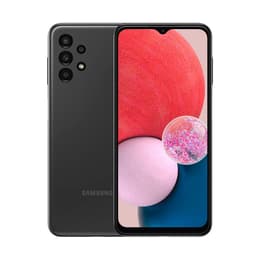


Galaxy A13 Vs Google Pixel 9a

Galaxy A13
Galaxy A13
Starting at

Refurbished price:£73.00

Versus £249.00 new

See options
Google Pixel 9a
Google Pixel 9a
Starting at

Refurbished price:£319.00

Versus £499.00 new

See options

Ratings

The Samsung Galaxy A13 (2022) and the Google Pixel 9a (2025) are smartphones designed for different user expectations, reflecting their respective release years and market positioning. While the Galaxy A13 offers a foundational Android experience, the Pixel 9a integrates more advanced hardware and software capabilities. Both devices operate on the Android platform, but the Pixel 9a benefits from Google's direct software ecosystem and a more recent operating system at launch.

Scores

Durability

The expected practical lifespan and software support differ significantly between these two devices due to their release timelines and manufacturer policies.

  • Release Timeline and Age: The Galaxy A13 was released in March 2022, making it a device that has been on the market for a few years. The Pixel 9a, launched in April 2025, is a much newer device, benefiting from more current technology and a longer support window ahead.
  • OS Support Duration: The Galaxy A13 typically received two major Android OS upgrades, reaching Android 14 (One UI 6.1) as its final major OS update. It is expected to receive security updates until the end of 2025. In contrast, the Pixel 9a launched with Android 15 and is committed to receiving seven years of OS and security updates, offering a substantially longer period of software relevance and security.
  • Repairability: The Galaxy A13 has demonstrated a good repairability score, with some regions reporting an 8 out of 10, indicating a design that facilitates component replacement. While a specific repairability score for the Pixel 9a is not widely published, Google generally supports repairability through parts programs.

Year of Release

2022

2025

Compatible with latest Update

No

Yes

OS

Android

Android

Foldable

No

No

Performance

The performance capabilities of the Galaxy A13 and Pixel 9a reflect their different generations and hardware philosophies, impacting daily usage and responsiveness.

  • Processor Capabilities: The Galaxy A13 is equipped with an octa-core processor that handles everyday tasks like browsing, social media, and light applications. The Pixel 9a features Google's Tensor G4 processor, which is designed for more demanding applications, advanced AI features, and smoother multitasking, providing a more responsive experience across the system.
  • Multitasking and Responsiveness: Users of the Galaxy A13 may experience occasional delays when switching between multiple applications or running graphically intensive content. The Pixel 9a, with its more powerful processor and typically higher RAM configuration (8GB), offers a more fluid experience for multitasking and running contemporary applications.
  • Storage Options: The Galaxy A13 offers various storage configurations, including 32GB, 64GB, and 128GB, with the option to expand storage via a microSD card. The Pixel 9a typically comes with 128GB or 256GB of internal storage, but it does not offer expandable storage.

Memory (GB)

4 GB

8 GB

Screen quality

The visual experience on these devices differs in display technology, resolution, and overall brightness, affecting clarity and outdoor visibility.

  • Display Technology and Clarity: The Galaxy A13 features a 6.6-inch PLS TFT LCD with a resolution of 1080 x 2408 pixels, providing clear visuals for general use. The Pixel 9a has a 6.3-inch OLED display with a resolution of 1080 x 2424 pixels, offering deeper blacks, higher contrast, and more vibrant colors due to its display technology.
  • Refresh Rate and Smoothness: The Galaxy A13 has a standard 60Hz refresh rate, which is suitable for most daily interactions. The Pixel 9a features a variable refresh rate that can go up to 120Hz, resulting in smoother scrolling and a more fluid visual experience, particularly noticeable in fast-paced content or user interface navigation.
  • Brightness Levels: The Pixel 9a's OLED display can achieve significantly higher brightness levels, with peak brightness reaching up to 2700 nits, making it more comfortable to view in bright outdoor conditions compared to the Galaxy A13's LCD panel.

Resolution

1080 x 2408

2424 x 1080

Audiovisual

The camera systems on the Galaxy A13 and Pixel 9a offer different capabilities for photography and video recording, catering to varying user needs.

  • Rear Camera System: The Galaxy A13 features a quad-camera setup with a 50MP main sensor, a 5MP ultrawide, and two 2MP sensors for macro and depth. The Pixel 9a has a dual-camera system, including a 48MP main sensor with optical image stabilization (OIS) and a 13MP ultrawide lens. The Pixel 9a's larger aperture on its main sensor and OIS contribute to better low-light performance and more stable video.
  • Front Camera and Video Quality: The Galaxy A13 includes an 8MP front camera, capable of 1080p video recording. The Pixel 9a features a 13MP front camera and supports 4K video recording on its rear cameras, offering higher detail and flexibility for content creation.
  • Photography Features: The Pixel 9a leverages Google's computational photography, providing features like Pixel Shift, Auto-HDR, and enhanced low-light processing, which can result in more consistent and detailed images across various conditions.

Front camera

8 megapixels

13 megapixels

Miscellaneous

Beyond core features, several practical elements distinguish these devices, from connectivity to physical design and user interaction.

  • Connectivity Options: The Galaxy A13 supports 4G LTE, Wi-Fi 5, and Bluetooth 5.0. The Pixel 9a offers more advanced connectivity with 5G capabilities, Wi-Fi 6E, and Bluetooth 5.3, providing faster data speeds and more stable wireless connections.
  • Ports and Sensors: Both phones include a USB-C port for charging and data transfer. The Galaxy A13 retains a 3.5mm headphone jack, which is absent on the Pixel 9a. For security, both devices feature a fingerprint sensor, with the Galaxy A13's being side-mounted and the Pixel 9a typically using an in-display optical sensor.
  • Build Materials and Durability: The Galaxy A13 features a glass front (Gorilla Glass 5) and a plastic back and frame. The Pixel 9a incorporates an aluminum frame and a matte glass back, along with IP68 dust and water resistance, offering a higher level of protection against environmental elements.
  • Dimensions and Handling: The Galaxy A13 is a larger device at 165.1 x 76.4 x 8.8 mm and 195g. The Pixel 9a is more compact and lighter, measuring around 154 x 73 x 8.8mm and weighing 187g, which may appeal to users preferring a smaller form factor for one-handed use.

Weight

195 g

186 g

Screen size (in)

6.6

6.3

Mobile network

4G

5G

SIM card

Dual Physical SIM

Physical SIM + eSIM

Carrier compatibility

Unlocked

Unlocked

The Samsung Galaxy A13 and Google Pixel 9a cater to distinct user needs, primarily differentiated by their release generations and the technological advancements introduced over time. Users often praise the Galaxy A13 for its large display and long-lasting battery, making it a practical choice for essential smartphone functions. However, some users note its performance limitations with more demanding applications and its shorter software support window compared to newer devices.

The Pixel 9a, being a more recent release, is frequently lauded for its robust performance, advanced camera capabilities, and Google's extended software support policy, which promises updates for seven years. Its integration of AI features and a vibrant OLED display are also common points of appreciation. Some users might find its design less distinctive than previous Pixel models or note that its charging speed is not the fastest available.

Users prioritizing a device for basic communication, media consumption, and a large screen, with a focus on a more established ecosystem, may find the Galaxy A13 suitable. Conversely, individuals seeking a device with a longer software lifespan, superior camera performance, smoother overall operation, and advanced AI features will likely find the Pixel 9a better aligned with their requirements. Both devices offer reliable Android experiences, and for those considering a sustainable choice, quality-assured refurbished options are available for both models, providing an eco-friendly alternative to purchasing new.


See all articles

Our recent comparisons