Galaxy A13 Vs Galaxy Z Fold6

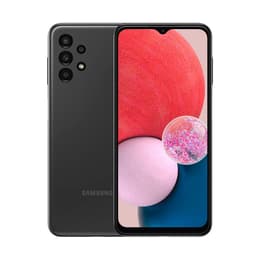
Galaxy A13
Galaxy A13
Starting at

Refurbished price:£73.00

Versus £249.00 new

See options
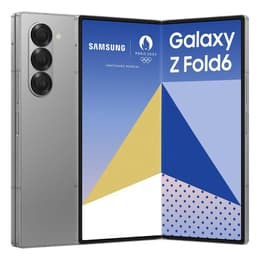
Galaxy Z Fold6
Galaxy Z Fold6
Starting at

Refurbished price:£523.00

Versus £1,685.59 new

See options

Ratings

The Samsung Galaxy A13, released in early 2022, is a traditional smartphone designed for everyday use, focusing on core functionalities. In contrast, the Samsung Galaxy Z Fold6, launched in mid-2024, represents a premium foldable device that transforms from a compact smartphone into a larger tablet-like experience. These devices cater to distinctly different user needs, primarily differing in their form factor, processing power, and display technology.

Scores

Durability

The expected practical lifespan and software support differ significantly between these two devices, reflecting their respective market segments and release timelines.

  • Release Timeline: The Galaxy A13 was released in early 2022, while the Galaxy Z Fold6 became available in mid-2024. This two-year difference means the Z Fold6 benefits from more recent hardware and software advancements.
  • Software Longevity: The Galaxy A13 (4G variant) originally shipped with Android 12 and is upgradable to Android 14, while the 5G variant shipped with Android 11 and is upgradable to Android 13. The Galaxy Z Fold6 launched with Android 14 and is promised 7 years of Android OS upgrades and security updates, extending its software support significantly further into the future, potentially up to Android 21.
  • Physical Durability: The Galaxy A13 features a plastic build with Corning Gorilla Glass 5 on its display, offering basic scratch resistance. The Galaxy Z Fold6, with its foldable design, incorporates an Armor Aluminum frame, Gorilla Glass Victus 2 on its cover screen and back panel, and an Ultra Thin Glass for its inner display. It also boasts an IP48 rating, providing water resistance and some protection against solid particles larger than 1mm, a notable improvement for foldable devices.

Year of Release

2022

2024

Compatible with latest Update

No

Yes

OS

Android

Android

Foldable

No

Yes

Performance

The performance capabilities of the Galaxy A13 and Galaxy Z Fold6 are tailored to different user expectations and tasks, reflecting their internal hardware.

  • Processing Power: The Galaxy A13 is equipped with an octa-core processor designed for essential daily tasks, such as browsing, social media, and light applications. The Galaxy Z Fold6 features a current-generation, high-performance processor, enabling smooth operation of demanding applications, advanced multitasking, and graphically intensive gaming.
  • Multitasking and Responsiveness: With 3GB to 6GB of RAM, the Galaxy A13 handles basic multitasking, though users may experience slower app transitions and occasional delays with multiple applications open. The Galaxy Z Fold6 comes with 12GB of RAM, providing substantial capacity for seamless switching between numerous applications and maintaining responsiveness even under heavy workloads.
  • Storage Options: The Galaxy A13 offers internal storage options from 32GB to 128GB, with the flexibility to expand storage up to 1TB via a microSD card. The Galaxy Z Fold6 provides larger internal storage configurations ranging from 256GB to 1TB, but it does not include a microSD card slot for expandable storage.

Memory (GB)

4 GB

12 GB

Screen quality

The display experience is a primary differentiator, with the Galaxy A13 offering a standard smartphone screen and the Galaxy Z Fold6 providing a versatile dual-screen setup.

  • Display Technology and Clarity: The Galaxy A13 features a 6.6-inch PLS LCD display with a resolution of 1080 x 2408 pixels, offering clear visuals for general content consumption. The Galaxy Z Fold6 boasts two Dynamic AMOLED 2X displays: a 6.3-inch cover screen and a 7.6-inch main foldable screen, both delivering vibrant colors, deep blacks, and high clarity with resolutions of 2376 x 968 pixels and 2160 x 1856 pixels respectively.
  • Refresh Rate and Smoothness: The Galaxy A13's display operates at a standard 60Hz refresh rate, which is suitable for everyday interactions. The Galaxy Z Fold6's displays feature an adaptive refresh rate that can scale from 1Hz to 120Hz, providing exceptionally smooth scrolling and fluid animations, which is particularly noticeable during gaming or fast-paced content.
  • Brightness and Viewing Experience: The Galaxy A13's LCD panel offers adequate brightness for indoor use, though visibility may be reduced in bright outdoor conditions. The Galaxy Z Fold6's AMOLED displays achieve a peak brightness of up to 2,600 nits, ensuring excellent visibility and color accuracy even in direct sunlight. The foldable nature of the Z Fold6 allows for a larger, immersive viewing area when unfolded, enhancing productivity and media consumption.

Resolution

1080 x 2408

1856 x 2160

Screen type

PLS LCD

Foldable Dynamic LTPO AMOLED 2X

Audiovisual

The camera systems of these two devices are designed for different levels of photographic versatility and image quality.

  • Rear Camera System: The Galaxy A13 (4G variant) includes a quad-camera setup with a 50MP main sensor, a 5MP ultrawide, and two 2MP sensors for macro and depth. The Galaxy Z Fold6 features a triple rear camera system comprising a 50MP wide-angle lens with optical image stabilization (OIS), a 12MP ultrawide lens, and a 10MP telephoto lens with 3x optical zoom and OIS.
  • Photography Performance: The Galaxy A13's main 50MP camera can capture detailed photos in good lighting conditions, but its ultrawide and macro lenses offer more limited utility. The Galaxy Z Fold6's camera system delivers high-resolution images with improved detail and color accuracy across its multiple lenses, performing competently in various lighting scenarios, including enhanced low-light photography with its main sensor.
  • Video Recording and Front Cameras: Both devices are capable of recording video at 1080p at 30 frames per second with their main cameras. The Galaxy A13 has an 8MP front camera (4G variant). The Galaxy Z Fold6 offers more advanced video capabilities, including 8K at 30fps and 4K at 60fps from its primary camera, and features a 10MP front camera on the cover screen and a 4MP under-display camera on the main screen for video calls and selfies.

Main camera

50 megapixels

50 megapixels

Front camera

8 megapixels

4 megapixels

Miscellaneous

Beyond core features, several practical elements contribute to the overall user experience and differentiate these two Samsung smartphones.

  • Connectivity and Ports: The Galaxy A13 supports 4G LTE (with a 5G variant available) and Wi-Fi, along with Bluetooth 5.0, and includes a 3.5mm headphone jack and a USB-C port for charging and data transfer. The Galaxy Z Fold6 offers advanced connectivity with 5G, newer Wi-Fi standards (Wi-Fi 6E/7), and Bluetooth 5.3/5.4, featuring a USB-C port but omitting the traditional headphone jack.
  • Biometric Security: Both devices incorporate a side-mounted fingerprint sensor for secure unlocking. The Galaxy Z Fold6 also includes face recognition capabilities, leveraging its front-facing cameras for additional security and convenience.
  • Design and Handling: The Galaxy A13 has a conventional slab design, weighing around 195 grams and measuring 8.8mm thick. The Galaxy Z Fold6, with its unique foldable form factor, is heavier at 239 grams and thicker when folded (12.1mm) but much thinner when unfolded (5.6mm), offering a different handling experience that adapts to various use cases. The Z Fold6 also supports S Pen input on its main display, though the stylus is sold separately.

Weight

195 g

239 g

Screen size (in)

6.6

7.6

Mobile network

4G

5G

SIM card

Dual Physical SIM

Dual Physical SIM + eSIM

Carrier compatibility

Unlocked

Unlocked

The Samsung Galaxy A13 and Galaxy Z Fold6 cater to distinct user needs, with user feedback highlighting their respective strengths. For the Galaxy A13, common praise points often revolve around its reliable battery life, which users report can last through a full day of heavy use and sometimes longer. It is generally seen as a functional device for essential smartphone tasks. Criticisms sometimes point to its display quality and overall performance, which can feel less fluid compared to higher-end devices.

The Galaxy Z Fold6, on the other hand, is frequently lauded for its innovative foldable design, offering a large, immersive screen for productivity and media consumption. Users appreciate its powerful performance and the versatility of having both a compact cover screen and an expansive inner display. While its camera system is competent, some users note that it may not match the absolute top-tier performance of some non-foldable flagship phones. Battery life, while improved through software optimization, is considered good for a foldable but not necessarily exceptional when compared to traditional smartphones.

Users prioritizing extended software support, advanced multitasking capabilities, and a versatile, large display for productivity and entertainment may find the Galaxy Z Fold6 well-suited to their needs. Its robust build and water resistance also appeal to those seeking a durable, cutting-edge device. Conversely, users who require a straightforward smartphone for daily communication, social media, and basic media consumption, coupled with long battery life, may prefer the Galaxy A13. It serves as a practical option for those who value core functionality in a traditional form factor. Both devices, whether new or as quality-assured refurbished options, enable informed and sustainable choices for consumers.

See all articles

Our recent comparisons