
Galaxy A13 Vs Galaxy A16 5G

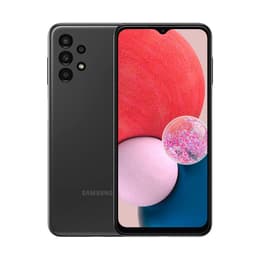
Galaxy A13
Galaxy A13
Starting at

Refurbished price:£73.00

Versus £249.00 new

See options
Galaxy A16 5G
Galaxy A16 5G
Starting at

Refurbished price:£103.00

Versus £205.87 new

See options

Ratings

The Samsung Galaxy A13, released in March 2022, and the Samsung Galaxy A16 5G, launched in October 2024, are both Android smartphones designed for everyday use. While the A13 offered a solid entry-level experience, the A16 5G brings notable advancements in display technology, processing capabilities, and a significantly extended software support policy. Both devices run on Samsung's One UI over Android, providing a consistent user experience.

Scores

Durability

When considering the long-term usability of these devices, their release timelines and software support policies are key differentiators.

  • Release Timeline & OS Support: The Galaxy A13, released in March 2022, launched with Android 12 (4G LTE model) or Android 11 (5G model) and received two major Android OS updates, reaching Android 14 and One UI 6.1 for the 4G LTE variant. It is expected to receive security updates until the end of 2025. In contrast, the Galaxy A16 5G, released in October 2024 with Android 14 and One UI 6.1, is guaranteed an exceptional six years of major OS upgrades and six years of security updates, extending its support until October 2030.
  • Repairability: The Galaxy A13 (LTE model) has a repairability index score of 8 out of 10, indicating a relatively straightforward repair process with good availability of parts. The Galaxy A13 5G model has a score of 7 out of 10. The Galaxy A16 5G also demonstrates good repairability, with a score of 8.0 out of 10, and some sources even suggest 9 out of 10, partly due to easily accessible components like the battery with pull tabs.
  • Expected Practical Lifespan: Users prioritizing extended software longevity and up-to-date features will find the Galaxy A16 5G's six-year update commitment a significant advantage, ensuring a longer practical lifespan for modern applications and security. The Galaxy A13, while still receiving security patches for a period, has reached its limit for major OS upgrades.

Year of Release

2022

2024

Compatible with latest Update

No

Yes

OS

Android

Android

Foldable

No

No

Performance

The performance of both smartphones caters to everyday tasks, though the newer model offers a more responsive experience.

  • Processor Capabilities: The Galaxy A13 is powered by an octa-core processor, such as the Exynos 850 for the 4G LTE version or the MediaTek Dimensity 700 for the 5G version. The Galaxy A16 5G features a more recent octa-core processor, either the Exynos 1330 or MediaTek Dimensity 6300, which provides a smoother experience for basic activities, light multitasking, social media, and streaming.
  • System Responsiveness & Multitasking: While the Galaxy A13 initially performed well, some users reported a noticeable slowdown and occasional stuttering after extended use, particularly with multiple apps open. The Galaxy A16 5G generally handles everyday apps and multitasking smoothly, though some user reviews indicate that variants with lower RAM (e.g., 4GB) can still experience occasional stuttering or slowdowns, especially under heavier loads.
  • Storage Options: Both devices offer various internal storage configurations, typically ranging from 32GB to 128GB for the A13 and 128GB to 256GB for the A16 5G. Both models support expandable storage via a microSD card, allowing users to increase their storage capacity for photos, videos, and apps.

Memory (GB)

4 GB

4 GB

Screen quality

The visual experience differs between the two models, with the newer device offering an enhanced display technology.

  • Display Technology & Clarity: The Galaxy A13 features a 6.6-inch PLS TFT LCD with a Full HD+ resolution (1080 x 2408 pixels), providing clear visuals for general use. The Galaxy A16 5G upgrades to a 6.7-inch Super AMOLED display with a Full HD+ resolution (1080 x 2340 pixels), which typically offers more vibrant colors, deeper blacks, and better contrast compared to an LCD panel.
  • Refresh Rate & Brightness: The Galaxy A13 (4G LTE) has a standard 60Hz refresh rate, while some 5G variants offered 90Hz. The Galaxy A16 5G consistently features a 90Hz refresh rate, contributing to smoother scrolling and a more fluid user interface experience. The A16 5G also boasts a higher peak brightness of around 800 nits in High Brightness Mode (HBM), making it more visible outdoors compared to the A13's typical brightness of around 483 cd/m².
  • Viewing Experience: The larger Super AMOLED screen of the Galaxy A16 5G provides a more immersive viewing experience for media consumption and general browsing, with its enhanced color reproduction and contrast. While the A13's LCD is functional, the A16 5G's display offers a noticeable upgrade for users who prioritize visual quality.

Resolution

1080 x 2408

1080 x 2340

Screen type

PLS LCD

Super AMOLED

Audiovisual

Both devices offer multi-camera setups, with the main sensor generally performing well under optimal conditions.

  • Camera System Capabilities: The Galaxy A13 (4G LTE) features a quad-camera setup with a 50MP main sensor, a 5MP ultrawide, a 2MP macro, and a 2MP depth sensor. The Galaxy A16 5G comes with a triple-camera system, also featuring a 50MP main sensor, a 5MP ultrawide, and a 2MP macro lens. The front-facing camera is 8MP on the A13 (4G LTE) and 13MP on the A16 5G.
  • Photography Performance: Both phones' 50MP main cameras are capable of capturing decent images in good lighting conditions, with the A16 5G often producing vibrant colors. However, the secondary ultrawide and macro lenses on both models are frequently noted by users as being of limited utility or poor quality. Neither device includes Optical Image Stabilization (OIS), which can impact low-light performance and video stability.
  • Video & Audio Quality: Both devices support video recording up to 1080p at 30 frames per second. The absence of OIS on both can lead to shaky video footage. User reviews for the A13 often criticize its single speaker for poor audio quality. The A16 5G also lacks stereo speakers and 4K video recording, which some users might expect from a newer device.

Main camera

50 megapixels

50 megapixels

Front camera

8 megapixels

13 megapixels

Miscellaneous

Beyond core specifications, several practical elements contribute to the overall user experience of these smartphones.

  • Connectivity & Ports: The Galaxy A13 is available in both 4G LTE and 5G variants, while the Galaxy A16 is exclusively a 5G device, offering faster mobile data speeds. Both support standard Wi-Fi and Bluetooth connectivity. The A13 uses a USB Type-C 2.0 port, and the A16 5G also features a USB Type-C port. Neither device typically includes a traditional headphone jack.
  • Sensors & Biometrics: Both smartphones include a side-mounted fingerprint sensor for secure unlocking. They also feature common sensors like accelerometers and proximity sensors. The Galaxy A16 5G may utilize a virtual proximity sensor, which some users have noted as a potential drawback.
  • Build & Handling: Both the Galaxy A13 and A16 5G feature a plastic build, with the A16 5G incorporating what Samsung calls 'Glastic' on the front and back, mimicking glass. The A13 weighs around 195g, while the A16 5G is slightly heavier at 200g. The A16 5G also introduces an IP54 rating for splash and dust resistance, offering a degree of protection not found on the A13. Some users have expressed concerns about the A16 5G's durability due to its slippery material and potential for corner damage from drops.

Weight

195 g

200 g

Screen size (in)

6.6

6.7

Mobile network

4G

5G

SIM card

Dual Physical SIM

Dual Physical SIM

Carrier compatibility

Unlocked

Unlocked

The Samsung Galaxy A13 and Galaxy A16 5G cater to users seeking functional Android smartphones, with the A16 5G representing a more modern and future-proof option. Users often praise the Galaxy A13 for its reliable battery life and decent main camera performance in good lighting conditions. However, common criticisms include its slower performance over time, particularly for the 5G model, and the limited utility of its secondary camera lenses. The display, while functional, is an LCD panel with a standard refresh rate.

The Galaxy A16 5G is frequently lauded for its vibrant Super AMOLED display with a 90Hz refresh rate, solid battery life, and a main camera that performs well for its category. Its most significant advantage, and a frequent point of praise from users, is Samsung's commitment to six years of major OS and security updates, which is exceptional for a device in this segment. Criticisms often revolve around its performance, which some users find can still stutter or slow down, especially with lower RAM configurations, and the continued presence of subpar secondary camera sensors. The lack of stereo speakers and 4K video recording are also noted as drawbacks.

Users prioritizing long-term software support and a more modern display experience will find the Galaxy A16 5G well-suited to their needs. Its extended update policy makes it a sustainable choice for those who keep their devices for several years. Conversely, users with more basic requirements who are comfortable with an older software update cycle and a less vibrant display might still find the Galaxy A13 sufficient. For those evaluating refurbished products, both models offer an eco-friendly alternative to purchasing new, allowing for informed decisions based on individual priorities.


See all articles

Our recent comparisons