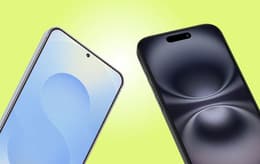
Compare models

Galaxy A04S Vs iPhone Air

  • 1-year minimum warranty
  • Free delivery on all items
  • Free 30-day returns
iPhone Air
Starting at

Refurbished price:£604.00

Versus £1,099.00 new

See options

Differences at a glance

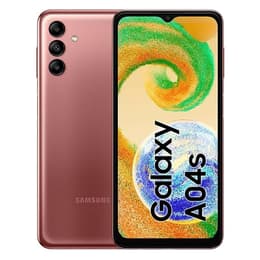
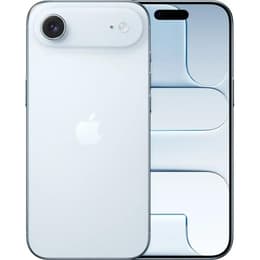
The Samsung Galaxy A04s (2022) and the Apple iPhone Air (2025) represent completely different tiers and eras of the smartphone market, catering to vastly distinct user expectations. While the Galaxy A04s is an entry-level Android device built for essential day-to-day communication, the iPhone Air is a contemporary, ultra-slim flagship running iOS that prioritizes a lightweight profile and high-end capabilities. These devices differ significantly in build philosophy, operating systems, and overall processing power.

Available Models

Colour

Storage

Scores

Durability

Lifecycle expectations and software longevity differ substantially between these models due to their release timelines and positioning.

  • Release timeline and software support: The Galaxy A04s launched in 2022 with Android 12, whereas the iPhone Air arrived in late 2025 running iOS 26, giving the Apple device a much longer expected window for major system updates and security patches.
  • Repairability and durability: The Galaxy A04s utilizes a standard plastic build that handles minor drops flexibly, while the iPhone Air features a rigid titanium frame paired with reinforced glass protection, though its ultra-thin chassis requires careful handling.
  • Practical lifespan: Users looking for multi-year software relevance will find that the newer iOS architecture of the iPhone Air provides sustained system updates, whereas the Galaxy A04s suits users with shorter-term or basic communication needs.

Year of Release

2022

2025

Compatible with latest Update

Yes

Yes

OS

Android

iOS

Foldable

No

No

Performance

System responsiveness, multitasking capability, and daily operational speeds vary drastically based on the internal hardware architecture of each phone.

  • App loading and multitasking: The iPhone Air handles demanding applications, high-end mobile gaming, and heavy background multitasking smoothly, while the Galaxy A04s is tailored for simpler tasks like web browsing, messaging, and light media streaming.
  • Storage capacity: The Galaxy A04s offers expandable storage via a dedicated card slot, whereas the iPhone Air relies on fixed internal storage tiers starting at larger capacities without external expansion options.
  • Battery behavior: The Galaxy A04s features a large battery capacity paired with lower-power hardware that easily stretches across full-day basic use, while the iPhone Air balances a slim battery footprint with efficient power management for moderate daily routines.

Screen quality

Visual output and screen responsiveness offer entirely different viewing experiences depending on the display technology employed.

  • Display technology: The iPhone Air utilizes an advanced OLED panel with deep contrast levels and high peak brightness, whereas the Galaxy A04s features a basic liquid crystal display panel suitable for indoor visibility.
  • Refresh rate and smoothness: The iPhone Air supports a fluid high refresh rate for seamless scrolling, while the Galaxy A04s incorporates a modest 90Hz refresh rate that offers adequate smoothness for a budget device.
  • Resolution and clarity: The iPhone Air delivers sharp high-resolution text and media rendering, whereas the Galaxy A04s uses a lower resolution that prioritizes energy conservation over fine visual crispness.

Resolution

720 x 1600

2736x1260

Screen type

PLS LCD

Super Retina XDR

Audiovisual

Multimedia capture and audio output capabilities reflect the distinct target categories of these two smartphones.

  • Camera versatility: The iPhone Air features a high-resolution single primary lens supported by advanced computational photography for clear low-light and video performance, whereas the Galaxy A04s provides a basic multi-lens setup intended for casual daytime snapshots.
  • Video recording: The iPhone Air records steady, high-definition video with sophisticated stabilization features, while the Galaxy A04s handles standard definition video capture for basic sharing.
  • Media consumption: The iPhone Air delivers balanced audio output for media playback, whereas the Galaxy A04s relies on a single mono speaker supplemented by the convenience of a traditional headphone jack.

Main camera

50 megapixels

48 megapixels

Front camera

5 megapixels

18 megapixels

Miscellaneous

Physical handling, port selection, and connectivity features dictate how each phone integrates into everyday accessories and networks.

  • Connectivity standards: The iPhone Air supports modern fifth-generation cellular networks and fast wireless protocols, while the Galaxy A04s is restricted to standard fourth-generation connectivity.
  • Port type and build weight: The iPhone Air adopts a reversible connector housed within an exceptionally thin titanium body weighing 165 grams, whereas the Galaxy A04s features a thicker plastic construction weighing 195 grams.
  • Authentication sensors: The Galaxy A04s relies on a side-mounted fingerprint reader, whereas the iPhone Air uses advanced facial recognition technology for secure unlocking and system navigation.

Weight

195 g

165 g

Screen size (in)

6.5

6.5

Mobile network

4G

5G

SIM card

Dual Physical SIM

eSIM

Carrier compatibility

Unlocked

Unlocked

Connector

USB-C

USB-C

What the community thinks

Choosing between the Samsung Galaxy A04s and the iPhone Air depends entirely on individual usage requirements and ecosystem preferences. Users prioritizing advanced processing power, high-resolution visual displays, and long-term software support will find the iPhone Air well-suited to their needs. Conversely, users seeking a straightforward, utilitarian device for basic calling, messaging, and expandable storage will lean toward the Galaxy A04s. Both options cater to distinct functional expectations without direct overlap in capability.

For consumers exploring sustainable alternatives, opting for a quality-assured refurbished option from Back Market provides an eco-friendly way to acquire either model while reducing electronic waste. Evaluating core priorities such as daily processing demands, operating system preference, and physical handling will guide a practical and informed purchasing decision.