
Galaxy S20 Vs Galaxy S20 FE

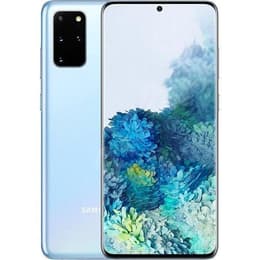
Galaxy S20
Galaxy S20
Starting at

Refurbished price:£157.00

Versus £829.95 new

See options
Galaxy S20 FE
Galaxy S20 FE
Starting at

Refurbished price:£116.99

Versus £900.00 new

See options

Ratings

The Samsung Galaxy S20 (released in March 2020) and the Samsung Galaxy S20 FE (Fan Edition, launched in October 2020) are both Android smartphones from the same generation, offering a blend of features for different user preferences. While the Galaxy S20 presents a more compact design with a higher-resolution display, the Galaxy S20 FE provides a larger screen and a bigger battery, catering to users seeking core flagship capabilities in a slightly different form factor. Both devices launched with Android 10 and have received several major operating system updates.

Scores

Durability

When considering the long-term usability of these devices, their release timelines and software support are key factors.

  • Release Timeline: The Galaxy S20 was introduced in March 2020, followed by the Galaxy S20 FE in October 2020. This seven-month difference means the S20 FE benefits from a slightly longer period of potential software support.
  • Software Longevity: Both models received three major Android operating system updates, bringing them up to Android 13. Security updates for the Galaxy S20 likely concluded in early 2024, while the Galaxy S20 FE may have received security patches until late 2024 or early 2025 due to its later release date. As of 2026, both devices are past their major OS update cycles, but can still run most current applications.
  • Repairability: The Galaxy S20 has a repairability score of 7 out of 10, with accessible battery and screen cables, though adhesive is used for the back cover and battery. The Galaxy S20 FE scores slightly higher at 7.5 out of 10, also noted for moderate repairability with accessible components despite the use of adhesive.

Year of Release

2020

2020

Compatible with latest Update

No

No

OS

Android

Android

Foldable

No

No

Performance

Both the Galaxy S20 and S20 FE are equipped to handle demanding tasks, though there are distinctions in their configurations that impact overall responsiveness.

  • Processing Power: Both devices feature current-generation processors, ensuring smooth operation for everyday applications, multitasking, and mobile gaming. Users can expect a responsive experience across various activities.
  • Multitasking Capability: The Galaxy S20 typically offers 8GB or 12GB of RAM, while the S20 FE comes with 6GB or 8GB of RAM. The higher RAM options in the Galaxy S20 may provide a slight advantage in managing numerous applications simultaneously or in very demanding multitasking scenarios.
  • Battery Behavior: The Galaxy S20 FE features a larger 4500 mAh battery compared to the Galaxy S20's 4000 mAh unit. This generally translates to longer usage times between charges for the S20 FE, particularly for heavy users. While the S20 supports 25W fast charging and includes a 25W charger, the S20 FE, despite supporting 25W, typically ships with a 15W charger.

Memory

8 GB

6 GB

Screen quality

The display experience on these two smartphones differs primarily in resolution and size, while both offer smooth visuals.

  • Display Technology and Clarity: The Galaxy S20 features a 6.2-inch Dynamic AMOLED 2X display with a QHD+ resolution (3200x1440 pixels), resulting in a very sharp and detailed image with deep blacks and vibrant colors. The Galaxy S20 FE has a larger 6.5-inch Super AMOLED display with an FHD+ resolution (2400x1080 pixels). The S20's higher pixel density provides a noticeably sharper display, especially for fine text and high-resolution content.
  • Brightness and Refresh Rate: Both devices offer a 120Hz refresh rate for smooth scrolling and animations. However, the Galaxy S20 requires users to choose between the QHD+ resolution and the 120Hz refresh rate, as they cannot be used simultaneously. The S20 FE's display is generally considered bright enough for outdoor use.
  • Screen Size and Design: The Galaxy S20 has a smaller 6.2-inch screen with curved edges, contributing to a more compact feel. The Galaxy S20 FE offers a larger 6.5-inch flat display, which some users find more practical for content consumption and less prone to accidental touches.

Resolution

1440 x 3200

1080 x 2400

Screen type

Dynamic AMOLED 2X

Super AMOLED

Audiovisual

Both the Galaxy S20 and S20 FE offer versatile camera systems, though with some key differences in their telephoto and front-facing cameras.

  • Rear Camera System: Both phones feature a triple-camera setup. The Galaxy S20 includes a 12MP main, 12MP ultrawide, and a 64MP telephoto lens that uses cropping for 3x hybrid optical zoom. The Galaxy S20 FE also has a 12MP main and 12MP ultrawide, but an 8MP telephoto lens that provides a dedicated 3x optical zoom. The ultrawide camera on the S20 has slightly larger sensor pixels, which can contribute to better image quality.
  • Photography Performance: In general, the main and ultrawide cameras on both devices deliver comparable results in good lighting conditions, with minor differences in dynamic range and color saturation where the S20 might have a slight edge. Both support features like Night Mode and Super Steady video.
  • Front Camera Quality: The Galaxy S20 features a 10MP front camera, while the Galaxy S20 FE has a 32MP front camera. Despite the higher megapixel count on the FE, the S20's front camera often produces better results, particularly in low-light conditions, due to its larger pixel size, offering more brightness and accurate colors.

Main camera

12 megapixels

12 megapixels

Front camera

10 megapixels

32 megapixels

Miscellaneous

Beyond core specifications, several practical elements differentiate the user experience between these two devices.

  • Connectivity: Both the Galaxy S20 and S20 FE support 5G connectivity (depending on the specific variant), Wi-Fi 6, and Bluetooth 5.0, ensuring fast and reliable wireless connections for modern usage.
  • Physical Design and Materials: The Galaxy S20 is more compact and lighter, measuring 151.7 x 69.1 x 7.9 mm and weighing 163g. It features a premium glass back (Gorilla Glass 6) and an aluminum frame. The Galaxy S20 FE is slightly larger and heavier at 159.8 x 74.5 x 8.4 mm and 190g, with a plastic (polycarbonate) back and an aluminum frame. The plastic back of the FE can offer more resilience to minor impacts and a grippier feel, while the S20 provides a more premium tactile experience. Both devices are IP68 rated for dust and water resistance.
  • Biometric Security: Both phones incorporate an in-display fingerprint sensor and face recognition. The Galaxy S20 uses an ultrasonic fingerprint sensor, while the Galaxy S20 FE uses an optical sensor. Some users report the optical sensor on the FE can be more reliable.

Weight

163 g

193 g

Width

6,91 cm

7,45 cm

Height

15,17 cm

15,98 cm

Depth

0,79 cm

0,84 cm

Screen size (in)

6.2

6.5

Network

4G

4G

SIM card

Dual Physical SIM

Physical SIM

Carrier compatibility

Unlocked

Unlocked

The Samsung Galaxy S20 and Galaxy S20 FE, both released in 2020, offer distinct advantages tailored to different user priorities. User feedback often highlights the Galaxy S20's more premium build quality, sharper display, and higher RAM configurations as key strengths. Conversely, the Galaxy S20 FE is frequently praised for its larger screen, generally longer battery life, and a flat display that some prefer for usability. While the S20's selfie camera is often noted for better low-light performance, the S20 FE's dedicated optical zoom lens is a point of appeal for others.

Users prioritizing a compact device with a high-resolution, curved display and a more premium glass construction may find the Galaxy S20 better suited to their needs. Those who value a larger, flat screen, extended battery life, and a potentially more durable plastic back might lean towards the Galaxy S20 FE. Both devices provide a robust Android experience with similar processing power and connectivity options. Ultimately, the choice depends on individual preferences for design, display characteristics, and specific camera features. For those considering either model, exploring quality-assured refurbished options can provide an eco-friendly alternative.

See all articles

Our recent comparisons