
Galaxy S10+ Vs Galaxy S20

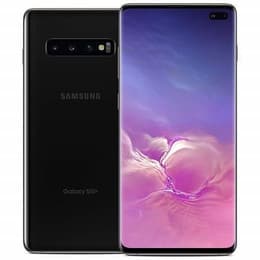
Galaxy S10+
Galaxy S10+
Starting at

Refurbished price:£115.32

Versus £330.00 new

See options
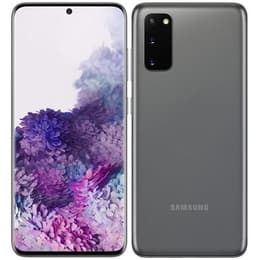
Galaxy S20
Galaxy S20
Starting at

Refurbished price:£143.00

Versus £799.00 new

See options

Ratings

The Samsung Galaxy S10 Plus, released in March 2019, and the Samsung Galaxy S20, launched in March 2020, represent successive generations of Samsung's flagship smartphone line. While both offer a premium Android experience, the Galaxy S20 introduces advancements in display technology, camera capabilities, and connectivity. Both devices run on the Android operating system with Samsung's One UI overlay, providing a consistent user experience across the brand.

Scores

Durability

When considering the practical lifespan of these devices, several factors come into play, including their release timelines, software support, and physical durability.

  • Release Timeline: The Galaxy S10 Plus was released in March 2019, making it a year older than the Galaxy S20, which launched in March 2020. This difference in release date directly impacts their software support cycles.
  • Software Longevity: The Galaxy S10 Plus received its last major Android operating system update with Android 12 (One UI 4.1). The Galaxy S20, being newer, received its last major Android update with Android 13 (One UI 5.1), offering an additional year of major OS support. Both devices have received regular security updates for several years post-launch.
  • Physical Durability: Both models feature Gorilla Glass 6 on the front for display protection and an aluminum frame. The Galaxy S10 Plus has Gorilla Glass 5 on its back, while the Galaxy S20 also uses Gorilla Glass 6 on the back. Both are rated IP68 for dust and water resistance, meaning they can withstand submersion in up to 1.5 meters of water for 30 minutes.

Year of Release

2019

2020

Compatible with latest Update

No

No

OS

Android

Android

Foldable

No

No

Performance

The performance of a smartphone is crucial for daily tasks, from app usage to multitasking and gaming. Both the Galaxy S10 Plus and Galaxy S20 offer robust performance for their respective generations.

  • Processing Power: The Galaxy S20 features a newer generation processor compared to the Galaxy S10 Plus. This translates to generally faster app loading times, smoother transitions, and more efficient handling of demanding applications and games on the S20.
  • Multitasking and Storage: Both devices offer various RAM configurations, with options for 8GB or 12GB, allowing for efficient multitasking. The Galaxy S10 Plus was available with up to 1TB of internal storage, while the Galaxy S20 typically came with 128GB of internal storage. Both support expandable storage via a microSD card, offering flexibility for users with large media libraries.
  • Battery Behavior: The Galaxy S10 Plus is equipped with a 4100 mAh battery, while the Galaxy S20 has a 4000 mAh battery. Despite the slightly smaller capacity, the Galaxy S20's newer, more efficient processor and display technology can contribute to optimized power consumption. Users generally report that the Galaxy S10 Plus's battery can last through a full day of moderate to heavy use. The Galaxy S20's battery life can be influenced by its 120Hz refresh rate setting, which offers a smoother visual experience but consumes more power.

Memory (GB)

8 GB

8 GB

Screen quality

The display is a primary interface for any smartphone, and both the Galaxy S10 Plus and Galaxy S20 offer high-quality viewing experiences with distinct characteristics.

  • Display Technology and Resolution: Both phones feature Dynamic AMOLED displays, known for deep blacks and vibrant colors. The Galaxy S10 Plus has a 6.4-inch display with a resolution of 3040 x 1440 pixels. The Galaxy S20 has a slightly smaller 6.2-inch display but a higher resolution of 3200 x 1440 pixels, resulting in a slightly higher pixel density.
  • Refresh Rate: A key differentiator is the refresh rate. The Galaxy S10 Plus features a standard 60Hz refresh rate. The Galaxy S20 introduced a 120Hz refresh rate option, which provides a noticeably smoother scrolling experience and more fluid animations, though it operates at 60Hz at its highest resolution.
  • Brightness and Clarity: Both displays offer excellent brightness levels, making them suitable for outdoor use. The Dynamic AMOLED technology ensures good contrast and color accuracy for media consumption and general viewing.

Resolution

1440 x 3040

1440 x 3200

Screen type

Dynamic AMOLED

Dynamic AMOLED 2X

Audiovisual

Camera performance is a significant consideration for many users, and both the Galaxy S10 Plus and Galaxy S20 offer versatile camera systems.

  • Rear Camera System: The Galaxy S10 Plus features a triple-camera setup with a 12MP wide-angle lens, a 12MP telephoto lens with 2x optical zoom, and a 16MP ultrawide lens. The Galaxy S20 also has a triple-camera system, but it includes a 12MP wide-angle lens, a 64MP telephoto lens with 3x hybrid optical zoom, and a 12MP ultrawide lens. The S20's telephoto lens offers greater zoom capabilities.
  • Photography Performance: The Galaxy S20 generally offers improved low-light performance and enhanced detail capture, particularly with its higher-megapixel telephoto sensor. The S10 Plus still delivers strong performance in good lighting conditions. Both are capable of recording 4K video, with the S20 introducing 8K video recording capabilities.
  • Front Camera and Audio: The Galaxy S10 Plus features a dual front camera setup (10MP wide and 8MP depth sensor), while the Galaxy S20 has a single 10MP front camera. Both devices offer stereo speakers for an immersive audio experience and good microphone quality for calls and recordings. The S10 Plus retains a 3.5mm headphone jack, which is absent on the S20.

Main camera

12 megapixels

12 megapixels

Front camera

10 megapixels

10 megapixels

Miscellaneous

Beyond core features, several practical elements contribute to the overall user experience and differentiate these two smartphones.

  • Connectivity: The Galaxy S10 Plus supports 4G LTE and Wi-Fi 6. The Galaxy S20 offers 5G connectivity, providing access to faster mobile network speeds where available, in addition to Wi-Fi 6. Both support Bluetooth 5.0.
  • Ports and Sensors: The Galaxy S10 Plus includes a 3.5mm headphone jack and a USB-C port. The Galaxy S20 removes the headphone jack, relying solely on its USB-C port for wired audio and charging. Both devices feature an ultrasonic in-display fingerprint sensor for secure unlocking and a range of other sensors like accelerometers, gyroscopes, and proximity sensors.
  • Design and Handling: The Galaxy S10 Plus measures 157.6 x 74.1 x 7.8 mm and weighs 175 grams. The Galaxy S20 is slightly more compact and lighter at 151.7 x 69.1 x 7.9 mm and 163 grams, making it potentially easier for one-handed use for some individuals. Both feature a premium glass and aluminum construction.

Weight

175 g

163 g

Screen size (in)

6.4

6.2

Mobile network

4G

4G

SIM card

Dual Physical SIM

Dual Physical SIM

Carrier compatibility

Unlocked

Unlocked

The Samsung Galaxy S10 Plus and Galaxy S20 both offer compelling smartphone experiences, each with strengths catering to different user priorities. Users often praise the Galaxy S10 Plus for its larger display, the inclusion of a headphone jack, and its generally robust battery life. Some users, however, noted that its low-light camera performance could be improved compared to newer models.

The Galaxy S20 is frequently lauded for its smoother 120Hz display, enhanced camera capabilities, particularly in zoom and low-light scenarios, and the addition of 5G connectivity. Some common criticisms for the S20 include the removal of the headphone jack and the potential for reduced battery life when the 120Hz refresh rate is consistently enabled.

Users prioritizing a larger screen, a traditional headphone jack, and a slightly more established software ecosystem may find the Galaxy S10 Plus well-suited to their needs. Conversely, those who value the latest display technology with a high refresh rate, improved camera performance, and future-proof 5G connectivity will likely lean towards the Galaxy S20. Both devices, as quality-assured refurbished options, offer a sustainable choice for consumers looking for premium smartphone features without purchasing new.

See all articles

Our recent comparisons