
Galaxy S20 Vs Galaxy S20+

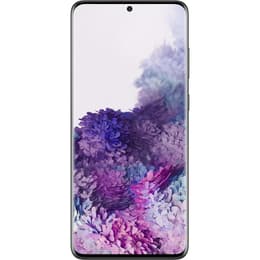
Galaxy S20
Galaxy S20
Starting at

Refurbished price:£150.00

Versus £799.00 new

See options
Galaxy S20+
Galaxy S20+
Starting at

Refurbished price:£188.00

Versus £900.00 new

See options

Ratings

The Samsung Galaxy S20 and Galaxy S20 Plus, both released in early 2020, are flagship Android smartphones that share a core design philosophy and many internal components. While they belong to the same series, key distinctions lie in their physical dimensions, battery capacity, and subtle camera enhancements. Both devices launched with Android 10 and received several years of software updates, offering a consistent user experience through Samsung's One UI.

Scores

Durability

When considering the longevity of these devices, their release timeline and software support are important factors. Both the Galaxy S20 and S20 Plus were launched in March 2020, meaning they have completed their official software update cycle as of April 2025.

  • Software Longevity: Samsung initially pledged four years of software updates for the S20 series, including security patches. While major OS upgrades concluded with Android 13, security updates were extended to March 2025. Users should be aware that new Android versions and security patches are no longer provided by the manufacturer.
  • Build Materials: Both models feature a glass front and back, protected by Corning Gorilla Glass 6, and are framed with aluminum. They also carry an IP68 rating for dust and water resistance, indicating protection against immersion in up to 1.5 meters of water for 30 minutes.
  • Expected Practical Lifespan: While official software support has ended, both devices remain functional for basic tasks. However, users prioritizing the latest security features and operating system advancements may find their practical lifespan for daily use diminishing.

Year of Release

2020

2020

Compatible with latest Update

No

No

OS

Android

Android

Foldable

No

No

Performance

Both the Galaxy S20 and S20 Plus deliver a responsive user experience, powered by similar internal hardware configurations. Their performance is well-suited for a range of activities from everyday browsing to more demanding applications.

  • Processor Capabilities: Both devices are equipped with a powerful processor (Qualcomm Snapdragon 865 in some regions, Samsung Exynos 990 in others) and typically come with 8GB or 12GB of RAM. This hardware allows for smooth multitasking, quick app loading, and capable handling of graphically intensive games.
  • Storage Options: Both models generally offer 128GB of internal storage, with the S20 Plus also available in a 512GB variant. Both support expandable storage via a microSD card, providing flexibility for users with large media libraries.
  • Battery Behavior: The Galaxy S20 features a 4,000mAh battery, while the S20 Plus has a larger 4,500mAh battery. In typical use, the S20 Plus generally offers longer battery life, which is a notable advantage for heavy users or those who prefer less frequent charging. Enabling the 120Hz refresh rate on either device can significantly impact battery endurance.

Memory (GB)

8 GB

8 GB

Screen quality

The display experience on both the Galaxy S20 and S20 Plus is a highlight, offering vibrant visuals and smooth interactions, though they differ in size.

  • Display Technology and Resolution: Both phones feature a Dynamic AMOLED 2X display with a resolution of 3200 x 1440 pixels. This technology provides deep blacks, high contrast, and vibrant colors, contributing to an immersive viewing experience.
  • Screen Size and Clarity: The Galaxy S20 has a 6.2-inch display, while the S20 Plus offers a larger 6.7-inch screen. While the S20 has a slightly higher pixel density due to its smaller size, the difference in clarity is generally not noticeable in everyday use.
  • Refresh Rate and Brightness: Both displays support a 120Hz refresh rate, providing smoother scrolling and more fluid animations. They also achieve high brightness levels, ensuring good visibility even in bright outdoor conditions.

Resolution

1440 x 3200

1440 x 3200

Screen type

Dynamic AMOLED 2X

Dynamic AMOLED 2X

Audiovisual

The camera systems on the Galaxy S20 and S20 Plus are largely similar, designed to capture high-quality photos and videos in various conditions, with one key distinction.

  • Rear Camera System: Both devices feature a triple-camera setup comprising a 12MP wide-angle lens, a 64MP telephoto lens with 3x hybrid optic zoom, and a 12MP ultrawide lens. The S20 Plus adds an additional DepthVision (Time-of-Flight or ToF) sensor, which assists with depth mapping for improved portrait mode effects and augmented reality applications.
  • Photography Performance: For general photography, both phones deliver comparable results with good detail and color reproduction. The 64MP telephoto lens allows for detailed zoomed shots up to 30x digital zoom. Low-light performance is also strong on both models.
  • Video Recording: Both the S20 and S20 Plus are capable of recording video at up to 8K resolution at 24 frames per second, and 4K at up to 60 frames per second, offering high-quality video capture.

Main camera

12 megapixels

12 megapixels

Front camera

10 megapixels

10 megapixels

Miscellaneous

Beyond their core features, the Galaxy S20 and S20 Plus offer a range of practical elements that enhance their overall usability and connectivity.

  • Connectivity: Both models support 5G connectivity, Wi-Fi 6, and Bluetooth 5.0. A notable difference is that the standard Galaxy S20 primarily supports sub-6GHz 5G, while the S20 Plus also includes support for mmWave 5G, offering potentially faster speeds in areas where it's available.
  • Physical Design and Handling: The Galaxy S20 measures 151.7 x 69.1 x 7.9 mm and weighs 163 grams, making it a more compact and lighter option. The S20 Plus is larger at 161.9 x 73.7 x 7.8 mm and weighs 186-188 grams, providing a more expansive screen but a less pocketable form factor. Both devices feature a USB-C port for charging and data transfer but lack a traditional 3.5mm headphone jack.
  • Security and Other Features: Both phones include an in-display ultrasonic fingerprint sensor and support face recognition for secure unlocking. They also offer features like Wireless PowerShare for charging other compatible devices wirelessly.

Weight

163 g

186 g

Screen size (in)

6.2

6.7

Mobile network

4G

4G

SIM card

Dual Physical SIM

Physical SIM + eSIM

Carrier compatibility

Unlocked

Unlocked

The Samsung Galaxy S20 and S20 Plus, while sharing many advanced features, cater to slightly different user preferences primarily concerning size and battery life. Users frequently praise both models for their exceptional Dynamic AMOLED displays, offering vibrant colors and a smooth 120Hz refresh rate. The camera systems are also generally well-regarded for their versatility and ability to capture high-quality images and 8K video. Common criticisms at launch included battery life concerns, particularly for the smaller S20 when using the 120Hz display mode, and the absence of a headphone jack. Some users have also reported issues such as overheating, especially with the Exynos variants, and display anomalies like green lines appearing on the screen over time, which can be a hardware concern.

Users prioritizing a more compact device that is easier for one-handed use may prefer the standard Galaxy S20. Its smaller footprint makes it more pocket-friendly, though it comes with a slightly smaller battery. Conversely, those who value a larger screen for media consumption, gaming, or productivity, and desire extended battery life, will find the Galaxy S20 Plus more suitable. The additional DepthVision camera on the Plus model offers a minor enhancement for portrait photography. Both devices, despite their age and the conclusion of official software support, still offer a capable smartphone experience. For those seeking a quality-assured refurbished option, both the Galaxy S20 and S20 Plus present an eco-friendly alternative to purchasing new, allowing users to enjoy flagship-level features while making a sustainable choice.

See all articles

Our recent comparisons