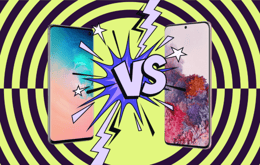
Galaxy Note20 Vs Galaxy S20

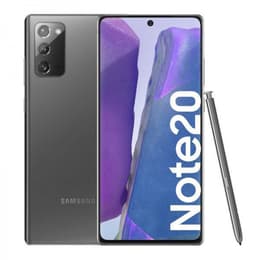
Galaxy Note20
Galaxy Note20
Starting at

Refurbished price:£309.00

Versus £1,099.00 new

See options
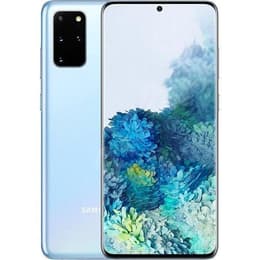
Galaxy S20
Galaxy S20
Starting at

Refurbished price:£164.00

Versus £949.00 new

See options

Ratings

The Samsung Galaxy Note20, released in August 2020, and the Samsung Galaxy S20, launched in March 2020, are both flagship smartphones from the same manufacturer. While they share a common operating system and many core functionalities, their primary distinctions lie in the Note20's integrated S Pen and differences in display technology and build materials.

Scores

Durability

Both the Galaxy Note20 and Galaxy S20 were part of Samsung's flagship lineup, offering a similar expected lifespan in terms of software support and physical durability.

  • Release Timeline and Software Support: The Galaxy S20 was released in March 2020, followed by the Galaxy Note20 in August 2020. Both devices launched with Android 10 and were eligible for three major Android operating system updates, concluding with Android 13. Security updates for both series have largely concluded in early to mid-2025, marking the end of their official software lifecycle.
  • Build Materials and Durability: The Galaxy S20 features Gorilla Glass 6 on both its front and back, providing a robust glass construction. In contrast, the standard Galaxy Note20 uses Gorilla Glass 5 for its display and a polycarbonate (plastic) material for its back panel. Both smartphones carry an IP68 rating for dust and water resistance, indicating protection against immersion in water up to 1.5 meters for 30 minutes.
  • Repairability: While both devices are designed with internal components that require specialized tools for repair, the Galaxy Note20's battery has been noted as particularly challenging to remove due to strong adhesive.

Year of Release

2020

2020

Compatible with latest Update

No

No

OS

Android

Android

Foldable

No

No

Performance

The performance of both the Galaxy Note20 and Galaxy S20 is driven by similar-generation processors, ensuring capable handling of everyday tasks and demanding applications.

  • Processor Capabilities: Both devices are equipped with the same generation of processors, either the Exynos 990 or Snapdragon 865/865+ depending on the region. This hardware allows for smooth navigation through interfaces, efficient multitasking, and responsive performance in mobile gaming and productivity applications.
  • Storage and RAM: The Galaxy S20 typically offered 128GB of internal storage, with some variants including 12GB of RAM. The Galaxy Note20 generally came with 256GB of storage and 8GB of RAM. For users who frequently switch between many applications or engage in intensive tasks, the higher RAM option on some S20 models could offer a slight advantage in maintaining app states in memory.
  • Battery Capacity: The Galaxy Note20 is powered by a 4300 mAh battery, providing a slightly larger capacity compared to the Galaxy S20's 4000 mAh battery. In typical use, this difference can translate to varying endurance, particularly for heavy users.

Memory (GB)

8 GB

8 GB

Screen quality

The display experience on both the Galaxy Note20 and Galaxy S20 is a highlight, though they cater to different preferences in terms of size, resolution, and refresh rate.

  • Display Technology and Clarity: Both smartphones feature AMOLED display technology, known for producing vibrant colors, deep blacks, and excellent contrast, enhancing the viewing experience for media and general use. The Galaxy S20 offers a QHD+ resolution (3200x1440 pixels) on its 6.2-inch display, resulting in a higher pixel density and sharper visuals. The Galaxy Note20, with its larger 6.7-inch display, features an FHD+ resolution (2400x1080 pixels).
  • Refresh Rate and Smoothness: The Galaxy S20 stands out with its 120Hz refresh rate, which provides noticeably smoother scrolling and more fluid animations. However, this higher refresh rate operates at FHD+ resolution, meaning users must choose between the highest resolution at 60Hz or a smoother experience at a slightly lower resolution. The standard Galaxy Note20 features a 60Hz refresh rate.
  • Screen Size and Viewing Experience: The Galaxy Note20 offers a larger 6.7-inch display, providing more screen real estate for content consumption and productivity. The Galaxy S20, with its 6.2-inch display, is more compact, which can be preferred for one-handed use.

Resolution

1080 x 2400

1440 x 3200

Screen type

Super AMOLED Plus

Dynamic AMOLED 2X

Audiovisual

Both the Galaxy Note20 and Galaxy S20 are equipped with versatile camera systems designed to capture a wide range of photos and videos, delivering comparable results in many scenarios.

  • Rear Camera System: Both devices feature a similar triple-camera setup on the rear. This typically includes a 12-megapixel main sensor, a 64-megapixel telephoto lens offering 3x hybrid optical zoom, and a 12-megapixel ultra-wide-angle lens. This configuration allows for flexibility in capturing various scenes, from expansive landscapes to zoomed-in subjects.
  • Photography Performance: In well-lit conditions, both smartphones produce detailed and color-accurate photos suitable for sharing and everyday use. The overall image processing is consistent across both models, leading to similar photographic outcomes.
  • Video Capabilities: Both the Galaxy Note20 and Galaxy S20 are capable of recording video at up to 8K resolution, offering high-fidelity video capture for those who require it.
  • Front Camera: For selfies and video calls, both phones are equipped with a 10-megapixel front-facing camera.

Main camera

12 megapixels

12 megapixels

Front camera

10 megapixels

10 megapixels

Miscellaneous

Beyond their core features, the Galaxy Note20 and Galaxy S20 offer a range of practical elements that influence daily usability and interaction.

  • S Pen Integration: A defining feature of the Galaxy Note20 is its integrated S Pen stylus. This stylus enables precise note-taking, drawing, and offers remote control functionalities for tasks like navigating presentations or capturing photos. The Galaxy S20 does not include S Pen support.
  • Connectivity: Both devices support modern connectivity standards, including 5G for faster mobile data, Wi-Fi 6 for improved wireless network performance, and Bluetooth 5.0 for connecting accessories.
  • Physical Design and Handling: The Galaxy S20 is the more compact and lighter device, measuring 151.7 x 69.1 x 7.9 mm and weighing 163 grams. The Galaxy Note20 is larger and heavier at 161.6 x 75.2 x 8.3 mm and 192 grams. These differences impact one-handed usability and pocketability. Neither phone includes a traditional 3.5mm headphone jack, relying on USB-C or wireless audio solutions.
  • Security Features: Both smartphones incorporate an in-display fingerprint sensor and support face recognition for secure unlocking and authentication.

Weight

192 g

163 g

Screen size (in)

6.7

6.2

Mobile network

4G

4G

SIM card

Dual Physical SIM

Physical SIM + eSIM

Carrier compatibility

Unlocked

Unlocked

Connector

USB-C

USB-C

The Samsung Galaxy Note20 and Galaxy S20, while sharing a similar technological foundation, present distinct user experiences shaped by their unique features and design philosophies. User feedback often highlights the Galaxy S20's appeal for its more compact form factor and the fluidity of its 120Hz display, which enhances general navigation and media consumption. Conversely, the Galaxy Note20 is frequently praised for the unparalleled productivity offered by its integrated S Pen, making it a preferred choice for those who value precise input for note-taking, drawing, or remote control.

Some common criticisms for the standard Galaxy Note20 included its polycarbonate back panel, which some users felt did not align with its flagship status, and its 60Hz display refresh rate. For the Galaxy S20, a frequent point of discussion was the trade-off between its high resolution and the 120Hz refresh rate, as both could not be utilized simultaneously at the highest settings, potentially impacting battery life.

Users prioritizing a device that is comfortable for one-handed use and offers a very smooth visual experience for browsing and apps may find the Galaxy S20 well-suited to their needs. Those who require advanced productivity tools, such as precise stylus input for creative tasks, detailed note-taking, or remote control functionality, will likely find the Galaxy Note20 to be the more appropriate choice. Both devices represent capable options for daily use, and considering a quality-assured refurbished option for either model can provide an eco-friendly alternative for consumers.