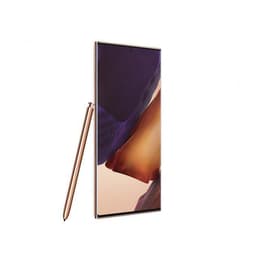
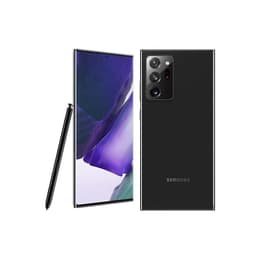

Galaxy Note20 Vs Galaxy Note20 Ultra

Galaxy Note20
Galaxy Note20
Starting at

Refurbished price:£307.00

Versus £1,099.00 new

See options
Galaxy Note20 Ultra
Galaxy Note20 Ultra
Starting at

Refurbished price:£383.68

Versus £1,049.99 new

See options

Ratings

The Samsung Galaxy Note20 and Galaxy Note20 Ultra, both released in August 2020, represent Samsung's flagship smartphone offerings from that year, each featuring the signature S Pen stylus. While they share the core Note experience, the Ultra model introduces several enhancements in display technology, camera capabilities, and build materials. Both devices launched with Android 10 and Samsung's One UI, providing a consistent software experience with productivity-focused features.

Scores

Durability

The longevity of a smartphone is influenced by its physical resilience and ongoing software support. Both the Galaxy Note20 and Note20 Ultra were part of Samsung's commitment to providing three major Android operating system updates and five years of security patches.

  • Software Support: Both devices received their last major Android OS update, Android 13 with One UI 5.1, in early 2023. Security updates for both models concluded around August 2025, marking the end of their official software support cycle.
  • Build Materials: The Galaxy Note20 features a plastic back and Gorilla Glass 5 on the front, offering a practical and durable construction. The Note20 Ultra, conversely, incorporates Gorilla Glass Victus on both the front and back, which is designed for enhanced resistance against scratches and drops.
  • Practical Lifespan: While official software updates have ceased, both phones are built to last physically. Users prioritizing the latest software features and security patches may find their practical lifespan for daily use has reached its limit, whereas those less concerned with these aspects may continue using them for their hardware capabilities.

Year of Release

2020

2020

Compatible with latest Update

No

No

OS

Android

Android

Foldable

No

No

Performance

Both the Galaxy Note20 and Note20 Ultra are equipped with powerful internal components designed to handle demanding tasks, though there are distinctions in their configurations that affect overall responsiveness and storage flexibility.

  • Processing Power: Both models utilize a current-generation processor for their release year, either the Snapdragon 865+ or the Exynos 990, depending on the region. This allows for smooth app loading, efficient multitasking, and capable gaming performance.
  • Memory and Storage: The Galaxy Note20 typically comes with 8GB of RAM, while the Note20 Ultra offers 12GB of RAM, providing additional headroom for intensive multitasking and keeping more applications active in the background. For storage, the Note20 is available with 128GB or 256GB, but lacks a microSD card slot for expansion. The Note20 Ultra offers more options, including 128GB, 256GB, and 512GB, and importantly, includes a microSD card slot for expandable storage.
  • Battery Behavior: The Galaxy Note20 has a 4300mAh battery, and due to its lower resolution and refresh rate display, users often report it can last through a full day of moderate to heavy use. The Note20 Ultra features a slightly larger 4500mAh battery, but its higher resolution and adaptive 120Hz refresh rate display can lead to quicker battery drain, especially with continuous high refresh rate usage.

Memory (GB)

8 GB

12 GB

Screen quality

The display is a central feature of the Note series, and both models offer large, vibrant screens, but the Note20 Ultra distinguishes itself with several key advancements.

  • Display Technology and Size: The Galaxy Note20 features a 6.7-inch Super AMOLED display with a flat design. The Note20 Ultra boasts a larger 6.9-inch Dynamic AMOLED 2X display with curved edges, providing a more immersive viewing experience.
  • Resolution and Refresh Rate: The Note20 offers a Full HD+ resolution (1080x2400 pixels) and a standard 60Hz refresh rate. The Note20 Ultra provides a sharper Quad HD+ resolution (1440x3088 pixels) and an adaptive 120Hz refresh rate, which delivers smoother scrolling and more fluid animations. However, the 120Hz refresh rate on the Ultra is limited to Full HD+ resolution.
  • Brightness and Clarity: Both displays offer excellent brightness and color reproduction, suitable for outdoor visibility and media consumption. The Note20 Ultra's Dynamic AMOLED 2X panel is capable of higher peak brightness, enhancing HDR content viewing.

Resolution

1080 x 2400

1440 x 3088

Screen type

Super AMOLED Plus

Dynamic AMOLED 2X

Audiovisual

Both Galaxy Note20 models offer versatile camera systems, but the Ultra variant includes more advanced hardware for photography and videography enthusiasts.

  • Rear Camera System: The Galaxy Note20 features a triple-camera setup with a 12MP main sensor, a 64MP telephoto lens offering 3x hybrid optical zoom, and a 12MP ultrawide lens. The Note20 Ultra elevates this with a 108MP main sensor, a 12MP periscope telephoto lens capable of 5x optical zoom, and a 12MP ultrawide lens. The Ultra also includes a laser autofocus system for faster and more accurate focusing.
  • Photography Performance: In everyday lighting, both phones capture detailed and vibrant images. The Note20 Ultra's larger main sensor and advanced telephoto capabilities generally result in superior detail, especially when zooming or in challenging lighting conditions. Both offer a dedicated Night Mode to improve low-light performance across their lenses.
  • Video Recording and Audio: Both devices support 8K video recording at 24 frames per second and offer various 4K and 1080p options. The Note20 Ultra includes a more advanced Pro Video mode with greater manual controls for professional-grade videography. Both phones provide good microphone quality for calls and recording, and their stereo speakers deliver a capable audio experience for media consumption.

Main camera

12 megapixels

108 megapixels

Front camera

10 megapixels

10 megapixels

Miscellaneous

Beyond core performance, several practical features and design elements differentiate the Galaxy Note20 and Note20 Ultra, impacting daily usability and handling.

  • S Pen Functionality: Both models integrate the signature S Pen, offering features like screen-off memos, air gestures, and precise input. The Note20 Ultra's S Pen boasts a significantly lower latency of 9ms, providing a more natural and responsive writing and drawing experience compared to the Note20's 25ms latency.
  • Connectivity and Ports: Both devices support 5G connectivity, along with modern Wi-Fi standards and Bluetooth. They feature a USB-C port for charging and data transfer, but neither includes a traditional 3.5mm headphone jack.
  • Design and Ergonomics: The Galaxy Note20 has a flatter display and a plastic back, which some users find offers a more secure grip and less concern about glass breakage. It measures 161.6 x 75.2 x 8.3 mm and weighs around 192-194g. The Note20 Ultra, with its curved display and glass back, presents a more premium feel. It is slightly larger and heavier at 164.8 x 77.2 x 8.1 mm and 208g. Both include an in-display ultrasonic fingerprint sensor and support face recognition for security.

Weight

192 g

208 g

Screen size (in)

6.7

6.9

Mobile network

4G

4G

SIM card

Dual Physical SIM

Physical SIM + eSIM

Carrier compatibility

Unlocked

Unlocked

Connector

USB-C

USB-C

User feedback on forums like Reddit often highlights distinct preferences for each device. The Galaxy Note20 is frequently praised for its consistent battery life, often attributed to its 60Hz display, and some users appreciate its flat screen and plastic back for perceived durability and ease of handling. Criticisms for the standard Note20 at launch often centered on its perceived value compared to the Ultra, particularly regarding the display and build materials.

The Galaxy Note20 Ultra, conversely, receives acclaim for its stunning, high-refresh-rate display and its highly capable camera system, especially the optical zoom capabilities. However, some users noted that the 120Hz display could significantly impact battery life, and its larger size and prominent camera bump were sometimes mentioned as considerations.

Users prioritizing extended battery life and a flat display for easier screen protector application may find the Galaxy Note20 well-suited to their needs. Those who prioritize a more immersive visual experience, superior camera versatility, and expandable storage will likely lean towards the Galaxy Note20 Ultra. Both devices offer the unique S Pen experience, making them ideal for productivity and creative tasks. For those considering these models, exploring quality-assured refurbished options can provide a sustainable choice for acquiring these feature-rich smartphones.


See all articles

Our recent comparisons