
Galaxy Note20 Ultra Vs Galaxy S21 Ultra 5G

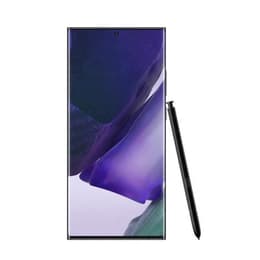
Galaxy Note20 Ultra
Galaxy Note20 Ultra
Starting at

Refurbished price:£383.68

Versus £1,049.99 new

See options
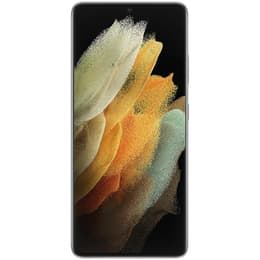
Galaxy S21 Ultra 5G
Galaxy S21 Ultra 5G
Starting at

Refurbished price:£186.00

Versus £1,800.00 new

See options

Ratings

The Samsung Galaxy Note20 Ultra, released in August 2020, and the Samsung Galaxy S21 Ultra 5G, launched in January 2021, represent premium Android smartphones from Samsung's flagship lines. While both devices offer high-end experiences, the S21 Ultra 5G introduces refinements in display technology, camera capabilities, and overall performance, building upon the foundation set by its predecessor. Both run on the Android operating system, offering a consistent software experience with Samsung's One UI overlay.

Scores

Durability

When considering the longevity of these devices, several factors come into play, including their release timelines, software support, and physical durability.

  • Release Timeline: The Galaxy Note20 Ultra was released in August 2020, while the Galaxy S21 Ultra 5G followed in January 2021. This difference in launch dates means the S21 Ultra 5G will generally receive software updates for a longer period, extending its practical lifespan by approximately one year.
  • Software Support: The Galaxy Note20 Ultra launched with Android 10 and is expected to receive major Android updates up to Android 13. The Galaxy S21 Ultra 5G, starting with Android 11, is anticipated to receive updates up to Android 14, providing a more current software experience for a longer duration.
  • Physical Durability: Both models feature Corning Gorilla Glass Victus on the front and back, offering enhanced scratch and drop resistance. They also share an IP68 rating for dust and water resistance, indicating protection against submersion in fresh water.

Year of Release

2020

2021

Compatible with latest Update

No

Yes

OS

Android

Android

Foldable

No

No

Performance

The performance of these devices is driven by their internal components, impacting everything from app responsiveness to multitasking capabilities and battery endurance.

  • Processing Power: The Galaxy Note20 Ultra is equipped with a powerful processor from its generation, enabling smooth handling of demanding applications and multitasking. The Galaxy S21 Ultra 5G features a newer generation processor, offering improved speed and energy efficiency, which translates to faster app loading, more fluid gaming, and enhanced overall system responsiveness.
  • Battery Behavior: The Galaxy Note20 Ultra houses a 4500mAh battery, which provides sufficient power for a full day of moderate use, though heavy usage, especially with the high refresh rate display, may require more frequent charging. The Galaxy S21 Ultra 5G comes with a larger 5000mAh battery, combined with a more power-efficient display and processor, generally resulting in better battery life, particularly when utilizing the high refresh rate at maximum resolution.
  • Storage and Multitasking: Both devices offer ample RAM, typically 12GB, ensuring smooth multitasking and efficient handling of numerous open applications. The Note20 Ultra provides expandable storage via a microSD card slot, offering flexibility for users with large media libraries. The S21 Ultra 5G, however, does not include a microSD card slot, relying solely on its internal storage options.

Memory (GB)

12 GB

12 GB

Screen quality

Both smartphones feature high-quality displays, but the newer model introduces advancements that enhance the visual experience.

  • Display Technology and Clarity: Both devices utilize Dynamic AMOLED 2X displays, known for their vibrant colors, deep blacks, and excellent contrast. They offer a sharp Quad HD+ resolution (3088x1440 for Note20 Ultra, 3200x1440 for S21 Ultra 5G), providing crisp visuals for text and images.
  • Refresh Rate and Smoothness: The Galaxy Note20 Ultra features an adaptive 120Hz refresh rate, which provides a smoother scrolling and gaming experience, though this high refresh rate is limited to Full HD resolution. The Galaxy S21 Ultra 5G improves upon this by allowing the adaptive 120Hz refresh rate to operate at its full Quad HD+ resolution, offering a consistently smoother and more detailed visual experience.
  • Brightness and Viewing Experience: Both displays achieve high peak brightness levels, reaching up to 1500-1600 nits, ensuring excellent visibility even in bright outdoor conditions and supporting HDR content effectively. The S21 Ultra 5G also incorporates a new low-power OLED panel, which contributes to better power efficiency without compromising brightness.

Resolution

1440 x 3088

1440 x 3200

Screen type

Dynamic AMOLED 2X

Dynamic AMOLED 2X

Audiovisual

Both devices are equipped with versatile camera systems designed to capture high-quality photos and videos, with the S21 Ultra 5G offering some notable enhancements.

  • Rear Camera System: The Galaxy Note20 Ultra features a triple-camera setup with a 108MP main sensor, a 12MP ultrawide lens, and a 12MP telephoto lens capable of 5x optical zoom and up to 50x hybrid zoom. It includes a laser autofocus sensor for quick and accurate focusing. The Galaxy S21 Ultra 5G elevates this with a quad-camera system, retaining the 108MP main and 12MP ultrawide sensors, but adding two 10MP telephoto lenses—one for 3x optical zoom and another periscope lens for 10x optical zoom, enabling up to 100x Space Zoom.
  • Photography Performance: Both phones excel in everyday photography, producing detailed images with good color reproduction. The S21 Ultra 5G's dual telephoto setup provides greater flexibility and improved clarity at various zoom levels, making it particularly well-suited for distant subjects. Its low-light performance is also refined, capturing more detail and managing noise effectively.
  • Video Recording and Front Camera: Both devices support 8K video recording at 24 frames per second and 4K video at 30 or 60 frames per second. For selfies and video calls, the Note20 Ultra has a 10MP front camera. The S21 Ultra 5G significantly upgrades the front camera to a 40MP sensor, offering higher resolution and more detailed self-portraits.

Main camera

108 megapixels

108 megapixels

Front camera

10 megapixels

40 megapixels

Miscellaneous

Beyond core specifications, several practical elements contribute to the overall user experience and differentiate these two devices.

  • S Pen Integration: A primary distinction lies in the S Pen. The Galaxy Note20 Ultra features an integrated S Pen with reduced latency, offering a highly responsive writing and drawing experience directly from the device. It supports Air Actions for remote control and screen-off memos. The Galaxy S21 Ultra 5G supports S Pen functionality, but the stylus is an optional accessory and is not integrated into the phone's body.
  • Connectivity and Ports: Both phones support 5G connectivity, ensuring access to the latest mobile network speeds. The S21 Ultra 5G offers newer Wi-Fi 6E and Bluetooth 5.2 standards, providing potentially faster and more stable wireless connections compared to the Note20 Ultra's Wi-Fi 6 and Bluetooth 5.0. Both utilize a USB-C port for charging and data transfer and lack a traditional 3.5mm headphone jack.
  • Design and Handling: The Note20 Ultra measures 164.8 x 77.2 x 8.1 mm and weighs 208g. The S21 Ultra 5G is slightly larger and heavier at 165.1 x 75.6 x 8.9 mm and 227-229g, which can impact one-handed use. Both feature an ultrasonic in-screen fingerprint sensor for secure unlocking.

Weight

208 g

227 g

Screen size (in)

6.9

6.8

Mobile network

4G

5G

SIM card

Physical SIM + eSIM

Dual Physical SIM + eSIM

Carrier compatibility

Unlocked

Unlocked

Connector

USB-C

USB-C

The Samsung Galaxy Note20 Ultra and Galaxy S21 Ultra 5G both deliver a premium smartphone experience, each with distinct strengths that cater to different user preferences. User feedback often praises the Note20 Ultra for its integrated S Pen, which is a significant draw for those who prioritize productivity, note-taking, and creative tasks directly on their device. Its display, while excellent, has been noted by some users for its 120Hz refresh rate being limited to Full HD resolution, which can be a minor point of criticism for those seeking the absolute sharpest and smoothest visuals simultaneously.

The Galaxy S21 Ultra 5G, on the other hand, frequently receives acclaim for its more refined camera system, particularly its dual telephoto lenses that offer superior zoom capabilities and a higher-resolution front camera. Users also appreciate its ability to run the 120Hz refresh rate at the display's full Quad HD+ resolution, providing a consistently crisp and fluid visual experience. Its larger battery and improved power efficiency are also commonly highlighted as advantages. A frequent point of discussion for the S21 Ultra 5G is the absence of an integrated S Pen and a microSD card slot, which might be a drawback for long-time Note series users or those requiring expandable storage.

Users prioritizing an integrated S Pen for extensive note-taking, drawing, or precise navigation may prefer the Galaxy Note20 Ultra. Its dedicated S Pen slot and enhanced latency make it a powerful tool for productivity. Conversely, users who prioritize a more advanced and versatile camera system, especially for zoom photography, along with a display that offers the highest resolution and refresh rate simultaneously, will find the Galaxy S21 Ultra 5G well-suited to their needs. Its improved battery life and newer connectivity standards also make it a compelling choice for those seeking the latest technological advancements. Both devices, whether new or as a quality-assured refurbished option, offer robust performance and features for various user profiles.
See all articles

Our recent comparisons