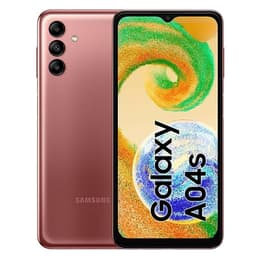
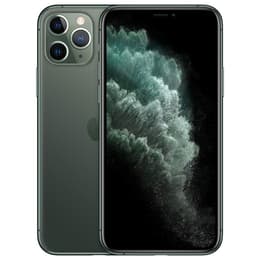

Galaxy A04S Vs iPhone 11 Pro

Galaxy A04S
Galaxy A04S
Starting at

Refurbished price:£99.00

Versus £179.00 new

See options
iPhone 11 Pro
iPhone 11 Pro
Starting at

Refurbished price:£151.00

Versus £639.00 new

See options

Ratings

The Samsung Galaxy A04S, released in late 2022, and the Apple iPhone 11 Pro, launched in late 2019, represent distinct approaches to smartphone design and functionality. While the Galaxy A04S operates on the Android platform, offering a user experience focused on customization and accessibility, the iPhone 11 Pro runs on Apple's iOS, known for its integrated ecosystem and streamlined interface. These devices cater to different user priorities, with the A04S emphasizing battery longevity and a larger display, and the iPhone 11 Pro focusing on advanced camera capabilities and a premium build.

Scores

Durability

The longevity of a smartphone is influenced by its release timeline, software support, and physical durability. These two devices, separated by a few years in their release, offer different expectations in these areas.

  • Release Timeline and OS Support: The iPhone 11 Pro, released in September 2019, typically receives major iOS updates for approximately 5-7 years from its launch, with security updates potentially extending beyond that. Users report it is currently running iOS 18 and may receive iOS 19 as its last major OS update, with security patches continuing for 2-3 more years. The Galaxy A04S, launched in August/September 2022, runs Android 12 out of the box and has received updates to Android 14 and One UI 6.1. Samsung generally provides 2-3 major Android OS updates and 4 years of security updates for its A-series devices, suggesting a shorter software support window compared to the iPhone.
  • Repairability and Practical Lifespan: The iPhone 11 Pro features a glass and stainless steel construction, contributing to a more robust feel, and has an IP68 rating for dust and water resistance, allowing submersion up to 4 meters for 30 minutes. The Galaxy A04S has a glass front with a plastic back and frame, and does not carry an official IP rating for water and dust resistance. While both devices are repairable, the availability and cost of parts can vary. The iPhone 11 Pro's premium materials and higher initial durability rating suggest a potentially longer practical lifespan under typical usage conditions, though the Galaxy A04S's simpler construction might lead to more affordable repairs for certain components.

Year of Release

2022

2019

Compatible with latest Update

Yes

Yes

OS

Android

iOS

Foldable

No

No

Performance

Performance in smartphones is determined by the interplay of processing power, memory, and storage, impacting how smoothly applications run and how efficiently tasks are handled.

  • Processing Capabilities: The iPhone 11 Pro is equipped with a processor that, at its release, was considered among the fastest in a smartphone, offering significant speed improvements over previous generations. This allows for smooth operation of demanding applications, efficient multitasking, and responsive gaming experiences. The Galaxy A04S utilizes a processor designed for essential functionality, handling basic tasks and everyday applications smoothly. However, it may exhibit stutters and longer loading times with more intensive applications or extensive multitasking.
  • Storage and Responsiveness: The iPhone 11 Pro was available with storage options up to 512 GB, providing ample space for apps, photos, and videos. Its system is optimized for quick app loading and fluid navigation. The Galaxy A04S offers storage options up to 128 GB, expandable via a microSD card, which is beneficial for users needing more space for media. However, its eMMC 5.1 storage type may result in slower app load times compared to the iPhone's faster storage. The iPhone 11 Pro typically includes 4GB of RAM, facilitating efficient multitasking, while the Galaxy A04S comes with 3GB or 4GB of RAM, which can impact the number of applications that can run simultaneously without performance degradation.
  • Battery Behavior: The Galaxy A04S features a substantial 5000mAh battery, which users report provides over 14 hours of screen time with moderate use, making it a reliable device for extended periods without charging. The iPhone 11 Pro, with a 3046mAh battery, was noted for its improved battery life compared to its predecessors, often lasting more than a full day with heavy use. However, as the device ages, battery health naturally declines, which can affect its overall endurance.

Memory (GB)

3 GB

4 GB

Screen quality

The display is a primary interface for smartphone interaction, and the technologies used significantly influence the visual experience.

  • Display Technology and Resolution: The iPhone 11 Pro features a 5.8-inch Super Retina XDR OLED display, offering deep blacks, high contrast, and vibrant colors. Its resolution of 2436x1125 pixels results in a sharp image with 458 pixels per inch. The Galaxy A04S has a larger 6.5-inch PLS LCD Infinity-V display with a resolution of 1600x720 pixels, providing a clear but less detailed image at 270 pixels per inch.
  • Brightness and Refresh Rate: The iPhone 11 Pro's OLED panel can reach a typical brightness of 800 nits and a peak HDR brightness of 1200 nits, ensuring excellent visibility even in bright outdoor conditions and supporting HDR content. It operates at a standard 60Hz refresh rate. The Galaxy A04S offers a 90Hz refresh rate, which provides a smoother scrolling experience compared to a 60Hz display. Its peak brightness is around 400 nits, which is suitable for indoor use but may be less visible under direct sunlight.
  • Viewing Experience: The iPhone 11 Pro's smaller, high-resolution OLED screen delivers a more immersive and visually rich experience, particularly for media consumption and detailed content. The Galaxy A04S's larger LCD screen, combined with its 90Hz refresh rate, offers a spacious viewing area and smoother motion for general browsing and casual gaming, though with less color accuracy and contrast than an OLED.

Resolution

720 x 1600

1125 x 2436

Screen type

PLS LCD

Super Retina XDR OLED

Audiovisual

Camera systems are a key differentiator, with both devices offering distinct capabilities for capturing photos and videos.

  • Rear Camera System: The iPhone 11 Pro boasts a versatile triple 12MP camera system, including wide, ultra-wide, and telephoto lenses. This setup allows for optical zoom, a wide range of perspectives, and advanced features like Night Mode for improved low-light photography and Smart HDR for balanced exposures. The Galaxy A04S features a triple camera setup with a 50MP main sensor, accompanied by 2MP macro and depth sensors. The 50MP main camera captures decent daylight shots, but its auxiliary lenses offer limited practical utility.
  • Low-Light and Video Performance: The iPhone 11 Pro excels in low-light conditions thanks to its dedicated Night Mode, producing brighter and more detailed images than previous iPhone models. It supports 4K video recording at up to 60 frames per second across all its rear cameras, with good stabilization and dynamic range. The Galaxy A04S's low-light performance is less robust, and video recording is limited to 1080p at 30 frames per second.
  • Front Camera and Audio: The iPhone 11 Pro includes a 12MP front camera capable of 4K video recording, offering high-quality selfies and video calls. Its speakers provide a loud and clear audio experience, suitable for media consumption. The Galaxy A04S has a 5MP front camera, which performs adequately in good lighting conditions. It includes a 3.5mm headphone jack, a feature absent on the iPhone 11 Pro, offering flexibility for wired audio accessories.

Main camera

50 megapixels

12 megapixels

Front camera

5 megapixels

12 megapixels

Miscellaneous

Beyond core features, several practical elements contribute to the overall user experience and daily usability of a smartphone.

  • Connectivity and Ports: The iPhone 11 Pro supports Gigabit-Class LTE, Wi-Fi 6 (802.11ax), and Bluetooth 5.0, providing fast wireless data and efficient connections to accessories. It uses Apple's proprietary Lightning port for charging and data transfer. The Galaxy A04S supports 4G LTE, Wi-Fi 5 (802.11ac), and Bluetooth 5.0. It features a USB Type-C port, which is a widely adopted standard, and notably includes a 3.5mm headphone jack, offering direct compatibility with traditional wired headphones.
  • Biometrics and Design: The iPhone 11 Pro utilizes Face ID for secure facial recognition, enabling convenient unlocking and authentication. Its design features a stainless steel frame and frosted glass back, contributing to a premium feel and a comfortable grip. The Galaxy A04S incorporates a side-mounted fingerprint sensor for biometric security, which functions effectively. Its build is primarily plastic, making it lighter, and it has a textured finish on the back to resist smudges.
  • Dimensions and Weight: The iPhone 11 Pro is a more compact device, measuring 144 x 71.4 x 8.1 mm and weighing 188 grams, making it suitable for one-handed use. The Galaxy A04S is larger and slightly heavier at 164.7 x 76.7 x 9.1 mm and 195 grams, offering a more expansive screen but potentially requiring two hands for comfortable operation.

Weight

195 g

188 g

Screen size (in)

6.5

5.8

Mobile network

4G

4G

SIM card

Dual Physical SIM

Physical SIM + eSIM

Carrier compatibility

Unlocked

Unlocked

Connector

USB-C

Lightning

User feedback for the iPhone 11 Pro often highlights its robust camera system, particularly its low-light capabilities and versatile triple lenses, as a major strength. Many users also praise its display quality, noting the vibrant colors and deep blacks of the OLED panel. The battery life, especially upon release, was frequently cited as a significant improvement over previous iPhone models, often lasting a full day or more for many users. Criticisms sometimes revolve around its aging design compared to newer models and the lack of a high refresh rate display. Some users also find the 64GB base storage insufficient over time.

For the Samsung Galaxy A04S, common praise points include its impressive battery life, which can easily last through extended periods of use, and the inclusion of a 90Hz refresh rate display for smoother scrolling. Users appreciate its large screen size for media consumption and the presence of a 3.5mm headphone jack. However, criticisms often point to its less powerful processor, which can lead to slower performance with demanding apps, and the lower resolution of its display compared to more premium devices. The camera system, while featuring a high megapixel count for the main sensor, is noted for its limited performance in challenging lighting conditions and the less useful auxiliary lenses.

Users prioritizing a premium build, advanced camera features, and a highly optimized software experience with longer update support may find the iPhone 11 Pro well-suited to their needs. Its compact size and powerful performance make it ideal for those who value a refined user experience and strong multimedia capabilities. Conversely, users who prioritize extended battery life, a larger screen for general browsing, and the flexibility of a 3.5mm headphone jack will likely lean towards the Galaxy A04S. It serves as a practical choice for everyday communication and media consumption without demanding tasks. Both devices offer distinct advantages, and choosing between them depends on individual priorities and usage patterns. Opting for a quality-assured refurbished option for either model can be an eco-friendly alternative to purchasing new, providing access to these features sustainably.


See all articles

Our recent comparisons