
Galaxy S10 Vs Oppo Find X5

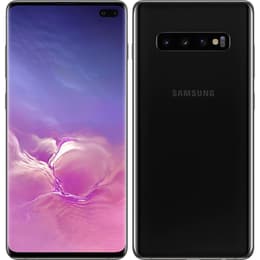
Galaxy S10
Galaxy S10
Starting at

Refurbished price:£108.00

Versus £639.00 new

See options
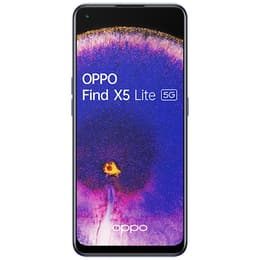
Oppo Find X5
Oppo Find X5
Starting at

Refurbished price:£296.00

Versus £816.65 new

See options

Ratings

The Samsung Galaxy S10, released in March 2019, and the Oppo Find X5, launched in March 2022, represent different generations of Android smartphones. While both devices offer a premium experience, the Find X5 benefits from newer technology, particularly in its camera system and charging capabilities, while the Galaxy S10 maintains a strong foundation with its display and overall build. Both run on the Android operating system, though with different manufacturer-specific interfaces.

Scores

Durability

When considering the long-term usability of these devices, their release timelines and software support are key factors. The Galaxy S10, being an older model, has reached the end of its major Android operating system updates, while the Oppo Find X5 still has several years of updates ahead.

  • Release Timeline: The Galaxy S10 was released in March 2019, making it a device from an earlier generation. The Oppo Find X5, launched in March 2022, is a more recent offering.
  • Software Longevity: The Galaxy S10 launched with Android 9 and received its last major OS update with Android 12, with security updates extending for approximately four years from its release. The Oppo Find X5, starting with Android 12 and ColorOS 12.1, is expected to receive three years of Android version updates, potentially up to Android 15, offering a longer period of current software support.
  • Repairability: The Galaxy S10 received a low repairability score of 3 out of 10 from iFixit, indicating challenges in repair due to extensive adhesive, a soldered charging port, and an integrated fingerprint sensor. Specific repairability scores for the standard Oppo Find X5 are not widely available, but modern smartphone designs often present similar challenges.

Year of Release

2019

2022

Compatible with latest Update

No

Yes

OS

Android

Android

Foldable

No

No

Performance

The performance of both devices is influenced by their internal components, with the newer Oppo Find X5 generally offering more contemporary processing power and memory configurations suitable for demanding applications.

  • Processor Capabilities: The Galaxy S10 is powered by an octa-core chipset, which provided strong performance at its release, handling everyday tasks and moderate multitasking efficiently. The Oppo Find X5 features a more recent processor, which delivers smoother performance for current demanding applications, complex games, and intensive multitasking.
  • Multitasking and Responsiveness: The Galaxy S10 typically comes with 8GB of RAM, which is sufficient for most daily usage. The Oppo Find X5 offers configurations with 8GB or 12GB of RAM, providing more headroom for keeping numerous applications open simultaneously and ensuring a highly responsive user experience.
  • Storage Options: Both devices offer ample internal storage. The Galaxy S10 was available with 128GB or 512GB of storage. The Oppo Find X5 typically comes with 256GB of internal storage, but it does not offer expandable storage.

Memory (GB)

8 GB

8 GB

Screen quality

Both smartphones feature high-quality displays, but they differ in resolution, refresh rate, and overall viewing experience, catering to slightly different user preferences.

  • Display Technology and Clarity: The Galaxy S10 features a 6.1-inch Dynamic AMOLED display with a QHD+ resolution (3040x1440 pixels), offering a very sharp and detailed visual experience. The Oppo Find X5 has a slightly larger 6.55-inch AMOLED display with an FHD+ resolution (2400x1080 pixels), providing clear and vibrant visuals.
  • Smoothness and Responsiveness: The Galaxy S10's display operates at a standard 60Hz refresh rate. The Oppo Find X5 offers a higher 120Hz refresh rate, resulting in noticeably smoother scrolling, animations, and a more fluid overall interaction, which can be particularly beneficial for gaming and fast-paced content.
  • Brightness and Color: Both devices utilize AMOLED technology, known for deep blacks and vibrant colors. The Galaxy S10's Dynamic AMOLED panel supports HDR10+. The Oppo Find X5's AMOLED display also supports HDR10+ and offers good brightness levels for outdoor visibility.

Resolution

1440 x 3040

1080 x 2400

Screen type

Dynamic AMOLED

AMOLED

Audiovisual

The camera systems on the Galaxy S10 and Oppo Find X5 reflect advancements in mobile photography over their respective release periods, with the Find X5 incorporating newer sensor technology and image processing.

  • Rear Camera System: The Galaxy S10 features a versatile triple-camera setup, including a 12MP wide-angle lens with dual aperture and optical image stabilization (OIS), a 12MP telephoto lens with 2x optical zoom and OIS, and a 16MP ultrawide lens. The Oppo Find X5 also has a triple rear camera system, comprising a 50MP main sensor with OIS, a 50MP ultrawide sensor, and a 13MP telephoto lens with 2x optical zoom.
  • Image Processing and Features: The Oppo Find X5 benefits from a dedicated MariSilicon X neural processing unit (NPU) and a partnership with Hasselblad for color calibration, which enhances image processing, particularly in low-light conditions and for color accuracy. The Galaxy S10 offered strong camera performance for its time, with features like scene optimizer and live focus.
  • Front Camera and Video: For selfies, the Galaxy S10 has a 10MP front camera. The Oppo Find X5 features a higher-resolution 32MP front camera. Both devices are capable of recording high-quality video, with the Find X5 offering advanced features like 4K Ultra Night Video due to its NPU.

Main camera

12 megapixels

50 megapixels

Front camera

10 megapixels

32 megapixels

Miscellaneous

Beyond core specifications, several practical elements differentiate the user experience between the Galaxy S10 and the Oppo Find X5, from physical design to connectivity options.

  • Connectivity and Ports: The Galaxy S10 supports Wi-Fi 6 and Bluetooth 5.0, and notably includes a 3.5mm headphone jack, which is absent on many newer phones. The Oppo Find X5 supports 5G connectivity, Wi-Fi 6, and Bluetooth 5.2, offering more modern wireless standards. Both devices use a USB-C port for charging and data transfer.
  • Physical Design and Durability: The Galaxy S10 features an IP68 rating, signifying robust dust and water resistance, allowing submersion in up to 1.5 meters of water for 30 minutes. The standard Oppo Find X5 has an IP54 rating, indicating splash resistance but not full water immersion protection. The Galaxy S10 has a glass front and back with an aluminum frame, while the Find X5 also uses glass for the back panel.
  • Biometric Security and Handling: The Galaxy S10 introduced an ultrasonic in-display fingerprint sensor. The Oppo Find X5 also features an in-display fingerprint sensor. In terms of dimensions, the Galaxy S10 is slightly more compact and lighter at 149.9 x 70.4 x 7.8 mm and 157g, compared to the Oppo Find X5's 160.3 x 72.6 x 8.7 mm and 196g, which may influence one-handed use and pocketability.

Weight

175 g

196 g

Screen size (in)

6.1

6.55

Mobile network

4G

5G

SIM card

Physical SIM

Physical SIM + eSIM

Carrier compatibility

Unlocked

Unlocked

Connector

USB-C + Jack 3.5mm

USB-C

The Samsung Galaxy S10 and Oppo Find X5 cater to different user priorities, largely due to their respective release dates and the technological advancements made in the intervening years. Users often praise the Galaxy S10 for its compact size, high-resolution display, and the inclusion of a headphone jack, which remains a valued feature for some. Criticisms sometimes point to its aging software support and battery life compared to newer models. The Oppo Find X5, on the other hand, frequently receives positive remarks for its powerful camera system, fast charging capabilities, and smooth high refresh rate display. Some users note its lack of an IP68 water resistance rating, unlike its Pro counterpart, as a point of consideration.

Users prioritizing a more compact device with a very sharp display and a traditional headphone jack may find the Galaxy S10 well-suited to their needs. It remains a capable device for everyday tasks and media consumption. Conversely, users who prioritize cutting-edge camera technology, faster performance for demanding applications, quicker charging, and a longer period of software updates will likely lean toward the Oppo Find X5. Its higher refresh rate screen also offers a more fluid visual experience. Both devices, when purchased as quality-assured refurbished options, offer an eco-friendly alternative to buying new, extending their lifecycle and providing excellent value.


See all articles

Our recent comparisons