Compare models
Galaxy S21 Ultra 5G Vs Galaxy S23 FE
- 1-year minimum warranty
- Free delivery on all items
- Free 30-day returns
Differences at a glance
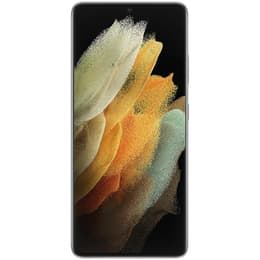
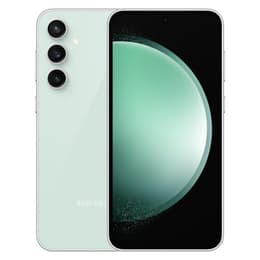
The Samsung Galaxy S21 Ultra 5G, released in January 2021, and the Samsung Galaxy S23 FE, launched in October 2023, represent different segments within Samsung's smartphone lineup. While the S21 Ultra was a flagship device at its release, the S23 FE is positioned as a 'Fan Edition,' offering a blend of premium features at a more accessible point. Both devices operate on the Android platform, but they differ significantly in their release timelines, affecting their software support longevity and hardware capabilities. The S21 Ultra emphasizes a top-tier camera system and a larger, higher-resolution display, whereas the S23 FE provides a more recent processor and improved repairability.
Available Models
Colour
Storage (GB)
Scores
Durability
When considering the practical lifespan of these devices, their respective release dates and software support policies are key factors.
- Release Timeline: The Galaxy S21 Ultra 5G was introduced in January 2021, making it an older device compared to the Galaxy S23 FE, which launched in October 2023. This difference in release year directly impacts their remaining software support.
- Software Longevity: The Galaxy S21 Ultra 5G received four major Android OS updates, concluding with Android 15 (One UI 7.0), and its security updates ended in February 2026. In contrast, the Galaxy S23 FE launched with Android 13 and is promised four years of OS updates, extending to Android 17, and five years of security updates, expected to last until October 2028. This means the S23 FE offers a significantly longer period of official software support.
- Repairability: The Galaxy S21 Ultra 5G received a low repairability score of 3 out of 10 from iFixit, primarily due to the extensive use of adhesive for the battery, display, and rear panel, making disassembly challenging. The display cable was also noted as non-modular, complicating screen replacements. The Galaxy S23 FE, however, boasts a higher repairability score, ranging from 8.0 to 8.5 out of 10, attributed to features like pull tabs for the battery, which simplify component replacement. This design choice suggests that the S23 FE may be easier and less costly to repair over its lifespan.
Year of Release
2021
2023
Compatible with latest Update
Yes
Yes
OS
Android
Android
Foldable
No
No
Performance
The performance of a smartphone is largely determined by its internal components and how efficiently they handle various tasks.
- Processing Capabilities: The Galaxy S21 Ultra 5G is equipped with a powerful processor from its generation, enabling it to handle demanding applications and multitasking with considerable ease. The Galaxy S23 FE features a more recent generation processor, which provides robust performance for everyday use, gaming, and complex applications. While both offer strong performance, the S23 FE's newer architecture generally translates to improved efficiency and sustained performance for current and future applications. However, some users of the S23 FE (particularly the Exynos variant) have reported instances of overheating during intensive use or charging.
- Multitasking and Responsiveness: The S21 Ultra 5G typically comes with 12GB or 16GB of RAM, providing ample capacity for extensive multitasking and keeping numerous applications open in the background without slowdowns. The S23 FE is equipped with 8GB of RAM, which is sufficient for smooth daily operation and most multitasking scenarios, though it offers less headroom than the S21 Ultra for extremely heavy usage. Both devices offer a responsive user experience, with quick app loading and fluid navigation.
- Storage Options and Battery Behavior: Both models offer internal storage options of 128GB and 256GB, with the S21 Ultra also having a 512GB option. Neither device supports expandable storage via a microSD card. The S21 Ultra 5G houses a 5000mAh battery, designed to provide all-day power for most users, though some users have noted that heavy usage, especially with the high-resolution display, can lead to more frequent charging. The S23 FE features a 4500mAh battery. While it supports 25W wired and 15W wireless charging, some users have reported that its battery life can be inconsistent, with some experiencing faster drain, particularly with the Exynos variant.
Screen quality
The visual experience on a smartphone is heavily influenced by its display technology and specifications.
- Display Technology and Resolution: The Galaxy S21 Ultra 5G features a 6.8-inch Dynamic AMOLED 2X display with a WQHD+ resolution (3200x1440 pixels), resulting in a high pixel density of 515 PPI. This delivers exceptionally sharp images and detailed text. The Galaxy S23 FE comes with a 6.4-inch Dynamic AMOLED 2X display, offering an FHD+ resolution (2340x1080 pixels). While still vibrant and clear, its lower resolution compared to the S21 Ultra means a slightly less dense pixel count.
- Brightness and Refresh Rate: Both devices feature a 120Hz adaptive refresh rate, providing smooth scrolling and fluid animations. The S21 Ultra 5G can reach a peak brightness of 1500 nits, ensuring excellent visibility even in bright outdoor conditions. The S23 FE also offers good brightness levels suitable for outdoor use, though specific peak brightness figures are not as high as the S21 Ultra. Both displays support HDR10+ for enhanced contrast and color reproduction.
- Screen Size and Viewing Experience: The S21 Ultra 5G's larger 6.8-inch display provides a more expansive canvas for media consumption, gaming, and productivity tasks. The S23 FE's 6.4-inch screen offers a comfortable viewing experience in a slightly more compact form factor, which some users may find easier for one-handed use. Both displays are protected by Gorilla Glass, offering resistance against scratches and drops.
Resolution
1440 x 3200
1080 x 2340
Screen type
Dynamic AMOLED 2X
Dynamic AMOLED 2X
Audiovisual
The camera systems on both the Galaxy S21 Ultra 5G and Galaxy S23 FE are designed to capture high-quality images and videos, though with different specifications.
- Rear Camera System: The Galaxy S21 Ultra 5G boasts a versatile quad-camera setup, including a 108MP main sensor, a 12MP ultrawide lens, and two 10MP telephoto lenses offering 3x and 10x optical zoom, respectively. This configuration allows for exceptional detail, wide-angle shots, and impressive zoom capabilities, including up to 100x Space Zoom. The Galaxy S23 FE features a triple-camera system with a 50MP main sensor, a 12MP ultrawide lens, and an 8MP telephoto lens with 3x optical zoom. While capable of producing good quality images, its telephoto capabilities are less extensive than the S21 Ultra.
- Photography Performance: The S21 Ultra 5G generally excels in various lighting conditions, with its large main sensor contributing to strong low-light performance and detailed shots. Its advanced zoom system provides flexibility for capturing distant subjects. The S23 FE delivers reliable performance for everyday photography, with its 50MP main sensor capturing clear and vibrant images. However, some users have reported issues with blurry regions in photos and less impressive low-light performance, particularly with the ultrawide lens, and grainy results beyond 3x zoom.
- Video Recording and Audio: Both devices are capable of recording high-resolution video. The S21 Ultra 5G supports 8K video recording at 24fps and 4K at 30/60fps. The S23 FE also offers strong video capabilities, though specific resolutions and frame rates might vary. Both phones include stereo speakers for an immersive audio experience during media consumption.
- Front Camera: For selfies and video calls, the S21 Ultra 5G features a high-resolution 40MP front camera. The S23 FE comes with a 10MP front camera, which is suitable for clear video calls and self-portraits.
Main camera
108 megapixels
50 megapixels
Front camera
40 megapixels
10 megapixels
Miscellaneous
Beyond core performance and camera, several other features contribute to the overall user experience and device utility.
- Connectivity and Ports: Both the Galaxy S21 Ultra 5G and Galaxy S23 FE support 5G connectivity for fast mobile data speeds. The S21 Ultra 5G also features Wi-Fi 6E for enhanced wireless performance. Both devices utilize a USB-C port for charging and data transfer, and neither includes a traditional 3.5mm headphone jack.
- Biometric Security: For secure unlocking, both smartphones incorporate an in-display fingerprint sensor. The S21 Ultra 5G also supports face recognition.
- Build Materials and Durability Features: The S21 Ultra 5G features a premium construction with Gorilla Glass Victus on both the front and back, coupled with an aluminum frame, providing a robust feel and enhanced durability. It also carries an IP68 rating for dust and water resistance. The S23 FE also has an IP68 rating for dust and water protection and uses Gorilla Glass for its display. However, some users have noted that the S23 FE features a plastic back, which, while potentially more resistant to shattering than glass, can attract smudges and grime.
- Dimensions and Handling: The Galaxy S21 Ultra 5G is a larger and heavier device, measuring 165.1 x 75.6 x 8.9mm and weighing 227g, which might be a consideration for users preferring a more compact phone. The Galaxy S23 FE is comparatively smaller and lighter, offering a more manageable size for some users.
Weight
227 g
209 g
Screen size (in)
6.8
6.4
Mobile network
5G
5G
SIM card
Dual Physical SIM + eSIM
Dual Physical SIM
Carrier compatibility
Unlocked
Unlocked
Connector
USB-C
USB-C
What the community thinks
The Samsung Galaxy S21 Ultra 5G and Galaxy S23 FE cater to different user priorities, reflecting their original market positioning and release timelines. User feedback for the S21 Ultra often praised its exceptional camera system, particularly its zoom capabilities, and its vibrant, high-resolution display. However, some users reported concerns regarding battery life under heavy use and occasional software glitches. The S23 FE, being a more recent release, benefits from a longer software support window and improved repairability. Common praise for the S23 FE includes its capable camera for everyday use and its overall smooth performance. Conversely, some users have noted issues such as potential overheating, particularly with the Exynos variant, inconsistent battery life, and a plastic back that can attract smudges.
Users prioritizing a top-tier camera experience with extensive zoom capabilities and a larger, higher-resolution display may find the Galaxy S21 Ultra 5G well-suited to their needs. Its premium build and powerful performance from its generation still hold up for many tasks. However, those who value extended software updates, easier repairability, and a more recent processor for future-proofing might lean towards the Galaxy S23 FE. Its slightly more compact size could also be a deciding factor for some. Both devices offer a robust Android experience, and choosing between them depends on whether a user prioritizes cutting-edge features from an older flagship or a more modern device with longer support and improved serviceability. For those considering either of these models, exploring quality-assured refurbished options can provide an eco-friendly alternative.