
Galaxy S21 Ultra 5G Vs Google Pixel 8 Pro

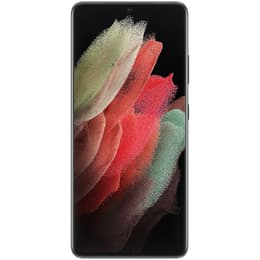
Galaxy S21 Ultra 5G
Galaxy S21 Ultra 5G
Starting at

Refurbished price:£187.00

Versus £1,800.00 new

See options
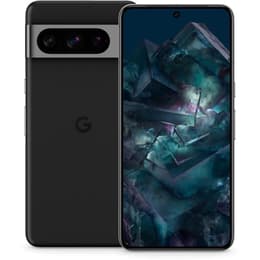
Google Pixel 8 Pro
Google Pixel 8 Pro
Starting at

Refurbished price:£253.00

Versus £960.91 new

See options

Ratings

The Samsung Galaxy S21 Ultra 5G, released in January 2021, and the Google Pixel 8 Pro, launched in October 2023, are both flagship smartphones from their respective manufacturers. While the Galaxy S21 Ultra 5G offered cutting-edge features at its release, the Pixel 8 Pro introduces more recent advancements in software integration and display technology. Both devices operate on the Android platform, but they offer distinct user experiences shaped by their different approaches to hardware and software.

Scores

Durability

When considering the long-term usability of these devices, their release timelines and software support policies are key factors.

  • Release Timeline: The Samsung Galaxy S21 Ultra 5G was released in early 2021, making it an older device compared to the Google Pixel 8 Pro, which launched in late 2023. This age difference inherently impacts their remaining support cycles.
  • Software Longevity: The Google Pixel 8 Pro stands out with an extensive commitment to software support, promising seven years of Android OS upgrades, security updates, and Feature Drops, extending its usability until 2030. The Galaxy S21 Ultra 5G, while receiving regular updates, typically follows a shorter support cycle, having received major OS updates up to Android 14.
  • Durability and Repairability: Both devices feature robust builds with glass fronts and aluminum frames, offering IP68 water and dust resistance. The Pixel 8 Pro benefits from newer Gorilla Glass Victus 2 protection, an upgrade from the original Gorilla Glass Victus on the S21 Ultra 5G.

Year of Release

2021

2023

Compatible with latest Update

Yes

Yes

Foldable

No

No

Performance

The performance of a smartphone is crucial for daily tasks, from app usage to demanding multimedia. Both devices offer capable hardware for their respective generations.

  • Everyday Responsiveness: The Google Pixel 8 Pro features a current-generation processor designed for efficient handling of demanding applications and multitasking, with a strong emphasis on AI-driven features that enhance user experience. The Galaxy S21 Ultra 5G, powered by its 2021 flagship processor, delivered strong performance for its time, capable of handling most tasks smoothly.
  • Battery Behavior: The Pixel 8 Pro is equipped with a 5050 mAh battery, often providing all-day power and, for some users, up to 1.5 days of use. Its display also contributes to improved power efficiency. The Galaxy S21 Ultra 5G has a 5000 mAh battery, which generally lasts a full day for typical usage, though heavy users might find themselves needing a charge before the day ends.
  • Storage and Multitasking: Both phones offer various internal storage options, ranging from 128GB to 512GB, with the Pixel 8 Pro also offering a 1TB option in some regions. Neither device supports expandable storage. The Pixel 8 Pro comes with 12GB of RAM, while the S21 Ultra 5G offered 12GB or 16GB RAM configurations, providing ample capacity for running multiple applications simultaneously.

Memory (GB)

12 GB

12 GB

Screen quality

The visual experience is a primary interaction point, and both phones feature high-quality displays.

  • Display Technology and Clarity: The Google Pixel 8 Pro features a 6.7-inch LTPO OLED display, which Google refers to as its 'Super Actua' display. It offers a resolution of 2992x1344 pixels, providing sharp visuals. The Samsung Galaxy S21 Ultra 5G sports a slightly larger 6.8-inch Dynamic AMOLED 2X display with a 3200x1440 resolution, known for its vibrant colors and deep blacks.
  • Brightness and Outdoor Visibility: The Pixel 8 Pro boasts a peak brightness of up to 2400 nits, making it exceptionally bright and highly visible even in direct sunlight. The S21 Ultra 5G also offers a bright display with a peak brightness of 1500 nits, ensuring good visibility in various lighting conditions.
  • Refresh Rate and Smoothness: Both devices feature adaptive refresh rates for smooth scrolling and responsive interactions. The Pixel 8 Pro can dynamically adjust its refresh rate from 1Hz to 120Hz, optimizing for both fluidity and power efficiency. The Galaxy S21 Ultra 5G also offers an adaptive 120Hz refresh rate, capable of scaling down to 10Hz.

Resolution

1440 x 3200

1344 x 2992

Screen type

Dynamic AMOLED 2X

LTPO OLED

Audiovisual

Both smartphones are designed to deliver advanced photographic capabilities, though they approach image processing with different philosophies.

  • Camera System Configuration: The Google Pixel 8 Pro features a versatile triple camera setup, including a 50MP main sensor, a 48MP ultrawide lens, and a 48MP telephoto lens with 5x optical zoom. The Samsung Galaxy S21 Ultra 5G comes with a quad-camera system, comprising a 108MP main sensor, a 12MP ultrawide, and two 10MP telephoto lenses offering 3x and 10x optical zoom.
  • Photography Performance: The Pixel 8 Pro is highly regarded for its computational photography, consistently producing images with natural colors and excellent dynamic range, particularly excelling in low-light conditions with its Night Sight mode. The S21 Ultra 5G was praised for its detailed photos and impressive zoom capabilities, especially its 10x optical zoom and 100x digital 'Space Zoom'.
  • Video and Audio: The Pixel 8 Pro offers improved video recording, including 4K 60fps from its front camera, and enhanced audio capture. The Galaxy S21 Ultra 5G is capable of 8K video recording and provides a strong overall video experience. Both devices include stereo speakers for media consumption.

Main camera

108 megapixels

50 megapixels

Front camera

40 megapixels

10.5 megapixels

Miscellaneous

Beyond core specifications, several practical elements contribute to the overall user experience.

  • Connectivity and Ports: The Google Pixel 8 Pro supports newer connectivity standards, including Wi-Fi 7 and Bluetooth 5.3, alongside 5G. The Samsung Galaxy S21 Ultra 5G supports Wi-Fi 6E and Bluetooth 5.2, also offering 5G capabilities. Both devices utilize a USB-C 3.2 port for charging and data transfer.
  • Biometrics and Security: For unlocking, the Pixel 8 Pro features an optical in-screen fingerprint sensor and Face Unlock, which meets high Android security standards. The S21 Ultra 5G uses an ultrasonic in-screen fingerprint sensor and 2D Face unlock.
  • Design and Handling: The Pixel 8 Pro measures 162.6 x 76.5 x 8.8 mm and weighs 213g, featuring a flat display and rounded corners. The Galaxy S21 Ultra 5G is slightly taller and narrower at 165.1 x 75.6 x 8.9 mm and weighs 227g or 229g, depending on the variant. The S21 Ultra 5G also uniquely supports the S Pen, though it is sold separately.

Weight

227 g

213 g

Screen size (in)

6.8

6.7

Mobile network

5G

5G

SIM card

Dual Physical SIM + eSIM

Physical SIM + eSIM

Carrier compatibility

Unlocked

Unlocked

The Samsung Galaxy S21 Ultra 5G and the Google Pixel 8 Pro cater to users with different priorities, reflecting their respective release years and design philosophies. Users often praise the Galaxy S21 Ultra 5G for its versatile camera system, particularly its impressive zoom capabilities, and its vibrant, high-resolution display. Some common criticisms at its launch included its battery life for heavy users and the absence of a charger in the box.

The Google Pixel 8 Pro receives acclaim for its advanced computational photography, delivering consistent and high-quality images, especially in challenging lighting. Its extended software support commitment is also a significant advantage for users seeking long-term device longevity. While its battery life is generally considered good, some users note that it might not always outperform competitors in extreme usage scenarios.

Users prioritizing a device with a highly capable and versatile zoom camera, along with S Pen support for productivity, may find the Galaxy S21 Ultra 5G well-suited to their needs. Conversely, users who value cutting-edge computational photography, a commitment to long-term software updates, and a bright, power-efficient display will likely lean towards the Google Pixel 8 Pro. Both devices represent strong options in the premium smartphone segment, and choosing a quality-assured refurbished option for either can be an eco-friendly alternative for consumers.

See all articles

Our recent comparisons