

Samsung
Compare models
Differences at a glance
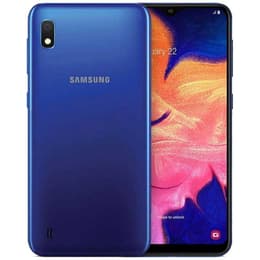
The Samsung Galaxy A10 and Galaxy A20 are Android smartphones released in early 2019, targeting users seeking essential features in a mobile device. While both share a similar design philosophy and operate on the Android platform, the Galaxy A20 introduces several enhancements in display technology, camera versatility, and battery capacity. These differences position the A20 as a slightly more capable option for daily use compared to its predecessor.
Colour
Storage (GB)
Both the Galaxy A10 and Galaxy A20 were launched in 2019, meaning they have a similar software support timeline. Their official software update cycle has concluded, with both devices receiving updates up to Android 11 (One UI 3.1). This indicates that neither model will receive further major Android version upgrades or security patches, which is a key consideration for long-term usability. Repairability for both models is considered moderate, with parts generally available, especially through quality-assured refurbished options.
Year of Release
Compatible with latest Update
OS
Foldable
The Galaxy A10 and A20 share similar underlying processing capabilities for everyday tasks, but the A20 benefits from additional RAM, which can lead to a more fluid experience, particularly when managing multiple applications. Both devices are designed for general use rather than demanding applications or intensive gaming.
A notable distinction between these two models lies in their display technology and size, offering different visual experiences. The Galaxy A20 provides a more vibrant and immersive viewing experience due to its panel type and slightly larger screen.
Resolution
Screen type
The camera systems on the Galaxy A10 and A20 show a clear distinction, with the A20 offering more versatility and higher resolution for selfies, enhancing its photographic capabilities for various scenarios.
Main camera
Front camera
Beyond core performance and display, several practical elements differentiate the Galaxy A10 and A20, impacting daily convenience and user interaction. These include connectivity, port types, and biometric security features.
Weight
Screen size (in)
Mobile network
SIM card
Carrier compatibility
Connector
User feedback for both the Galaxy A10 and A20 generally highlights their roles as reliable entry-level smartphones. The Galaxy A10 is often praised for its simplicity and ability to handle basic tasks effectively, making it a suitable choice for users who need a straightforward device for calls, messaging, and light media consumption. Criticisms sometimes point to its more modest display and lack of a fingerprint sensor.
The Galaxy A20, on the other hand, frequently receives positive remarks for its more vibrant Super AMOLED display, longer battery life, and the added versatility of its dual-camera system. Users appreciate the inclusion of a fingerprint sensor and USB-C port as practical upgrades. Some users have noted that while the A20 offers improvements, it still falls within the budget category, meaning it's not designed for heavy gaming or very demanding applications.
Users prioritizing a more immersive viewing experience, longer battery life, and enhanced photography options will find the Galaxy A20 better suited to their needs. Its additional RAM also contributes to smoother multitasking. Conversely, users who require a device primarily for essential communication and light usage, and prefer a simpler feature set, may find the Galaxy A10 to be a perfectly adequate option. Both devices represent solid choices in their segment, and opting for a quality-assured refurbished option can provide an eco-friendly alternative for either model.