
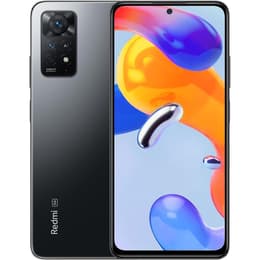

Sony Xperia 1 IV Vs Xiaomi Redmi Note 11 Pro 5G

Sony Xperia 1 IV
Sony Xperia 1 IV
Starting at

Refurbished price:£347.00

Versus £1,500.00 new

See options
Xiaomi Redmi Note 11 Pro 5G
Starting at

Refurbished price:£102.00

Versus £599.00 new

See options

Ratings

The Sony Xperia 1 IV and the Xiaomi Redmi Note 11 Pro 5G are smartphones released in 2022, targeting different segments of the market. The Xperia 1 IV, launched in May 2022, is Sony's flagship device, emphasizing advanced camera capabilities and a high-resolution display. The Redmi Note 11 Pro 5G, introduced in January 2022, positions itself as a feature-rich option with a focus on display quality and battery endurance. While both run on the Android operating system, they offer distinct user experiences shaped by their hardware and software philosophies.

Scores

Durability

When considering the long-term usability of these devices, several factors come into play, including their release timelines, software support, and physical resilience.

  • Release Timeline: The Sony Xperia 1 IV was released in May 2022, while the Xiaomi Redmi Note 11 Pro 5G launched earlier in January 2022. This difference means the Xperia 1 IV benefits from a slightly newer starting point for its software lifecycle.
  • Software Longevity: Sony typically provides 2 major Android OS updates and 3 years of security updates for its flagship devices, with the Xperia 1 IV upgradable to Android 14. The Redmi Note 11 Pro 5G launched with Android 11 and has received updates to Android 13 (HyperOS), but it has recently been added to Xiaomi's End-of-Life (EOL) list, indicating an end to further software and security updates. This suggests the Xperia 1 IV will receive software support for a longer duration.
  • Repairability and Durability: The Sony Xperia 1 IV has an IP68 rating for dust and water resistance, offering robust protection against environmental elements. Its repairability score is noted at 5.5 out of 10, with battery replacement potentially challenging due to adhesive. The Xiaomi Redmi Note 11 Pro 5G features an IP53 rating, providing splash resistance but less comprehensive protection. It boasts a higher repairability score of 7.8 out of 10, indicating easier access for component replacement.

Year of Release

2022

2022

Compatible with latest Update

No

No

OS

Android

Android

Foldable

No

No

Performance

The performance of a smartphone is largely determined by its internal components and how efficiently they handle various tasks, from everyday browsing to demanding applications.

  • Processing Power: The Sony Xperia 1 IV is equipped with a high-end processor, enabling it to handle intensive applications, complex multitasking, and graphic-heavy games with fluidity. Users can expect a responsive experience even with demanding workloads. In contrast, the Xiaomi Redmi Note 11 Pro 5G utilizes a mid-range processor, which provides capable performance for daily tasks and moderate gaming, though it may show limitations with the most graphically intensive titles or extensive multitasking.
  • System Responsiveness and Multitasking: The Xperia 1 IV's generous 12GB of RAM contributes to smooth transitions between applications and efficient background process management. The Redmi Note 11 Pro 5G offers 6GB or 8GB of RAM, which is sufficient for typical smartphone usage, but the Xperia 1 IV provides more headroom for power users who frequently switch between many applications.
  • Storage and Expansion: Both devices offer flexible storage solutions. The Xperia 1 IV comes with 256GB or 512GB of internal storage and supports microSDXC cards for expansion up to 1TB. The Redmi Note 11 Pro 5G provides 64GB or 128GB of internal storage, also expandable via microSD card up to 1TB.
  • Battery Behavior: Both phones house a 5000 mAh battery. The Xperia 1 IV supports 30W fast charging and wireless charging, but some users report that heavy use, particularly with the camera, can lead to quicker battery drain and noticeable heat generation. The Redmi Note 11 Pro 5G supports significantly faster 67W charging and is noted for its excellent battery longevity, often lasting over a full day even with heavy usage.

Memory (GB)

12 GB

6 GB

Screen quality

The display is a primary interface for smartphone interaction, and both devices offer distinct visual experiences.

  • Display Technology and Resolution: The Sony Xperia 1 IV features a 6.5-inch OLED display with a 4K (3840x1644) resolution and a 21:9 aspect ratio, delivering exceptional sharpness and detail, particularly for high-resolution content. The Xiaomi Redmi Note 11 Pro 5G comes with a 6.67-inch Super AMOLED display, offering a Full HD+ (2400x1080) resolution. While not 4K, its AMOLED panel provides vibrant colors and deep blacks.
  • Refresh Rate and Smoothness: Both smartphones feature a 120Hz refresh rate, contributing to smoother scrolling and more fluid animations in compatible applications and games. The Redmi Note 11 Pro 5G also boasts a 360Hz touch sampling rate for enhanced responsiveness.
  • Brightness and Outdoor Visibility: The Xperia 1 IV's OLED display is noted for being 50% brighter than its predecessor, improving outdoor visibility. The Redmi Note 11 Pro 5G's Super AMOLED display offers a peak brightness of 1200 nits, ensuring good visibility even in bright conditions.
  • Viewing Experience: The Xperia 1 IV's 21:9 CinemaWide aspect ratio is designed for an immersive cinematic viewing experience, aligning with movie formats. The Redmi Note 11 Pro 5G's larger 6.67-inch screen provides an expansive canvas for media consumption and general use.

Resolution

1644 x 3840

1080 x 2400

Screen type

OLED

Super AMOLED

Audiovisual

The camera systems on these smartphones cater to different photographic priorities, from advanced manual controls to high-megapixel sensors.

  • Rear Camera System: The Sony Xperia 1 IV features a versatile triple 12-megapixel camera setup, including a main lens with optical image stabilization (OIS), an ultrawide lens, and a telephoto lens with a unique continuous optical zoom ranging from 85mm to 125mm. It also includes a 0.3MP Time-of-Flight (TOF) depth sensor. The Xiaomi Redmi Note 11 Pro 5G is equipped with a 108-megapixel main camera, an 8-megapixel ultrawide lens, and a 2-megapixel macro lens.
  • Photography Performance: The Xperia 1 IV is praised for its natural color reproduction, extensive manual controls, and advanced features like Eye Autofocus, appealing to users who prefer a more traditional camera-like experience. Its main camera performs well in various lighting conditions, though secondary cameras may struggle in low light. The Redmi Note 11 Pro 5G's 108-megapixel main sensor can capture detailed images in good lighting, but its ultrawide and macro lenses are less capable, and overall image quality is considered good but not exceptional.
  • Video Recording Capabilities: A significant differentiator is the Xperia 1 IV's ability to record 4K video at 120 frames per second across all three rear cameras, offering advanced creative possibilities for videographers. The Redmi Note 11 Pro 5G's video recording is limited to 1080p at 30 frames per second, lacking 4K capability.
  • Front Camera and Audio: The Xperia 1 IV has a 12-megapixel front-facing camera capable of 4K video recording. The Redmi Note 11 Pro 5G features a 16-megapixel front camera, suitable for selfies and video calls. Both devices offer stereo speakers, with the Xperia 1 IV also retaining a 3.5mm headphone jack, a feature often appreciated by audiophiles.

Main camera

12 megapixels

108 megapixels

Front camera

12 megapixels

16 megapixels

Miscellaneous

Beyond core specifications, several practical elements contribute to the overall user experience and daily functionality of a smartphone.

  • Connectivity and Ports: Both devices support 5G connectivity, Wi-Fi (Wi-Fi 6 for Xperia 1 IV, Wi-Fi 5 for Redmi Note 11 Pro 5G), and Bluetooth (v5.2 for Xperia 1 IV, v5.1 for Redmi Note 11 Pro 5G). The Xperia 1 IV includes a 3.5mm headphone jack and a USB-C port. The Redmi Note 11 Pro 5G also features a 3.5mm headphone jack, a USB-C port, and an IR blaster for controlling home electronics.
  • Biometric Security: Both smartphones utilize side-mounted fingerprint sensors for secure unlocking. The Xperia 1 IV's fingerprint sensor has been noted by some users to be occasionally inconsistent.
  • Physical Design and Handling: The Sony Xperia 1 IV measures 165 x 71 x 8.2 mm and weighs 185g, featuring a tall and narrow design with a flat-edged aesthetic. The Xiaomi Redmi Note 11 Pro 5G is slightly wider and heavier at 164.19 x 76.1 x 8.12 mm and 202g, also sporting a flat-edged design with a glass back. The Xperia's narrower form factor can make one-handed grip more comfortable for some users.
  • Build Materials and Durability Features: The Xperia 1 IV features a glass front and back with a metal frame, contributing to a premium feel and an IP68 dust and water resistance rating. The Redmi Note 11 Pro 5G uses Gorilla Glass 5 on the front and a glass back with a plastic frame, offering an IP53 splash-resistant rating.

Weight

185 g

202 g

Screen size (in)

6,5

6.67

Mobile network

5G

5G

SIM card

Physical SIM + eSIM

Dual Physical SIM

Carrier compatibility

Unlocked

Unlocked

The Sony Xperia 1 IV and the Xiaomi Redmi Note 11 Pro 5G cater to different user needs, each with its own set of strengths and considerations. The Xperia 1 IV is often praised for its exceptional 4K OLED display, advanced camera system with true optical zoom, and extensive manual controls that appeal to photography and videography enthusiasts. Users appreciate its unique 21:9 aspect ratio for media consumption and comfortable handling. However, some common criticisms include its tendency to overheat during prolonged heavy use, particularly with the camera, and mixed reports on battery life under demanding conditions. The side-mounted fingerprint sensor has also been noted for occasional inconsistencies.

Conversely, the Xiaomi Redmi Note 11 Pro 5G receives commendation for its vibrant 120Hz Super AMOLED display, impressive battery life coupled with very fast charging, and a design that feels premium for its category. Its main 108-megapixel camera performs well in good lighting, and the inclusion of a 3.5mm headphone jack and IR blaster are practical additions. Criticisms often point to its less powerful processor compared to flagships, the absence of 4K video recording, and the ultrawide and macro cameras being less capable. A significant concern for long-term users is the device being added to Xiaomi's End-of-Life list, meaning an end to official software and security updates.

Users prioritizing a top-tier display, advanced camera features with granular control, and a more compact, premium build may find the Sony Xperia 1 IV well-suited to their needs. It is particularly appealing to those who value creative tools and a cinematic viewing experience. On the other hand, users who prioritize excellent battery endurance, rapid charging, a bright and smooth display for everyday use, and a higher repairability score may lean toward the Xiaomi Redmi Note 11 Pro 5G. It serves well as a reliable daily driver for general tasks and media consumption, provided the end of software support is an acceptable trade-off.

For those seeking a quality-assured refurbished option, both models can be found, offering an eco-friendly alternative to purchasing new devices.


See all articles

Our recent comparisons