
Galaxy Z Fold4 Vs Google Pixel 8

Galaxy Z Fold4
Galaxy Z Fold4
Starting at

Refurbished price:£352.00

Versus £1,889.00 new

See options
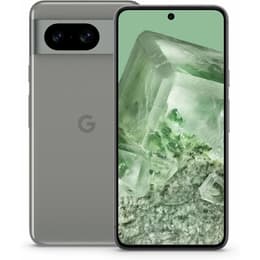
Google Pixel 8
Google Pixel 8
Starting at

Refurbished price:£189.00

Versus £699.99 new

See options

Ratings

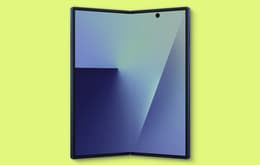
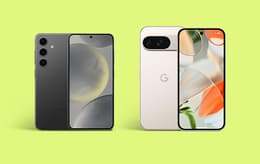
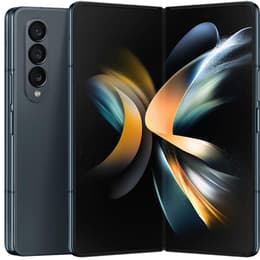
The Samsung Galaxy Z Fold4, released in August 2022, and the Google Pixel 8, launched in October 2023, represent distinct approaches to the modern smartphone experience. While the Z Fold4 offers a unique foldable design that transforms from a traditional smartphone into a larger tablet-like display, the Pixel 8 provides a more conventional, compact form factor with a strong emphasis on software integration and computational photography. Both devices operate on the Android platform, but they cater to different user priorities through their hardware and software philosophies.

Scores

Durability

The expected practical lifespan of a smartphone is influenced by its release timeline, software support, and physical resilience.

  • Release Timeline: The Galaxy Z Fold4 was released in August 2022, making it a year older than the Google Pixel 8, which launched in October 2023. This difference in release dates impacts their respective software support cycles.
  • Software Longevity: The Galaxy Z Fold4 was promised four major Android OS upgrades, extending its support to Android 16, along with five years of security updates until 2027. In contrast, the Google Pixel 8 offers a significantly longer commitment, with seven years of Android OS upgrades, security updates, and Feature Drops, ensuring support until 2030. This extended support means the Pixel 8 will receive new features and security patches for a longer duration.
  • Physical Durability: The Z Fold4 features an Armor Aluminium frame and Corning Gorilla Glass Victus+ on its cover screen, along with an IPX8 water resistance rating, meaning it can withstand submersion in fresh water. However, its foldable inner screen is more susceptible to scratches than traditional glass displays. The Pixel 8 comes with Gorilla Glass Victus on its front display and boasts an IP68 rating, providing robust protection against both dust and water immersion.

Year of Release

2022

2023

Compatible with latest Update

Yes

Yes

OS

Android

Android

Foldable

Yes

No

Performance

Both devices are equipped with high-performance processors designed to handle demanding tasks, though their architectures and optimizations differ.

  • Processing Power: The Galaxy Z Fold4 features a high-end processor from its release year, enabling smooth multitasking, rapid app loading, and efficient handling of graphics-intensive games. Its 12 GB of RAM further supports a fluid experience when switching between numerous applications. The Pixel 8, being a newer device, incorporates a more recent generation processor developed by Google, which is optimized for artificial intelligence tasks and provides responsive performance for everyday use, gaming, and complex computations.
  • Storage Options: The Z Fold4 offers storage capacities of 256 GB, 512 GB, and 1 TB, utilizing UFS 3.1 technology for fast data access. The Pixel 8 is available with 128 GB or 256 GB of UFS 3.1 storage. Neither device supports expandable storage via microSD cards.
  • Battery Behavior: The Galaxy Z Fold4 is equipped with a 4400 mAh battery, which, combined with its efficient processor and adaptive refresh rate displays, generally provides a full day of use for many users. The Pixel 8 has a 4575 mAh battery, and its power management features, including an adaptive battery system, contribute to reliable all-day endurance for typical usage.

Memory (GB)

12 GB

8 GB

Screen quality

The display experience is a primary differentiator, with the Z Fold4 offering a unique dual-screen setup and the Pixel 8 providing a high-quality traditional panel.

  • Display Technology and Size: The Galaxy Z Fold4 features two Dynamic AMOLED 2X displays. The main, foldable inner screen measures 7.6 inches, offering an expansive canvas for productivity and media consumption. The outer cover screen is 6.2 inches, functioning as a standard smartphone display when folded. The Google Pixel 8 has a single 6.2-inch OLED display, referred to as an 'Actua display'.
  • Resolution and Clarity: The Z Fold4's main display has a resolution of 2176 x 1812 pixels, providing sharp visuals on its large surface. The cover screen has a resolution of 904 x 2316 pixels. The Pixel 8's display offers a Full HD+ resolution of 2400 x 1080 pixels, resulting in clear and detailed images on its smaller panel.
  • Brightness and Refresh Rate: Both devices feature adaptive refresh rates up to 120 Hz for smooth scrolling and responsiveness. The Pixel 8's display can reach a peak brightness of up to 2000 nits, enhancing visibility in bright outdoor conditions.

Resolution

1812 x 2176

1080 x 2400

Screen type

Foldable Dynamic AMOLED 2X

OLED

Audiovisual

Both smartphones offer advanced camera systems, but they excel in different areas, catering to varying photographic preferences.

  • Rear Camera Systems: The Galaxy Z Fold4 is equipped with a versatile triple-camera setup: a 50 MP wide-angle main sensor with optical image stabilization (OIS), a 12 MP ultra-wide camera, and a 10 MP telephoto lens capable of 3x optical zoom and up to 30x digital zoom. The Pixel 8 features a dual-camera system with a 50 MP wide-angle main sensor (f/1.68, OIS) and a 12 MP ultrawide camera with a wider field of view and autofocus, which also enables macro photography.
  • Photography Performance: The Z Fold4 delivers vibrant and balanced photos, performing well in various lighting conditions, including low light, and offers good detail capture. The Pixel 8 is renowned for its computational photography, producing images with excellent exposure, detail, and natural color reproduction, particularly strong in low-light and night photography.
  • Video and Front Cameras: The Z Fold4 can record video up to 8K at 24 frames per second. It has a 10 MP cover screen camera and a 4 MP under-display camera on the inner screen, with the latter being primarily suited for video calls. The Pixel 8 records video up to 4K at 60 frames per second and includes a 10.5 MP front-facing camera, which provides clear selfies and supports facial recognition.

Main camera

50 megapixels

50 megapixels

Front camera

4 megapixels

10.5 megapixels

Miscellaneous

Beyond core features, several practical elements contribute to the overall user experience and daily usability of these devices.

  • Connectivity and Ports: Both the Galaxy Z Fold4 and the Google Pixel 8 support 5G connectivity, ensuring fast mobile data speeds. The Z Fold4 supports Wi-Fi and Bluetooth, while the Pixel 8 offers more advanced Wi-Fi 7 and Bluetooth 5.3 standards. Both devices utilize a USB-C 3.2 port for charging and data transfer.
  • Biometric Security: The Z Fold4 incorporates a side-mounted fingerprint scanner for secure unlocking. The Pixel 8 features an in-display fingerprint scanner and also supports facial recognition for convenient access.
  • Design and Handling: The Galaxy Z Fold4, with its foldable design, is heavier at 263 grams and thicker when folded (14.2–15.8 mm) compared to the Pixel 8, which weighs 187 grams and has a thickness of 8.9 mm. The Z Fold4's unfolded dimensions provide a tablet-like experience, while the Pixel 8 offers a more compact and pocketable form factor.

Weight

263 g

187 g

Screen size (in)

7.6

6.2

Mobile network

5G

5G

SIM card

Dual Physical SIM + eSIM

Physical SIM + eSIM

Carrier compatibility

Unlocked

Unlocked

The Samsung Galaxy Z Fold4 and the Google Pixel 8 cater to distinct user preferences, each offering a compelling smartphone experience. Users often praise the Z Fold4 for its innovative foldable design, which provides a large, immersive screen for productivity and media consumption, effectively combining a phone and a tablet into one device. Its robust multitasking capabilities and S Pen support are frequently highlighted as strong points. Some common criticisms, however, revolve around its bulkier form factor when folded and the perceived fragility of the inner display compared to traditional smartphones.

The Google Pixel 8 is widely lauded for its exceptional camera performance, driven by advanced computational photography, and its long-term software support commitment, promising seven years of updates. Users appreciate its clean Android experience and the integration of AI features that enhance daily tasks. Common feedback sometimes points to its battery life being good but not outstanding compared to some larger flagships, and the absence of a dedicated telephoto lens on the base model.

Users prioritizing a versatile device that can transform from a compact phone to a large-screen tablet for enhanced productivity and immersive content will find the Galaxy Z Fold4 well-suited to their needs. Its unique form factor is ideal for those who frequently multitask or consume media on a larger display. Conversely, users who value a compact, traditional smartphone with a top-tier camera system, long-term software support, and a streamlined Android experience will likely lean toward the Google Pixel 8. It is an excellent choice for photography enthusiasts and those who prefer a device that remains current with software updates for an extended period.

For those considering either of these devices, exploring quality-assured refurbished options can be an eco-friendly alternative to purchasing new, offering a sustainable choice without compromising on functionality.

See all articles

Our recent comparisons