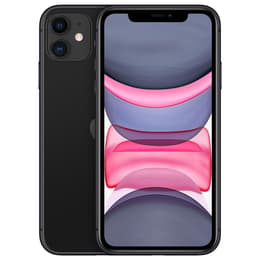
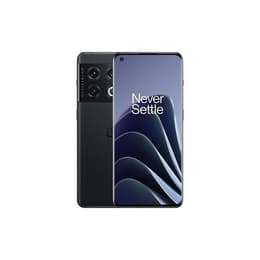

iPhone 11 Vs OnePlus 10 Pro

iPhone 11
iPhone 11
Starting at

Refurbished price:£123.00

Versus £489.00 new

See options
OnePlus 10 Pro
OnePlus 10 Pro
Starting at

Refurbished price:£391.00

Versus £769.39 new

See options

Ratings

The iPhone 11, released in September 2019, and the OnePlus 10 Pro, launched in January 2022, represent different approaches to smartphone design and functionality from their respective manufacturers. While the iPhone 11 operates on Apple's iOS ecosystem, the OnePlus 10 Pro runs on Android, offering distinct user experiences. Key differentiators between these two devices include their display technologies, camera systems, and overall performance capabilities, reflecting the technological advancements over their release timelines.

Scores

Durability

The practical lifespan of a smartphone is significantly influenced by its release date and the manufacturer's commitment to software updates and repairability.

  • Release Timeline: The iPhone 11 was released in late 2019, making it an older model compared to the OnePlus 10 Pro, which launched in early 2022. This age difference impacts how long each device is expected to receive major software updates and security patches.
  • Software Longevity: Apple typically provides iOS updates for iPhones for approximately five to seven years from their release. The iPhone 11 is expected to receive major iOS updates until at least late 2026, with security updates potentially extending beyond that. The OnePlus 10 Pro, initially promised three major Android upgrades and four years of security updates, has seen an unexpected extension, with some models receiving Android 16, pushing its software support further than initially anticipated.
  • Repairability: The iPhone 11 has a repairability score of 6 out of 10, indicating that critical display and battery repairs are prioritized in its design. The OnePlus 10 Pro also has a repairability score of 6 out of 10, with components like the battery and screen being accessible, though adhesive use can complicate repairs.

Year of Release

2019

2022

Compatible with latest Update

Yes

Yes

OS

iOS

Android

Foldable

No

No

Performance

Performance is a critical aspect for daily smartphone use, encompassing everything from app responsiveness to handling demanding tasks and battery endurance.

  • System Responsiveness: The iPhone 11, powered by its internal processor, offers smooth performance for everyday tasks and app navigation. Users generally report quick app switching and fluid scrolling. The OnePlus 10 Pro, featuring a newer generation processor, provides a highly responsive and smooth user interface, handling demanding applications and multitasking with ease.
  • Battery Behavior: The iPhone 11, with its 3110 mAh battery, is generally reported to last a full day of moderate use, especially with a healthy battery. The OnePlus 10 Pro, equipped with a larger 5000 mAh battery, offers extended usage, often providing all-day battery life even for heavy users.
  • Storage and Multitasking: The iPhone 11 is available with up to 256GB of storage and 4GB of RAM. The OnePlus 10 Pro offers more storage options, up to 512GB, and higher RAM configurations, up to 12GB, which can benefit users who frequently run many applications simultaneously or store large files.

Memory (GB)

4 GB

8 GB

Screen quality

The display is a primary interface for smartphone interaction, and differences in technology, resolution, and refresh rate significantly impact the visual experience.

  • Display Technology and Clarity: The iPhone 11 features a 6.1-inch Liquid Retina IPS LCD display with a resolution of 1792 x 828 pixels, resulting in a pixel density of 326 ppi. This provides clear visuals for general use, though it is not as sharp as higher-resolution displays. The OnePlus 10 Pro boasts a larger 6.7-inch Fluid AMOLED display with a higher resolution of 3216 x 1440 pixels and a pixel density of 525 ppi, offering sharper images and more vibrant colors.
  • Brightness and Refresh Rate: The iPhone 11's display has a typical maximum brightness of 625 nits. It operates at a standard 60Hz refresh rate. The OnePlus 10 Pro's AMOLED screen can reach a peak brightness of 1300 nits, improving visibility in bright conditions. It also features an adaptive refresh rate that can dynamically scale from 1Hz to 120Hz, contributing to smoother scrolling and potentially better power efficiency.
  • Viewing Experience: The iPhone 11's LCD panel offers good color reproduction and viewing angles. The OnePlus 10 Pro's AMOLED display provides deeper blacks and higher contrast, enhancing the viewing experience for media consumption.

Resolution

828 x 1792

1440 x 3216

Screen type

Liquid Retina IPS LCD

LTPO2 Fluid AMOLED

Audiovisual

Camera capabilities are a significant consideration for many users, with both devices offering distinct photographic and videographic features.

  • Rear Camera System: The iPhone 11 features a dual 12MP camera system, including a wide and an ultra-wide lens. It is known for producing sharp, colorful photos in daylight and introduced Night mode for improved low-light performance. The OnePlus 10 Pro comes with a triple camera setup, including a 48MP main, 50MP ultrawide, and 8MP telephoto lens, with Hasselblad color calibration. It generally delivers excellent daytime photos with accurate colors and good detail.
  • Low-Light and Video Performance: While the iPhone 11's Night mode was a notable improvement for its time, newer phones, including the OnePlus 10 Pro, often offer more advanced low-light capabilities, pulling in more light for cleaner images. Both devices are capable of 4K video recording at 60 frames per second, with good stabilization.
  • Front Camera and Audio: The iPhone 11 has a 12MP front camera. The OnePlus 10 Pro features a 32MP front camera. Both devices offer standard microphone quality for calls and recording, and their speaker outputs are suitable for media consumption.

Main camera

12 megapixels

48 megapixels

Front camera

12 megapixels

32 megapixels

Miscellaneous

Beyond core features, several practical elements contribute to the overall user experience and device utility.

  • Connectivity Options: The iPhone 11 supports Gigabit-class LTE and Wi-Fi 6, along with Bluetooth 5.0. It does not support 5G connectivity. The OnePlus 10 Pro offers 5G connectivity, Wi-Fi 6, and Bluetooth 5.2, providing faster network speeds and more modern wireless standards.
  • Ports and Biometrics: The iPhone 11 uses a Lightning port for charging and data transfer. It relies on Face ID for secure authentication. The OnePlus 10 Pro features a USB-C port and includes an in-display fingerprint sensor and facial recognition for unlocking.
  • Build and Handling: The iPhone 11 has a glass front and back with an aluminum frame, weighing 194 grams. It is rated IP68 for water and dust resistance. The OnePlus 10 Pro also features a glass front and back with an aluminum frame, weighing 200.5 grams. While some carrier versions may have an IP rating, global models often do not carry an official water resistance rating.

Weight

194 g

201 g

Screen size (in)

6.1

6.7

Mobile network

4G

5G

SIM card

Physical SIM + eSIM

Physical SIM

Carrier compatibility

Unlocked

Unlocked

Connector

Lightning

USB-C

The iPhone 11 and OnePlus 10 Pro cater to different user preferences, largely due to their distinct operating systems and release timelines. Users often praise the iPhone 11 for its consistent performance, reliable camera in good lighting, and the long-term software support characteristic of Apple devices. Its battery life, especially with a new battery, is generally considered sufficient for a full day of use.

Conversely, the OnePlus 10 Pro receives acclaim for its vibrant, high-refresh-rate AMOLED display, powerful performance for demanding tasks, and fast charging capabilities. Its camera system, co-developed with Hasselblad, is noted for accurate colors and strong daytime photography, though some users find its low-light and zoom performance less consistent than top-tier competitors.

Users prioritizing a familiar and long-supported iOS ecosystem with a focus on consistent performance and a capable camera for everyday situations may find the iPhone 11 well-suited to their needs. Those who value a larger, more advanced display, faster performance for gaming and heavy multitasking, and the flexibility of the Android operating system, along with rapid charging, might lean towards the OnePlus 10 Pro. Both devices offer a quality-assured refurbished option, providing an eco-friendly alternative for consumers seeking reliable technology.

See all articles

Our recent comparisons