
Huawei P30 Vs Huawei P30 Lite

Huawei P30
Huawei P30
Starting at

Refurbished price:£118.00

Versus £449.00 new

See options
Huawei P30 Lite
Huawei P30 Lite
Starting at

Refurbished price:£103.00

Versus £249.99 new

See options

Ratings

The Huawei P30 and Huawei P30 Lite are smartphones released by Huawei in 2019, targeting different segments of the market. The P30, launched in March 2019, was positioned as a flagship device, while the P30 Lite, also released around March 2019 with a 'New Edition' in January 2020, offered a more accessible option. Both devices run on Android with Huawei's EMUI custom interface, but they differ significantly in their internal hardware, display technology, and camera capabilities, catering to users with varying priorities for performance and photography.

Scores

Durability

When considering the longevity of these devices, several factors come into play, including their release timelines, software support, and physical construction.

  • Release Timeline and Software Support: The Huawei P30 was released in March 2019, while the P30 Lite followed shortly after, with a 'New Edition' appearing in January 2020. Both devices launched with Android 9 (Pie) and EMUI 9.1. The P30 received updates up to EMUI 12, which is based on Android 10 for global models, and some users have reported receiving security patches for up to five years. The P30 Lite also received EMUI updates, though its update longevity might be shorter than its more premium counterpart. Users should be aware that major Android version updates have largely ceased for these models, potentially impacting compatibility with newer applications over time. [1, 2, 4, 5, 8, 12, 14, 17, 19, 20, 22, 26, 37, 38, 39, 42, 43]
  • Physical Durability: The P30 features a glass construction, but unlike the P30 Pro, it does not carry an official IP rating for water and dust resistance, suggesting less protection against environmental elements. The P30 Lite also features a glass front and back with a plastic frame, and similarly lacks an official IP rating. Both phones are susceptible to damage from drops, with the P30's flat sides potentially offering a slight ergonomic advantage for grip compared to curved designs. [18, 20, 23, 30]
  • Expected Practical Lifespan: User reports indicate that the P30, despite its age, can still offer responsive performance for daily tasks. However, the lack of recent Android version updates and diminishing security patches could limit its practical lifespan for users who require the latest software features or enhanced security. The P30 Lite, with its less powerful internal components, may show signs of slowdown sooner, particularly with more demanding applications. [39, 40, 42]

Year of Release

2019

2019

Compatible with latest Update

No

No

OS

Android

Android

Foldable

No

No

Performance

The performance of a smartphone is largely determined by its internal processing power and memory, influencing how smoothly applications run and how efficiently the device handles multitasking.

  • Processing Capabilities: The Huawei P30 is equipped with a more capable processor, designed to handle demanding applications and complex tasks with greater efficiency. This translates to smoother navigation, faster app loading times, and a more fluid experience when engaging in mobile gaming or intensive productivity tasks. In contrast, the P30 Lite features a processor that provides adequate performance for everyday use, such as browsing, social media, and light gaming, but may exhibit slower response times with more resource-intensive applications. [2, 4, 5, 6, 7, 13, 14, 15, 17, 18, 23, 25, 26, 27, 37]
  • Memory and Storage: The P30 typically comes with 6GB or 8GB of RAM, allowing for robust multitasking and keeping more applications active in the background without needing to reload them. It offers 128GB of internal storage, expandable via Huawei's proprietary Nano Memory (NM) cards. The P30 Lite usually comes with 4GB or 6GB of RAM and 128GB of internal storage, which is expandable using more common microSD cards. While both offer expandable storage, the P30's higher RAM capacity provides a noticeable advantage for users who frequently switch between multiple applications. [2, 4, 5, 7, 10, 11, 13, 14, 15, 16, 17, 21, 22, 25, 27, 28, 30]
  • Battery Behavior: The P30 houses a 3650 mAh battery, supporting 22.5W fast charging, which generally provides sufficient power for a full day of moderate to heavy use. User experiences often highlight its strong battery performance. The P30 Lite has a 3340 mAh battery with 18W fast charging. While it can also last a full day for average users, heavy usage may necessitate more frequent charging compared to the P30. [2, 3, 4, 5, 7, 11, 17, 22, 25, 27, 31]

Memory

6 GB

4 GB

Screen quality

The display is a primary interface for smartphone interaction, and the quality of the screen significantly impacts the viewing experience.

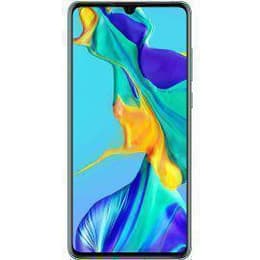
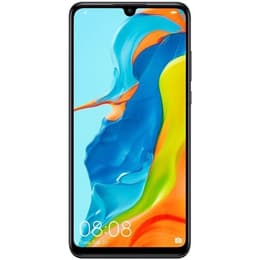
  • Display Technology and Clarity: The Huawei P30 features a 6.1-inch OLED display with a resolution of 2340x1080 pixels, resulting in sharp images and vibrant colors with deep blacks. This technology provides excellent contrast and viewing angles. The P30 Lite, on the other hand, uses a 6.15-inch IPS LCD panel with a resolution of 2312x1080 pixels. While the LCD offers good clarity and color reproduction, it does not achieve the same level of contrast or true black levels as the OLED display found in the P30. [2, 4, 5, 6, 7, 10, 11, 15, 16, 17, 18, 25, 27, 30, 33]
  • Brightness and Refresh Rate: Both devices feature a standard 60Hz refresh rate, which provides a smooth enough experience for most daily tasks but does not offer the fluid scrolling found on higher refresh rate displays. The P30's OLED screen generally offers better outdoor visibility due to its inherent brightness capabilities and superior contrast, making content easier to view under direct sunlight. The P30 Lite's LCD screen provides good brightness levels, but may struggle more in very bright outdoor conditions. [7, 15, 18]
  • Screen Size and Viewing Experience: With similar screen sizes (6.1 inches for P30 and 6.15 inches for P30 Lite), both phones offer a comfortable viewing area for media consumption and general use. The P30's OLED panel enhances the immersive quality of videos and images with its rich colors and deep blacks, making it particularly appealing for users who prioritize media viewing. The P30 Lite's display, while capable, offers a more standard visual experience. [2, 4, 5, 6, 7, 10, 11, 15, 16, 17, 18, 25, 27, 30, 33]

Resolution

1080 x 2340

1080 x 2312

Screen type

OLED

IPS LCD

Audiovisual

The camera systems on both the Huawei P30 and P30 Lite are key differentiators, with the P30 offering a more advanced setup.

  • Rear Camera Systems: The Huawei P30 boasts a triple Leica-branded camera system, featuring a 40 MP wide-angle lens with a unique RYYB sensor for enhanced low-light performance, a 16 MP ultra-wide-angle lens, and an 8 MP telephoto lens capable of 3x optical zoom. This configuration allows for versatile photography, including impressive low-light shots and detailed zoomed-in images. The P30 Lite also has a triple camera setup, typically with a 48 MP main sensor (some variants had 24 MP), an 8 MP ultra-wide lens, and a 2 MP depth sensor. While it can capture detailed images in good lighting, it lacks the optical zoom capabilities and the advanced low-light performance of the P30. [3, 4, 5, 9, 10, 11, 13, 17, 18, 19, 21, 22, 23, 24, 27, 28, 29, 32, 36]
  • Photography and Video Performance: The P30 excels in various photographic scenarios, particularly in low light, where its RYYB sensor captures more light, resulting in brighter and more detailed night photos. Its optical zoom provides clear magnification without significant loss of quality. Video recording on the P30 supports 4K resolution at 30fps, with good stabilization. The P30 Lite delivers good results in well-lit conditions, with its main sensor capturing sharp images. However, its low-light performance is less impressive, often producing noisier images, and it lacks optical zoom, relying on digital zoom which can reduce image quality. Video recording is generally limited to 1080p at 30fps. [9, 18, 21, 23, 24, 27, 29, 35, 36]
  • Front Camera and Audio: Both phones feature high-resolution front-facing cameras, with the P30 having a 32 MP sensor and the P30 Lite offering either a 24 MP or 32 MP sensor. These are suitable for detailed selfies and video calls. For audio, both devices include a 3.5mm headphone jack. The P30 Lite has a single mono speaker, which is typical for its segment. The P30 also features a single speaker, and user reviews indicate good call quality on both devices. [4, 5, 9, 10, 11, 13, 17, 18, 19, 20, 22, 27, 29, 30, 34, 36]

Main camera

40 megapixels

48 megapixels

Front camera

32 megapixels

24 megapixels

Miscellaneous

Beyond core specifications, several practical features contribute to the overall user experience and device utility.

  • Connectivity and Ports: Both the Huawei P30 and P30 Lite support 4G LTE connectivity, Wi-Fi (802.11 a/b/g/n/ac), and feature a USB Type-C port for charging and data transfer. A notable inclusion on both models is the 3.5mm headphone jack, offering traditional audio connectivity. The P30 supports Bluetooth 5.0, while the P30 Lite uses Bluetooth 4.2. Both include NFC for contactless payments and data exchange. [4, 5, 10, 17, 18, 20, 22, 27, 28]
  • Biometric Security and Sensors: The P30 incorporates an in-display fingerprint sensor, which provides a modern and convenient method for unlocking the device. It also supports face unlock. The P30 Lite features a rear-mounted physical fingerprint sensor, which is often praised for its speed and reliability. Both devices include standard sensors such as accelerometers, ambient light sensors, and proximity sensors. [4, 5, 10, 17, 25, 27, 30, 33]
  • Design and Handling: The P30 measures approximately 149.1 x 71.4 x 7.6 mm and weighs around 165g, offering a compact and manageable form factor. Its design includes a flat screen, which some users prefer for durability and ease of handling. The P30 Lite is slightly larger and lighter at about 152.9 x 72.7 x 7.4 mm and 159g, featuring a glass front and back with a plastic frame. Both phones present a sleek aesthetic, with the P30 Lite often noted for its appealing design despite its more modest build materials. [3, 4, 5, 10, 11, 16, 18, 23, 27, 30]

Weight

165 g

159 g

Screen size (in)

6.1

6.15

Network

4G

4G

SIM card

Physical SIM

Physical SIM

Carrier compatibility

Unlocked

Unlocked

The Huawei P30 and P30 Lite, while sharing a brand and release era, cater to distinct user needs. The P30, as the more premium offering, is frequently praised by users for its exceptional camera system, particularly its low-light capabilities and optical zoom, which were considered advanced for its time. Its OLED display and robust performance also receive positive mentions, with many users appreciating its overall speed and battery longevity. Common criticisms for the P30 often revolve around its software update policy, with some users expressing concerns about being stuck on older Android versions and the proprietary NM card format. [29, 30, 31, 33, 39, 40, 41, 42]

The P30 Lite is generally well-regarded for its attractive design and capable camera performance in good lighting conditions, especially considering its market segment. Users often highlight its clear LCD display and the inclusion of a traditional headphone jack. However, its performance is less powerful than the P30, and its camera struggles more in low-light environments, with some users noting inconsistencies in portrait mode. [18, 21, 23, 36]

For users prioritizing advanced photography features, particularly in challenging lighting, and a more powerful, responsive experience for demanding applications, the Huawei P30 would be the more suitable choice. Its OLED screen also offers a more vibrant visual experience. Conversely, individuals seeking a device with a pleasing design, a capable camera for everyday photos, and solid performance for general use, without the need for flagship-level processing power or advanced low-light photography, may find the Huawei P30 Lite to be a practical option. When considering either device, exploring quality-assured refurbished options can provide an eco-friendly alternative for extending the life cycle of these smartphones.
See all articles

Our recent comparisons