Google Pixel 8 Vs iPhone 16

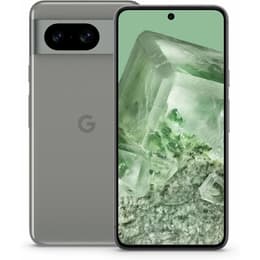
Google Pixel 8
Google Pixel 8
Starting at

Refurbished price:£189.00

Versus £699.99 new

See options
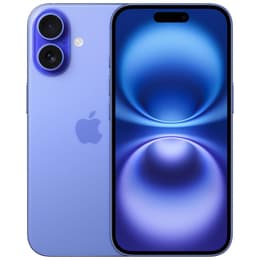
iPhone 16
iPhone 16
Starting at

Refurbished price:£475.00

Versus £699.00 new

See options

Ratings

The Google Pixel 8, released in October 2023, and the iPhone 16, launched in September 2024, represent distinct approaches to the modern smartphone experience. While both devices offer premium features and advanced capabilities, they differ significantly in their operating systems, core hardware, and user-centric philosophies. The Pixel 8 operates on Android, emphasizing Google's AI innovations and a long software support commitment, whereas the iPhone 16 runs on Apple's iOS, focusing on a refined ecosystem, enhanced camera features, and new hardware interactions.

Scores

Durability

When considering the long-term usability of these devices, both the Google Pixel 8 and the iPhone 16 offer robust support, though with different strategies.

  • Software Longevity: The Google Pixel 8 was launched with a commitment to seven years of software updates, including OS upgrades, security updates, and feature drops, extending its practical lifespan significantly [23]. The iPhone 16, running on iOS 26.3.1 as of March 2026, benefits from Apple's consistent, though unspecified, long-term software support, typically spanning five to six years from its release date [2, 21].
  • Physical Durability: Both devices feature IP68 ratings for dust and water resistance, indicating protection against immersion in water up to 6 meters for 30 minutes [1, 2, 5, 6, 8, 11, 20]. The iPhone 16 incorporates a Ceramic Shield front cover for enhanced drop performance, while the Pixel 8 uses Corning Gorilla Glass Victus for its display and back panel, offering strong scratch and shatter resistance [1, 5, 6, 8, 20].
  • Repairability: While specific repairability scores can vary by region and component, both manufacturers design their devices with a balance of durability and serviceability. Users seeking an eco-friendly alternative might consider quality-assured refurbished options for either model, extending their lifecycle.

Year of Release

2023

2024

Compatible with latest Update

Yes

Yes

Foldable

No

No

Performance

The performance of the Google Pixel 8 and iPhone 16 is driven by their respective proprietary chipsets, each optimized for their operating systems and user experiences.

  • Processing Power: The Google Pixel 8 is powered by a current-generation processor designed by Google, which efficiently handles demanding applications, complex AI tasks, and multitasking with smooth responsiveness [4, 6, 11, 23]. The iPhone 16 features Apple's latest mobile processor, delivering substantial improvements in speed and efficiency for gaming, video editing, and running multiple applications simultaneously [2, 3, 10, 15].
  • Multitasking and Storage: The Pixel 8 comes with 8GB of RAM, providing ample capacity for fluid app switching and background processes [4, 6, 22]. It offers storage options of 128GB and 256GB [4, 6, 11, 22]. The iPhone 16 also includes 8GB of RAM, ensuring a responsive user experience, and provides more storage flexibility with options up to 512GB [2, 5, 8, 9, 15].
  • Battery Performance: The Pixel 8 is equipped with a 4575 mAh battery, supporting fast wired charging at 27W and wireless charging at 18W [6, 11, 20]. The iPhone 16, with a 3561 mAh battery, is rated for up to 22 hours of video playback and 80 hours of audio playback, and supports fast charging to 50% in approximately 30 minutes with a 20W adapter [1, 2, 5, 8, 12, 24]. Both devices offer efficient power management, but real-world usage will vary based on individual patterns.

Memory (GB)

8 GB

8 GB

Screen quality

Both the Google Pixel 8 and iPhone 16 feature high-quality OLED displays, offering vibrant visuals and deep contrast, but they differ in refresh rates and peak brightness levels.

  • Display Technology and Clarity: The Pixel 8 sports a 6.2-inch OLED display with a resolution of 2400x1080 pixels, resulting in a pixel density of 428 pixels per inch (ppi) [4, 6, 11, 14, 20, 22]. The iPhone 16 features a 6.1-inch Super Retina XDR OLED display with a resolution of 2556x1179 pixels, achieving a higher pixel density of 460 ppi [1, 2, 3, 5, 8, 9]. Both displays deliver sharp text and detailed images.
  • Brightness and Smoothness: The Pixel 8's display offers a variable refresh rate ranging from 60Hz to 120Hz, providing smoother scrolling and more fluid animations, and can reach a peak brightness of 2000 nits for outdoor visibility [4, 6, 11, 22]. The iPhone 16 maintains a standard 60Hz refresh rate but also achieves a peak outdoor brightness of 2000 nits, ensuring good visibility in bright conditions [1, 3, 5, 8].
  • Viewing Experience: The iPhone 16 incorporates the Dynamic Island, an interactive area at the top of the display that adapts to alerts and background activities [1, 5]. Both devices offer HDR support for enhanced contrast and color in compatible content [4, 5, 6, 11].

Resolution

1080 x 2400

1179 x 2556

Screen type

OLED

Super Retina XDR OLED

Audiovisual

The camera systems on the Google Pixel 8 and iPhone 16 are central to their appeal, each offering advanced computational photography and versatile hardware for capturing moments.

  • Rear Camera Capabilities: The Pixel 8 features a dual-camera setup with a 50MP main sensor (f/1.7) and a 12MP ultrawide sensor (f/2.2 with a 126˚ field of view), both supporting optical image stabilization (OIS) on the main lens and autofocus on the ultrawide [11, 20, 22]. The iPhone 16 also has an advanced dual-camera system, including a 48MP Fusion main sensor (f/1.6) that can capture 2x optical-quality telephoto shots, and a 12MP ultrawide lens (f/2.2 with a 120° field of view) that supports macro photography through autofocus [1, 3, 5, 10].
  • Photography and Video Features: Both phones excel in low-light performance and offer advanced features like HDR and computational enhancements for detailed and well-exposed photos [1, 5, 22]. The iPhone 16 introduces a dedicated Camera Control button for quick access to camera tools and supports Spatial Video recording [3, 5, 9, 10]. Both devices record video at 4K resolution up to 60 frames per second, with the iPhone 16 supporting Dolby Vision HDR video and Cinematic mode [1, 5, 11, 20].
  • Front Camera and Audio: For selfies and video calls, the Pixel 8 has a 10.5MP ultrawide front camera [4, 11, 20], while the iPhone 16 features a 12MP front camera with autofocus [1, 5]. Both provide quality microphone performance for calls and stereo speakers for media consumption, with the iPhone 16 also supporting Spatial Audio [1, 2, 11, 20].

Main camera

50 megapixels

48 megapixels

Front camera

10.5 megapixels

12 megapixels

Miscellaneous

Beyond core performance and display, several practical elements differentiate the Google Pixel 8 and iPhone 16, impacting daily usability and connectivity.

  • Connectivity Standards: Both devices support modern wireless technologies, including Wi-Fi 7 and Bluetooth 5.3, ensuring fast and reliable connections [5, 11, 20]. They also offer 5G connectivity for high-speed mobile data [5, 11, 20]. The iPhone 16 features Apple's second-generation Ultra Wideband chip for enhanced spatial awareness and device finding [5].
  • Ports and Biometrics: The Pixel 8 utilizes a USB-C 3.2 port for charging and data transfer and includes an optical in-screen fingerprint sensor for secure unlocking [6, 11, 20]. The iPhone 16 also uses a USB-C port and relies on Face ID for biometric authentication [1, 2, 5, 8]. Notably, the US models of the iPhone 16 are eSIM-only, while the Pixel 8 supports both nano-SIM and eSIM [2, 5, 10, 11, 20].
  • Design and User Interaction: The Pixel 8 measures 150.5 x 70.8 x 8.9 mm and weighs 187g [4, 6, 11, 20]. The iPhone 16 is slightly more compact and lighter at 147.6 x 71.6 x 7.8 mm and 170g [1, 2, 5, 8]. The iPhone 16 introduces an Action Button, customizable for quick access to various functions, and a dedicated Camera Control button [3, 5, 9, 10].

Weight

187 g

170 g

Screen size (in)

6.2

6.1

Mobile network

5G

5G

SIM card

Physical SIM + eSIM

Physical SIM + eSIM

Carrier compatibility

Unlocked

Unlocked

User feedback for the Google Pixel 8 often highlights its exceptional computational photography, delivering consistent and high-quality images, particularly in challenging conditions. Many users also praise its clean Android experience and the long-term software update commitment, which provides extended value and access to new features. Criticisms sometimes point to its battery life, which, while generally sufficient for a day, may require more frequent charging for heavy users compared to some competitors. The Pixel 8's AI features, such as Magic Editor and Call Screen, are frequently cited as practical and innovative.

The iPhone 16 receives commendation for its robust performance, seamless integration within the Apple ecosystem, and the introduction of the Action Button and Camera Control, which enhance user interaction. Its display, while still 60Hz, is lauded for its brightness and color accuracy. Users appreciate the consistent camera quality and the new Spatial Video recording capabilities. Some common feedback includes the desire for a higher refresh rate display on the base model and the transition to eSIM-only in certain regions, which can be a change for some users.

Users prioritizing a highly integrated ecosystem, strong video capabilities, and a streamlined user experience with new hardware interaction points may find the iPhone 16 well-suited to their needs. Conversely, those who value cutting-edge computational photography, a pure Android experience with extensive AI features, and an industry-leading software support timeline may lean toward the Google Pixel 8. Both devices offer compelling features, and for those considering a sustainable choice, quality-assured refurbished options for either model provide an excellent way to access these technologies while minimizing environmental impact.


See all articles

Our recent comparisons