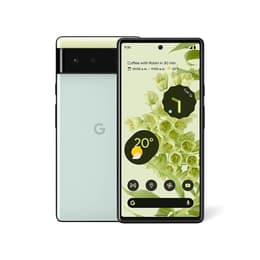

Google Pixel 6 Vs Google Pixel 8 Pro

Google Pixel 6
Google Pixel 6
Starting at

Refurbished price:£101.00

Versus £649.99 new

See options
Google Pixel 8 Pro
Google Pixel 8 Pro
Starting at

Refurbished price:£253.00

Versus £960.91 new

See options

Ratings

The Google Pixel 6, released in October 2021, and the Google Pixel 8 Pro, launched in October 2023, represent different generations within Google's flagship smartphone lineup. While both devices offer a pure Android experience, the Pixel 8 Pro introduces a more advanced processor, a significantly upgraded camera system, and an extended software support policy, setting it apart from its predecessor. Both operate on the Android platform, with the Pixel 8 Pro launching with a newer version and a longer commitment to future updates.

Scores

Durability

When considering the longevity of these devices, several factors come into play, including software support, physical resilience, and ease of repair.

  • Software Support: The Pixel 6 was guaranteed operating system updates until October 2024 and security updates until October 2026. In contrast, the Pixel 8 Pro offers a substantial commitment of seven years of both OS and security updates from its release date, extending its usable software life considerably.
  • Physical Durability: Both models feature an IP68 rating for dust and water resistance, providing protection against environmental elements. The Pixel 6 uses Gorilla Glass Victus on the front and Gorilla Glass 6 on the back, while the Pixel 8 Pro upgrades to Gorilla Glass Victus 2 on both the front and back for enhanced scratch and drop resistance.
  • Repairability: The Pixel 6 has been noted for relatively easy screen replacement, though battery removal can be challenging. The Pixel 8 Pro's repairability has been rated around 4.0 out of 10 by some, with strong adhesives making battery access difficult, and screen removal requiring a delicate process. However, other assessments suggest a score of 7 out of 10 for the Pixel 8 (which often shares similar internal design principles with the Pro model), highlighting good parts availability and screen replacement ease.

Year of Release

2021

2023

Compatible with latest Update

Yes

Yes

Foldable

No

No

Performance

The performance of a smartphone is largely determined by its internal processing capabilities, memory, and how efficiently it manages power for daily tasks.

  • Processing Power: The Pixel 6 is powered by an earlier generation of Google's custom processor, which delivered smooth performance for everyday applications and multitasking at its release. The Pixel 8 Pro features a newer, more advanced processor designed for increased efficiency and enhanced capabilities, particularly in handling complex AI tasks directly on the device.
  • System Responsiveness: Users of the Pixel 8 Pro generally report a more fluid and responsive experience across the system, with faster app loading times and smoother transitions, partly due to the newer processor's architecture and improved thermal management, which helps the device run cooler during demanding use.
  • Memory and Storage: The Pixel 6 typically comes with 8GB of RAM, sufficient for most multitasking needs. The Pixel 8 Pro steps up to 12GB of RAM, providing more headroom for heavy multitasking and resource-intensive applications. Both offer 128GB and 256GB storage options, but the Pixel 8 Pro also includes larger 512GB and 1TB variants for users requiring extensive storage.
  • Battery Behavior: While the Pixel 6 has a 4614 mAh battery, and the Pixel 8 Pro has a 5050 mAh battery, Google's internal tests initially suggested the Pixel 6 had slightly longer battery life. However, real-world user experiences and more recent tests indicate that the Pixel 8 Pro, with its more efficient processor and optimized software, often delivers better battery longevity, lasting through a full day of heavy use for many users.

Memory (GB)

8 GB

12 GB

Screen quality

The display is a primary interface for smartphone interaction, and both devices offer distinct viewing experiences.

  • Display Technology and Clarity: The Pixel 6 features a 6.4-inch AMOLED display with a resolution of 1080x2400 pixels, providing clear visuals for daily use. The Pixel 8 Pro boasts a larger 6.7-inch LTPO OLED display with a higher resolution of 2992x1344 pixels, resulting in a sharper image with more detail.
  • Brightness and Outdoor Visibility: The Pixel 8 Pro's display offers significantly higher peak brightness, reaching up to 2400 nits, which greatly enhances visibility in bright outdoor conditions compared to the Pixel 6. This makes the Pixel 8 Pro particularly well-suited for users who frequently use their phone outdoors.
  • Refresh Rate and Smoothness: The Pixel 6 features a 90Hz refresh rate, offering a smoother scrolling experience than standard 60Hz displays. The Pixel 8 Pro elevates this with an adaptive 1-120Hz LTPO display, allowing for exceptionally fluid motion when needed and conserving battery by dropping to lower refresh rates for static content.

Resolution

1080 x 2400

1344 x 2992

Screen type

AMOLED

LTPO OLED

Audiovisual

Both Pixel devices are known for their camera capabilities, leveraging computational photography, but the Pixel 8 Pro introduces notable advancements.

  • Rear Camera System: The Pixel 6 features a dual-camera setup with a 50MP main sensor and a 12MP ultrawide lens. The Pixel 8 Pro upgrades to a triple-camera system, including a 50MP main sensor, a 48MP ultrawide lens, and a 48MP telephoto lens capable of 5x optical zoom. This provides greater versatility for different photographic scenarios.
  • Low-Light and Video Performance: The Pixel 8 Pro shows significant improvements in low-light photography due to wider apertures across its lenses. Video recording quality is also substantially enhanced on the Pixel 8 Pro, with features like Video Boost and Night Sight Video, which were not available on the Pixel 6.
  • Front Camera and Features: The Pixel 6 includes an 8MP front camera. The Pixel 8 Pro features a 10.5MP front camera with autofocus, improving selfie clarity and video call quality. The Pixel 8 Pro also introduces advanced AI-powered editing tools like Best Take and Magic Editor, offering more post-capture flexibility.
  • Audio Quality: User feedback suggests the Pixel 8 Pro offers improved audio quality for media consumption and calls compared to the Pixel 6.

Main camera

50 megapixels

50 megapixels

Front camera

8 megapixels

10.5 megapixels

Miscellaneous

Beyond core specifications, several practical elements contribute to the overall user experience and daily usability of these smartphones.

  • Connectivity: The Pixel 6 supports 5G, Wi-Fi 6 (ax), and Bluetooth 5.2. The Pixel 8 Pro offers more advanced connectivity with 5G, Wi-Fi 7 (in select regions), and Bluetooth 5.3, providing faster and more stable wireless connections.
  • Ports and Biometrics: Both devices utilize a USB-C port for charging and data transfer. For security, both feature an in-display optical fingerprint sensor. The Pixel 8 Pro additionally offers an enhanced Face Unlock system, meeting the highest Android security levels for convenient and secure access.
  • Design and Handling: The Pixel 6 measures 158.6 x 74.8 x 8.9 mm and weighs 207 grams. The Pixel 8 Pro is slightly larger and heavier at 162.6 x 76.5 x 8.8 mm and 213 grams, but maintains a similar thickness. The Pixel 8 Pro also features a flat display, a departure from the curved edges of some previous Pro models.
  • Additional Features: The Pixel 8 Pro includes a unique temperature sensor, allowing users to measure the surface temperature of objects.

Weight

207 g

213 g

Screen size (in)

6.4

6.7

Mobile network

5G

5G

SIM card

Physical SIM + eSIM

Physical SIM + eSIM

Carrier compatibility

Unlocked

Unlocked

The Google Pixel 6 and Pixel 8 Pro cater to users with varying priorities, reflecting the advancements made over two generations of smartphone development. Users frequently praise the Pixel 6 for its strong camera performance and clean Android experience at its release. However, some common criticisms included concerns about battery life and the device occasionally running warm.

The Pixel 8 Pro, on the other hand, receives widespread acclaim for its significantly brighter and smoother display, substantial camera improvements—especially in video recording and low-light conditions—and a noticeable boost in overall performance and efficiency. Users also appreciate the improved Face Unlock and the extended software support.

Users prioritizing a device with a longer software lifespan, cutting-edge camera capabilities, and a highly responsive, bright display will find the Pixel 8 Pro well-suited to their needs. Its enhanced processing power also benefits those who engage in demanding applications or extensive multitasking. Conversely, individuals seeking a capable smartphone for everyday tasks, who may not require the absolute latest in camera technology or the longest software support, might find the Pixel 6 still offers a solid experience. Both devices, particularly when considering quality-assured refurbished options, present an eco-friendly alternative for consumers looking to make a sustainable choice.


See all articles

Our recent comparisons