

Galaxy Z Fold6 Vs Xiaomi Redmi Note 11 Pro 5G

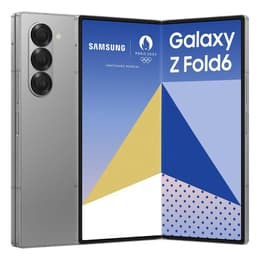
Galaxy Z Fold6
Galaxy Z Fold6
Starting at

Refurbished price:£524.00

Versus £1,685.59 new

See options
Xiaomi Redmi Note 11 Pro 5G
Starting at

Refurbished price:£102.00

Versus £599.00 new

See options

Ratings

The Samsung Galaxy Z Fold6, released in July 2024, and the Xiaomi Redmi Note 11 Pro 5G, launched in January 2022, represent distinct approaches to smartphone design and functionality. While the Galaxy Z Fold6 offers a cutting-edge foldable form factor with advanced features, the Redmi Note 11 Pro 5G provides a more traditional smartphone experience with a focus on core capabilities. Both devices operate on the Android platform, though with different custom user interfaces and varying software support timelines.

Scores

Durability

The expected lifespan and software support differ significantly between these two devices, primarily due to their release timelines and manufacturer policies.

  • Release Timeline: The Galaxy Z Fold6 is a much newer device, having been released in July 2024, while the Redmi Note 11 Pro 5G was launched in January 2022. This age difference directly impacts their remaining support cycles.
  • OS Support Duration: Samsung has committed to an extensive seven years of OS upgrades and security updates for the Galaxy Z Fold6, ensuring long-term software longevity. In contrast, the Redmi Note 11 Pro 5G, originally launched with Android 11, has received updates up to Android 13 with HyperOS, and its major OS update cycle is likely concluded, though security updates may continue for a period.
  • Repairability: The Galaxy Z Fold6 presents a more complex repair scenario due to its foldable design, with a reported repairability score around 4.5 to 5 out of 10. Key challenges include adhesive use, delicate screen removal, and intricate hinge mechanisms. The Redmi Note 11 Pro 5G, with its conventional design, generally offers higher repairability, scoring around 8.75 out of 10, featuring easier access to components like the battery and screen.

Year of Release

2024

2022

Compatible with latest Update

Yes

No

OS

Android

Android

Foldable

Yes

No

Performance

Performance capabilities vary considerably, reflecting the different hardware generations and design philosophies of each device.

  • Processor Capabilities: The Galaxy Z Fold6 is equipped with a current-generation flagship processor, enabling it to handle demanding applications, intensive multitasking, and graphic-heavy gaming with smooth responsiveness. The Redmi Note 11 Pro 5G features a mid-range processor, which provides capable performance for everyday tasks, general app usage, and moderate gaming, though it may show limitations with the most graphically intensive applications.
  • Storage and RAM: The Galaxy Z Fold6 offers substantial memory configurations, typically starting with 12GB of RAM and internal storage options up to 1TB, catering to users with extensive storage needs and heavy multitasking. The Redmi Note 11 Pro 5G comes with 6GB or 8GB of RAM and up to 128GB of internal storage, with the added flexibility of expandable storage via a microSD card.
  • Battery Behavior: The Galaxy Z Fold6 houses a 4400 mAh battery, which generally provides sufficient power for a full day of typical use, though frequent use of its larger inner display can lead to faster depletion. The Redmi Note 11 Pro 5G features a larger 5000 mAh battery, and users frequently report excellent battery longevity, often lasting through a full day of heavy use. The Redmi Note 11 Pro 5G also supports faster wired charging at 67W compared to the Galaxy Z Fold6's 25W.

Memory (GB)

12 GB

6 GB

Screen quality

The display experience is a primary differentiator, with the Galaxy Z Fold6 offering a unique foldable design.

  • Display Technology and Size: The Galaxy Z Fold6 features two Dynamic AMOLED 2X displays: a 6.3-inch cover screen and a 7.6-inch foldable main screen. This allows for a versatile experience, switching between a compact smartphone and a larger tablet-like interface. The Redmi Note 11 Pro 5G has a single 6.67-inch Super AMOLED display, providing a traditional smartphone viewing area.
  • Resolution and Clarity: Both devices offer clear visuals. The Galaxy Z Fold6's cover screen has a resolution of 2376 x 968 pixels, and its main screen is 2160 x 1865 pixels. The Redmi Note 11 Pro 5G provides a 1080 x 2400 pixel resolution, resulting in sharp images and text on its display.
  • Brightness and Refresh Rate: Both phones feature high refresh rates for smooth scrolling and animations. The Galaxy Z Fold6's displays offer an adaptive 120Hz refresh rate and can reach a peak brightness of up to 2600 nits, ensuring excellent visibility even in bright outdoor conditions. The Redmi Note 11 Pro 5G also boasts a 120Hz refresh rate and a peak brightness of 1200 nits, providing a vibrant and responsive viewing experience.

Resolution

1856 x 2160

1080 x 2400

Screen type

Foldable Dynamic LTPO AMOLED 2X

Super AMOLED

Audiovisual

The camera systems on both devices cater to different user expectations and offer distinct capabilities.

  • Camera System Capabilities: The Galaxy Z Fold6 features a versatile triple rear camera setup, including a 50 MP main sensor with optical image stabilization (OIS), a 12 MP ultrawide lens, and a 10 MP telephoto lens with 3x optical zoom and OIS. It also has a 10 MP front camera on the cover screen and a 4 MP under-display camera on the main screen. The Redmi Note 11 Pro 5G comes with a 108 MP main camera, an 8 MP ultrawide, and a 2 MP macro lens, alongside a 16 MP front camera.
  • Photography Performance: The Galaxy Z Fold6 benefits from advanced image processing and AI features, delivering good detail and dynamic range across various lighting conditions, with improved low-light and HDR capabilities. User feedback indicates that while its camera quality is good, it may not offer the 'wow factor' of some dedicated camera-focused flagship phones. The Redmi Note 11 Pro 5G's 108 MP main sensor can capture detailed photos in good lighting, but its overall camera performance is described as solid rather than exceptional, with some users noting inconsistencies and a lack of 4K video recording.
  • Video Recording: The Galaxy Z Fold6 supports high-resolution video recording, including HDR10+ 8K at 23 frames per second and 4K at 60 frames per second from its front camera. The Redmi Note 11 Pro 5G is limited to 1080p at 30 frames per second for video recording across all its cameras, which is a notable difference for users prioritizing video capabilities.

Main camera

50 megapixels

108 megapixels

Front camera

4 megapixels

16 megapixels

Miscellaneous

Beyond core features, several practical elements distinguish these two smartphones.

  • Connectivity and Ports: Both devices support 5G connectivity. The Galaxy Z Fold6 features a USB-C port for charging and data transfer. The Redmi Note 11 Pro 5G also uses a USB Type-C 2.0 port but additionally includes a 3.5mm headphone jack, which is absent on the Galaxy Z Fold6. The Redmi Note 11 Pro 5G also offers expandable storage via microSD, a feature not present on the Galaxy Z Fold6.
  • Sensors and Features: Both phones include essential sensors like fingerprint recognition (side-mounted on both), accelerometers, gyroscopes, and compasses. The Galaxy Z Fold6 incorporates face recognition and a barometer. The Redmi Note 11 Pro 5G uniquely features an IR blaster, allowing it to function as a universal remote control.
  • Build and Handling: The Galaxy Z Fold6 has a premium construction with Corning Gorilla Glass Victus 2 on its cover screen and back, and Ultra-Thin Glass for its inner display, encased in a matte aluminum frame. It carries an IP48 rating for dust and water protection. Its folded dimensions make it thicker but narrower than a traditional phone, while unfolded it offers a tablet-like experience. The Redmi Note 11 Pro 5G features a glass front (Gorilla Glass 5) and back with a plastic frame, and an IP53 rating for dust and splash resistance. It has a traditional slab design, weighing 202g, offering a comfortable grip for a device of its size.

Weight

239 g

202 g

Screen size (in)

7.6

6.67

Mobile network

5G

5G

SIM card

Dual Physical SIM + eSIM

Dual Physical SIM

Carrier compatibility

Unlocked

Unlocked

The Samsung Galaxy Z Fold6 and the Xiaomi Redmi Note 11 Pro 5G cater to different user needs and preferences, reflecting their distinct designs and release generations. Users praise the Galaxy Z Fold6 for its exceptional multitasking capabilities, the expansive inner display for content consumption, and its overall performance. Its refined foldable design and long-term software support are also frequently highlighted as significant advantages. However, some users note its weight and the potential for faster battery drain with extensive use of the main screen. The camera system, while capable, is sometimes seen as not reaching the absolute pinnacle of smartphone photography.

The Redmi Note 11 Pro 5G is often commended for its vibrant AMOLED display, impressive battery life, and rapid charging capabilities. Its inclusion of a 3.5mm headphone jack and expandable storage are also popular features. Criticisms often revolve around its camera performance, which, while solid, may not consistently deliver the best results, and the absence of 4K video recording. Its software update longevity is also shorter compared to the Fold6.

Users prioritizing a cutting-edge, versatile device for productivity and immersive media consumption, coupled with extensive software support, may find the Galaxy Z Fold6 well-suited to their needs. Its unique foldable form factor offers a distinct advantage for those who desire a larger screen in a portable package. Conversely, users seeking a reliable, long-lasting battery, a traditional smartphone experience with a good display, and practical features like a headphone jack and expandable storage, might lean towards the Redmi Note 11 Pro 5G. Both devices are available as quality-assured refurbished options, providing an eco-friendly alternative for consumers.

See all articles

Our recent comparisons