
Galaxy Z Fold6 Vs Google Pixel 8

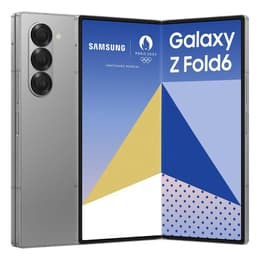
Galaxy Z Fold6
Galaxy Z Fold6
Starting at

Refurbished price:£524.00

Versus £1,685.59 new

See options
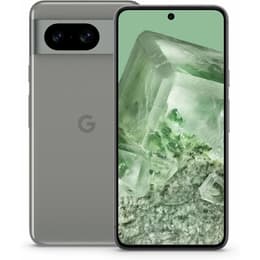
Google Pixel 8
Google Pixel 8
Starting at

Refurbished price:£185.99

Versus £699.99 new

See options

Ratings

The Samsung Galaxy Z Fold6, a foldable smartphone released in July 2024, and the Google Pixel 8, a traditional slab smartphone launched in October 2023, represent distinct approaches to mobile technology. While both devices operate on the Android platform, the Z Fold6 offers a unique folding design that transforms its screen size, contrasting with the Pixel 8's focus on a streamlined user experience and advanced computational photography.

Scores

Durability

The longevity of a smartphone is influenced by its release timeline, software support, and physical resilience. Both the Galaxy Z Fold6 and the Google Pixel 8 offer substantial software support, contributing to their practical lifespan.

  • Software Updates: The Galaxy Z Fold6, released in July 2024, and the Google Pixel 8, released in October 2023, both benefit from a commitment to seven years of operating system upgrades and security updates. This extended support means both devices are designed to remain current and secure well into the future, with the Pixel 8's support extending until October 2030.
  • Physical Durability: The Pixel 8 features an IP68 rating for dust and water protection, along with Gorilla Glass Victus on its front and back, providing a robust build for a traditional smartphone. The Z Fold6, as a foldable device, presents a different durability profile; its inner screen shows scratches at a lower level of hardness compared to its outer display, and its hinge mechanism, while passing bend tests, has shown some susceptibility to dust ingress in extreme tests. Samsung offers a 'Galaxy Z Assurance' program for screen protector replacements and discounted screen repairs for two years, acknowledging the unique nature of foldable displays.
  • Expected Lifespan: With their extensive software support, both devices are built for long-term use. The Pixel 8's conventional design may offer a more predictable physical lifespan, while the Z Fold6's innovative folding mechanism introduces specific considerations for care and handling to maximize its operational life.

Year of Release

2024

2023

Compatible with latest Update

Yes

Yes

OS

Android

Android

Foldable

Yes

No

Performance

Performance in modern smartphones encompasses how smoothly applications run, the device's responsiveness, and its ability to handle demanding tasks. The Galaxy Z Fold6 and Google Pixel 8 approach performance with different underlying hardware and optimization strategies.

  • Processing Power: The Galaxy Z Fold6 is equipped with a current-generation processor, which provides robust performance for multitasking, running demanding applications, and handling complex operations smoothly. The Pixel 8 features a processor designed by Google, optimized for its software and AI capabilities, ensuring a responsive user experience for everyday tasks and Google's integrated features. Benchmarks indicate the Z Fold6's processor generally offers higher raw performance.
  • Multitasking and Storage: The Z Fold6 typically comes with a larger amount of RAM, which can benefit users who frequently switch between many applications or utilize the large inner display for extensive multitasking. Both devices offer various storage options, with the Z Fold6 providing configurations up to 1TB, catering to users with large media libraries or extensive app collections, while the Pixel 8 offers up to 256GB.
  • Battery Behavior: The Z Fold6 houses a 4400mAh battery, and users often report it can last through a full day of heavy use, though its large, high-refresh-rate screens can contribute to faster drain. The Pixel 8 has a 4575mAh battery, and while it generally offers decent battery life, heavy usage can also lead to more frequent charging. Both devices support fast wired and wireless charging.

Memory (GB)

12 GB

8 GB

Screen quality

The display is a primary interaction point for any smartphone, and the Galaxy Z Fold6 and Google Pixel 8 offer distinct visual experiences due to their form factors and display technologies.

  • Display Technology and Size: The Galaxy Z Fold6 features two Dynamic AMOLED 2X displays: a large 7.6-inch foldable inner screen and a 6.3-inch cover screen. This allows for a versatile viewing experience, from a compact outer display to an expansive tablet-like inner display. The Pixel 8 has a single 6.2-inch OLED display, providing a vibrant and clear viewing area in a traditional smartphone form.
  • Resolution and Clarity: The Z Fold6's inner display offers a resolution of 1856x2160 pixels, while its cover screen is 968x2376 pixels. The Pixel 8's display has a resolution of 1080x2400 pixels (FHD+). Both provide sharp images and text for typical viewing distances, with the Z Fold6's larger inner screen offering more screen real estate for detailed content.
  • Brightness and Smoothness: Both devices feature high refresh rates of 120Hz, contributing to smooth scrolling and fluid animations. The Z Fold6's displays can reach a peak brightness of 2600 nits, offering excellent visibility even in bright outdoor conditions. The Pixel 8 also boasts high peak brightness, reaching up to 2000 nits, ensuring good outdoor readability.

Resolution

1856 x 2160

1080 x 2400

Screen type

Foldable Dynamic LTPO AMOLED 2X

OLED

Audiovisual

Camera capabilities are a significant factor for many users, and both the Galaxy Z Fold6 and Google Pixel 8 offer advanced systems, though with different strengths and focuses.

  • Rear Camera Systems: The Galaxy Z Fold6 features a versatile triple-camera setup on its rear, including a 50-megapixel wide-angle lens with optical image stabilization (OIS), a 12-megapixel ultra-wide lens, and a 10-megapixel telephoto lens with 3x optical zoom and OIS. The Pixel 8 comes with a dual-camera system, comprising a 50-megapixel primary sensor with OIS and a 12-megapixel ultrawide lens with autofocus.
  • Photography Performance: The Z Fold6 is noted for capturing detailed and colorful photos, performing well in good lighting conditions, and its ultrawide sensor has seen improvements for low-light scenarios. However, some users note its cameras, particularly zoom performance, may not match the absolute top-tier traditional flagships. The Pixel 8 excels in computational photography, consistently producing images with balanced tones, good detail, and pleasing color reproduction, especially in auto mode and low-light situations. Its ultrawide camera also offers a macro mode.
  • Video and Selfie Capabilities: Both devices offer strong video recording capabilities. For selfies, the Z Fold6 has a 10-megapixel camera on its cover screen and a 4-megapixel under-display camera on the inner screen. The Pixel 8 features a 10.5-megapixel front-facing camera. The Z Fold6's large inner screen can also serve as an expansive viewfinder, aiding in composition.

Main camera

50 megapixels

50 megapixels

Front camera

4 megapixels

10.5 megapixels

Miscellaneous

Beyond core performance and display, several practical elements contribute to the overall user experience of these devices.

  • Connectivity and Ports: Both the Galaxy Z Fold6 and Google Pixel 8 support modern connectivity standards, including 5G, advanced Wi-Fi (Wi-Fi 6e for Z Fold6, Wi-Fi 6e/7 for Pixel 8), and Bluetooth. The Z Fold6 also includes Ultra-Wideband (UWB) support. Both devices utilize a USB-C port for charging and data transfer, and neither includes a traditional 3.5mm headphone jack.
  • Biometric Security and Handling: The Z Fold6 features a side-mounted fingerprint scanner for secure unlocking. The Pixel 8 incorporates an under-display optical fingerprint sensor and also offers face recognition. In terms of handling, the Z Fold6 is heavier at 239 grams and has a thicker profile when folded, while the Pixel 8 is lighter at 187 grams and has a more conventional smartphone form factor.
  • Unique Features: The Z Fold6 supports S-Pen input, enhancing its productivity capabilities, particularly on the large inner screen, though the S-Pen is not integrated into the device itself. The Pixel 8 emphasizes Google's AI features, which are deeply integrated into its software for various enhancements, from photo editing to call screening.

Weight

239 g

187 g

Screen size (in)

7.6

6.2

Mobile network

5G

5G

SIM card

Dual Physical SIM + eSIM

Physical SIM + eSIM

Carrier compatibility

Unlocked

Unlocked

The Samsung Galaxy Z Fold6 and Google Pixel 8 cater to different user preferences, each excelling in its own domain. User feedback for the Z Fold6 often praises its innovative foldable design, which offers enhanced productivity and an immersive media consumption experience on its large inner screen. Many appreciate its robust performance for multitasking and the versatility of having both a compact outer display and an expansive inner one. However, some users note that while its cameras are capable, they may not reach the same level as Samsung's traditional flagship phones, and the device's folded thickness and weight are considerations. Concerns about the hinge's long-term dust resistance have also been raised by some.

For the Google Pixel 8, common praise centers on its exceptional camera performance, particularly its computational photography capabilities that deliver consistent and high-quality images in various conditions. Users also value its clean Android experience, timely software updates, and the integration of Google's AI features. Some criticisms include reports of paint chipping on the frame and occasional screen issues, as well as battery life that, while decent, might not consistently last a full day for heavy users.

Users prioritizing a versatile device for productivity, multitasking, and an expansive viewing experience will find the Galaxy Z Fold6 well-suited to their needs. Its unique form factor allows for a tablet-like experience in a pocketable device. Conversely, individuals who value a premium, traditional smartphone experience with a strong emphasis on photography, a streamlined software interface, and long-term software support may lean towards the Google Pixel 8. Both devices offer a compelling choice, and for those considering a more sustainable option, quality-assured refurbished alternatives are available, providing an eco-friendly way to acquire either of these advanced smartphones.

See all articles

Our recent comparisons