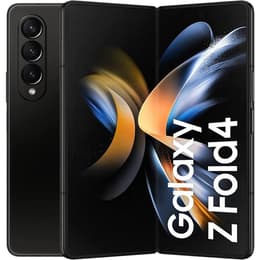

Galaxy Z Fold4 Vs Google Pixel 7

Galaxy Z Fold4
Galaxy Z Fold4
Starting at

Refurbished price:£352.00

Versus £1,889.00 new

See options
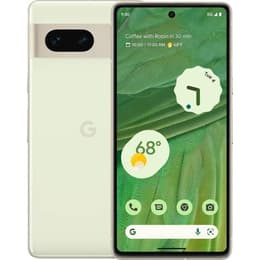
Google Pixel 7
Google Pixel 7
Starting at

Refurbished price:£134.00

Versus £729.00 new

See options

Ratings

The Samsung Galaxy Z Fold4 (2022) and the Google Pixel 7 (2022) represent distinct approaches to modern smartphone design. The Z Fold4 offers a unique foldable form factor that transforms a traditional smartphone into a larger tablet-like display, while the Pixel 7 provides a conventional, high-performance smartphone experience with a strong emphasis on software integration and computational photography. Both devices operate on the Android platform, offering users a wide ecosystem of applications and services.

Scores

Durability

When considering the long-term usability of these devices, their release timelines and software support policies are key factors. The Galaxy Z Fold4 was released in August 2022, and the Google Pixel 7 followed in October 2022, making them contemporary devices.

  • Software Support: Samsung has committed to providing the Galaxy Z Fold4 with four major Android OS updates and five years of security updates. This means the device is expected to receive updates until Android 16 and security patches until 2027. The Google Pixel 7 is also slated to receive five years of both OS and security updates from its launch date, extending its support until 2027.
  • Physical Durability: The Pixel 7 features a traditional slab design with Gorilla Glass Victus protection on its display and an IP68 rating for dust and water resistance, offering robust everyday durability. The Galaxy Z Fold4, with its innovative foldable screen, incorporates a flexible display and a hinge mechanism. It also carries an IPX8 water resistance rating, but its foldable nature introduces different considerations for long-term mechanical wear compared to a rigid device.
  • Expected Lifespan: Both devices are designed for a practical lifespan that aligns with their extensive software support. Users can expect consistent performance and security for several years, with the Pixel 7 offering a more conventional durability profile and the Z Fold4 providing a unique, larger screen experience with its own set of durability characteristics.

Year of Release

2022

2022

Compatible with latest Update

Yes

Yes

OS

Android

Android

Foldable

Yes

No

Performance

Both the Galaxy Z Fold4 and the Google Pixel 7 deliver capable performance for daily tasks, though they approach processing power with different philosophies.

  • Everyday Responsiveness: The Galaxy Z Fold4 handles demanding applications and extensive multitasking smoothly, benefiting from its robust processing capabilities and ample RAM. The Pixel 7 offers a fluid and optimized experience, particularly excelling in AI-driven tasks like voice recognition and advanced photography processing.
  • Multitasking and App Handling: The Z Fold4's design, especially when unfolded, is well-suited for running multiple applications simultaneously, allowing for efficient split-screen usage and app continuity between its displays. The Pixel 7, while capable of multitasking, operates within the confines of a single, traditional smartphone display.
  • Storage and Memory: The Galaxy Z Fold4 typically comes with 12 GB of RAM and offers storage options up to 1 TB, providing significant capacity for applications and media. The Pixel 7 is equipped with 8 GB of RAM and storage options up to 256 GB, which is sufficient for most users' needs.

Memory (GB)

12 GB

8 GB

Screen quality

The display experience is a primary differentiator between these two smartphones, with the Galaxy Z Fold4 offering a unique foldable design and the Pixel 7 providing a high-quality traditional screen.

  • Display Technology and Size: The Galaxy Z Fold4 features a 7.6-inch foldable Dynamic AMOLED 2X main display when unfolded, offering a large canvas for content consumption and productivity. It also has a 6.2-inch external AMOLED cover screen. The Pixel 7 sports a 6.3-inch OLED display, providing a vibrant and clear viewing experience in a more compact form factor.
  • Resolution and Clarity: The Z Fold4's main display has a resolution of 2176 x 1812 pixels, while its cover screen is 2316 x 904 pixels. The Pixel 7 offers a resolution of 1080 x 2400 pixels. Both displays deliver sharp images and text for typical viewing distances.
  • Refresh Rate and Brightness: The Z Fold4's main and cover displays both support a 120 Hz refresh rate for smooth scrolling and animations. The Pixel 7 features a 90 Hz refresh rate, which provides a smooth experience for most users. Both devices offer good brightness levels for visibility in various lighting conditions.

Resolution

1812 x 2176

1080 x 2400

Screen type

Foldable Dynamic AMOLED 2X

AMOLED

Audiovisual

Both the Galaxy Z Fold4 and the Google Pixel 7 are recognized for their camera capabilities, though they excel in different aspects of photography.

  • Rear Camera Systems: The Galaxy Z Fold4 features a versatile triple-camera setup, including a 50 MP wide-angle lens, a 12 MP ultra-wide lens, and a 10 MP telephoto lens with 3x optical zoom. The Pixel 7 also has a dual-camera system with a 50 MP wide-angle lens and a 12 MP ultra-wide lens, relying heavily on its advanced computational photography for image enhancement.
  • Photography Performance: The Pixel 7 is often praised for its consistent image processing, producing natural colors and strong detail, particularly in challenging lighting conditions, due to its computational photography strengths. The Z Fold4 offers vibrant colors and good detail, with its optical telephoto lens providing dedicated zoom capabilities.
  • Video and Selfies: Both devices are capable of high-quality video recording. For selfies, the Z Fold4 has a 10 MP camera on its cover screen and a 4 MP under-display camera on its main screen, with the option to use the main rear cameras for higher-quality selfies when unfolded. The Pixel 7 features a 10.8 MP front camera.

Main camera

50 megapixels

50 megapixels

Front camera

4 megapixels

10.8 megapixels

Miscellaneous

Beyond core features, several practical elements differentiate the user experience of the Galaxy Z Fold4 and the Google Pixel 7.

  • Connectivity and Ports: Both smartphones support 5G connectivity, modern Wi-Fi standards, and Bluetooth for wireless connections. The Z Fold4 utilizes a USB-C port for charging and data transfer, as does the Pixel 7. Neither device includes a traditional headphone jack.
  • Biometric Security: The Galaxy Z Fold4 incorporates a side-mounted fingerprint sensor integrated into the power button, offering quick and responsive unlocking. The Pixel 7 features an under-display optical fingerprint sensor for secure access.
  • Design and Handling: The Z Fold4's unique folding design means it is thicker and heavier when folded compared to a traditional smartphone, but it offers a much larger screen when unfolded. The Pixel 7 maintains a more conventional smartphone form factor, making it generally lighter and easier to handle with one hand. The Z Fold4 weighs 263 grams, while the Pixel 7 weighs 197 grams.

Weight

263 g

197 g

Screen size (in)

7.6

6.3

Mobile network

5G

5G

SIM card

Dual Physical SIM + eSIM

Physical SIM + eSIM

Carrier compatibility

Unlocked

Unlocked

The Samsung Galaxy Z Fold4 and the Google Pixel 7 cater to different user preferences, each offering a distinct smartphone experience. Users often praise the Z Fold4 for its innovative foldable display, which provides a tablet-like workspace for enhanced multitasking and immersive media consumption. Its ability to transform from a compact phone to a large screen is a significant draw for those who prioritize screen real estate and productivity on the go. Some users, however, note that its folded thickness and weight can be a consideration for everyday portability, and the unique form factor introduces different durability considerations compared to a rigid device.

The Google Pixel 7 is frequently lauded for its exceptional camera performance, driven by advanced computational photography, and its clean, intuitive Android software experience. Users appreciate its consistent image quality, especially in various lighting conditions, and the seamless integration of Google's AI features. Its traditional smartphone design offers a comfortable and familiar handling experience for most users.

Users prioritizing a versatile device with a large, adaptable screen for productivity and media will find the Galaxy Z Fold4 well-suited to their needs. Its unique form factor enables new ways of interacting with applications. Conversely, users who value a streamlined smartphone experience with a focus on photography, software optimization, and a more compact design may lean toward the Google Pixel 7. Both devices offer long-term software support, ensuring continued functionality and security for several years. For those considering a quality-assured refurbished option, both the Galaxy Z Fold4 and the Google Pixel 7 are available as sustainable choices, providing an eco-friendly alternative to purchasing new.
See all articles

Our recent comparisons